

This is the Roman Catholic cathedral in Los Angeles. Locals informally refer to it as COLA or the L.A. Cathedral. For more on the history, architecture, and unique features of the cathedral, check out la-future.
The Cathedral’s Origin Story
The Roman Catholic Church has never been confined to a single architectural style, embracing instead the creative spirit of local communities. So, what’s the story behind the Cathedral of Our Lady of the Angels, a modern landmark for today’s Angelenos?
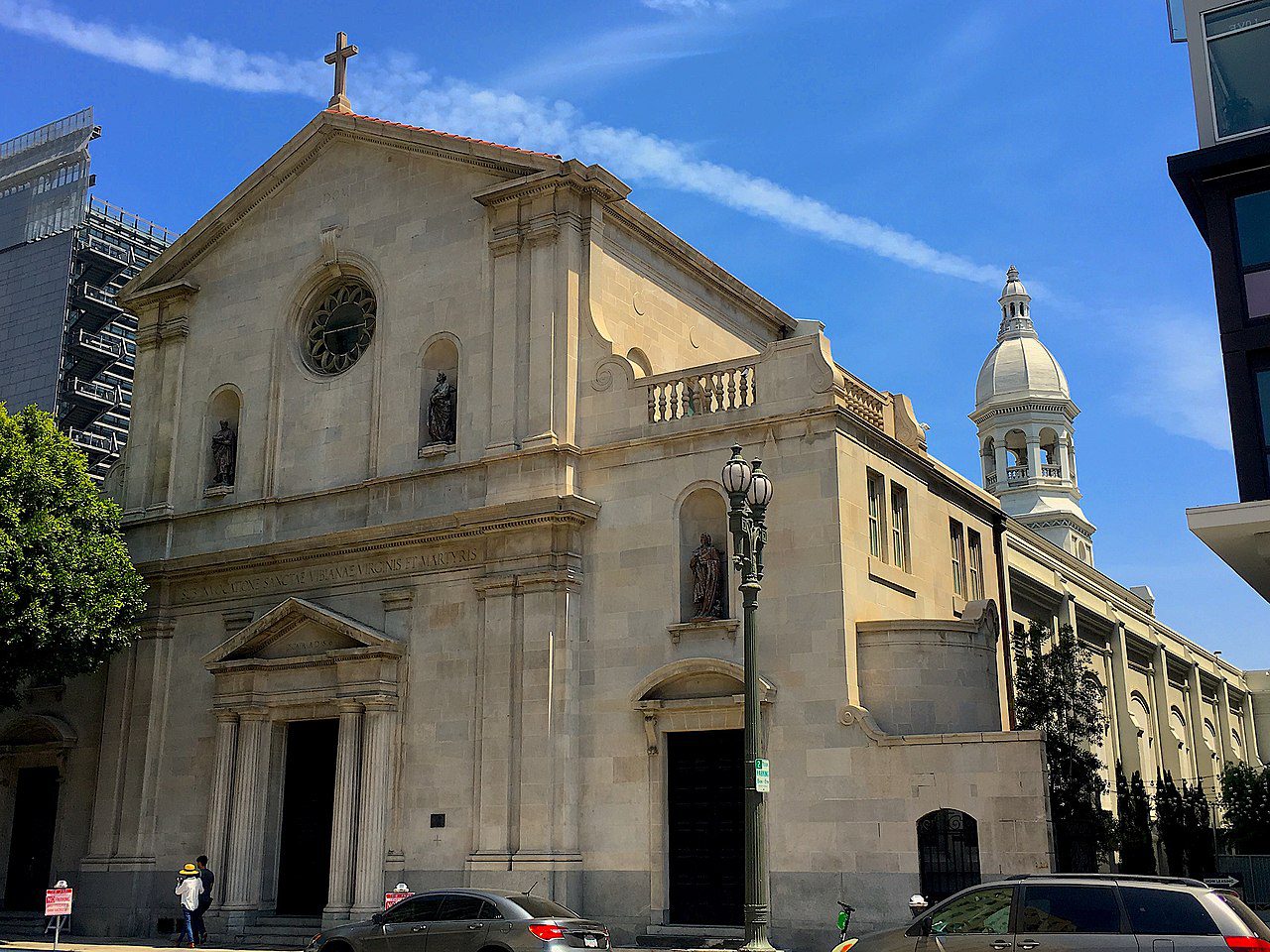
Planning for what would become St. Vibiana’s Cathedral began in 1859. The building was erected at Main and Second Streets in 1876. Archbishop Joseph Sadoc Alemany of San Francisco consecrated the site as St. Vibiana’s Cathedral. The project was completed four years later at a cost of $80,000. It was built on land donated by Amiel Cavalier, with the design overseen by architect Ezra F. Kysor.
A major renovation of the cathedral took place in 1895. The interior was transformed with Mexican onyx and Carrara marble. Frosted globes were installed in the sanctuary, and a stunning stained-glass window depicting a dove was added to the dome. The building’s exterior was also updated between 1922 and 1924.
Who was the enigmatic Saint Vibiana? It is said she was martyred for her faith in Rome during the third century. When her remains arrived in Los Angeles, she displayed a resilience that the cathedral named in her honor would later embody. Pope Pius IX ordered the cathedral be named for the forgotten martyr so she could finally find a place of eternal rest. It is believed Vibiana’s body was interred in the Roman catacombs, and an earthquake dislodged her remains in the mid-1800s. The cathedral housed her relics, which were transported to Los Angeles, with her coffin residing within the abandoned church building.
Condemnation and a New Beginning
In 1996, St. Vibiana’s Cathedral was condemned by Los Angeles authorities, leaving the city’s archdiocese without a central place of worship. At the time, the Catholic population numbered around 4 million, and the city desperately needed a cathedral that could accommodate nearly 3,000 people for special liturgies and services.
In January 1995, plans for the cathedral’s fate were announced: it would stay on its historic site. However, St. Vibiana’s had suffered from earthquakes for many years and had been closed since May 1995. The extensive damage from the 1994 Northridge earthquake left no alternative. The cathedral had to be demolished.
This is where historic preservationists stepped in. They attempted to save the old building and add a new structure, but the proposal was unworkable due to a lack of a proper foundation, reinforcement, and seismic protection. Legal challenges and court injunctions followed, delaying the demolition date.
Ultimately, the cathedral was never torn down. Instead, it was designated a historic and cultural landmark of Los Angeles. In the late 2000s, the former cathedral began hosting events under the name “Vibiana.” The building also houses a branch of the Los Angeles Public Library in Little Tokyo. Notably, the former cathedral is one of the last remaining buildings from the earliest period of Los Angeles history.
The building is cherished by locals and serves as an excellent venue for weddings, art exhibitions, and other events.
The Cathedral of Our Lady of the Angels
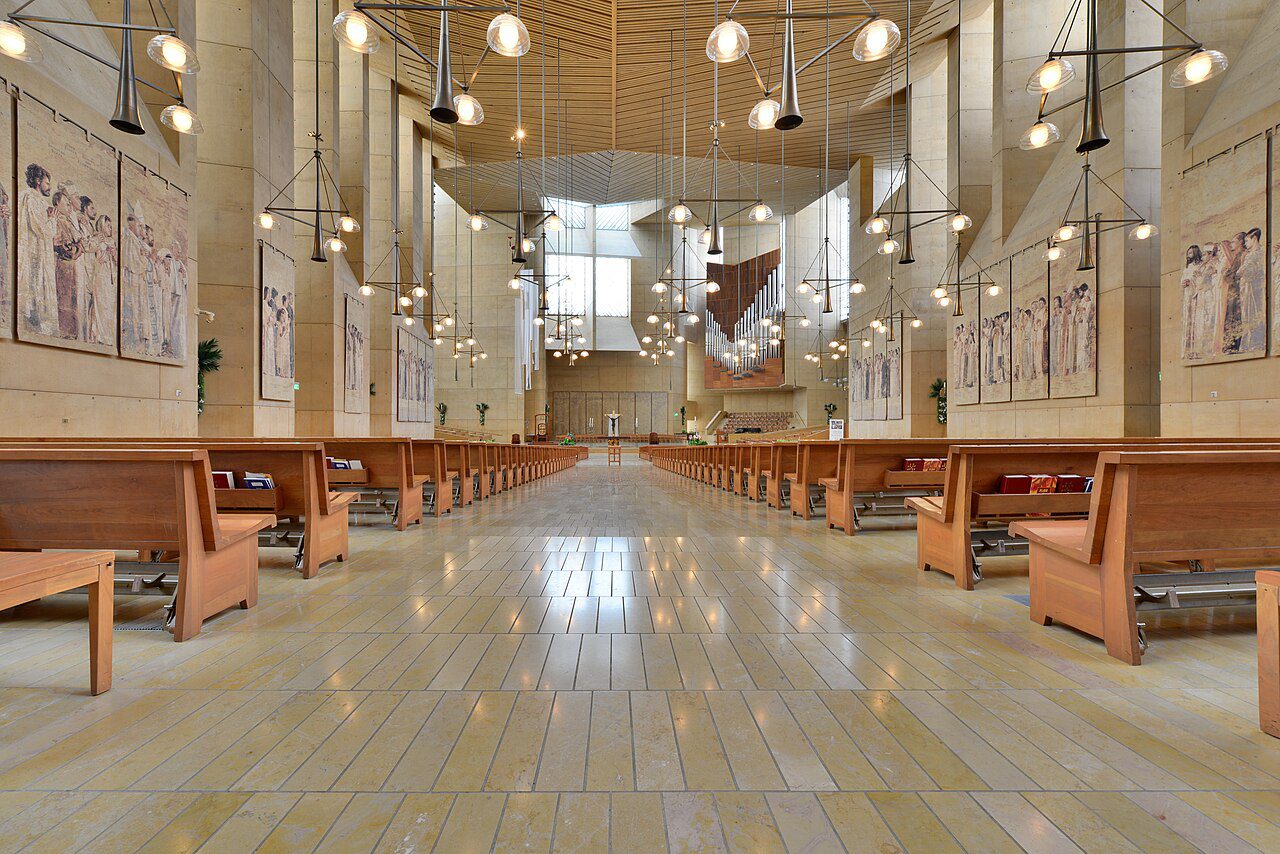
According to initial estimates from the archdiocese’s engineers and contractors, saving the old structure would have cost a minimum of $18–20 million. Such funds were unavailable, so on July 22, 1996, the search for a new cathedral site began. The Cathedral Advisory Board met with design architect Professor José Rafael Moneo. They reviewed eight potential sites, six of which were in Los Angeles. The board members eventually settled on a 5.6-acre parcel near Temple Street, Grand Avenue, Hill Street, and the Hollywood Freeway. The site was a parking lot owned by Los Angeles County at the time. The archdiocese successfully purchased it for $10.85 million on December 23, 1996.
Every year on September 4, the Feast of Our Lady of the Angels is celebrated, commemorating the city’s founding in 1781 under the name “El Pueblo de nuestra Señora, Reina de los Angeles” (The Town of Our Lady, Queen of the Angels). Cardinal Roger Mahony, the spiritual leader of the world’s largest Catholic archdiocese, announced the move of the old cathedral to the new site and a change of name. An official groundbreaking ceremony took place on September 21, 1997, and construction began in October 1998. The foundation was laid in May 1999, and on September 2, 2002, the Cathedral of Our Lady of the Angels in Los Angeles was officially consecrated and opened.
This location seems perfectly suited for a cathedral. The site is on an elevated part of downtown Los Angeles, on what was once Bunker Hill. The cathedral is seen by millions of people each year as they travel on the bustling Hollywood Freeway. It’s a landmark for everyone.
The Cathedral of Our Lady of the Angels in Los Angeles is strategically located between the city’s civic and cultural centers, serving as a unifying force for the community.

Architectural Highlights
Historically, cathedrals often took centuries to build. The Cathedral of Our Lady of the Angels was constructed in just three years. This 11-story building is the first Roman Catholic cathedral erected in the western United States. The project, designed by Spanish architect José Rafael Moneo, successfully created a dynamic and modern cathedral with an aura of both mystery and grandeur.
A key goal for the new cathedral was to reflect the diversity of the people it served. The architect was tasked with avoiding traditional medieval European designs. José Moneo’s design became a fresh and vibrant expression of the Catholic community of 21st-century Los Angeles. He envisioned the Hollywood Freeway as a “river of transport” and a connection between people. He sought to create a public space that offered exactly what people seek in a church. His vision is evident in the following architectural features:
- “Buffer spaces”: plazas, stairs, and colonnades that gently transition people from the urban chaos of the city to the peacefulness of the church.
- The entrance is located on the south side, not the central facade, which makes the entry experience feel less formal.
- Worshipers enter the cathedral through massive bronze doors, a creation of sculptor Robert Graham. These doors are adorned with a modern statue of Our Lady of the Angels.
- A unique architectural feature is the 15-foot concrete cross-lantern. The alabaster windows are protected by glass and are illuminated at night. The cross is visible from a distance, serving as a symbol and guiding light for those seeking to join the cathedral.
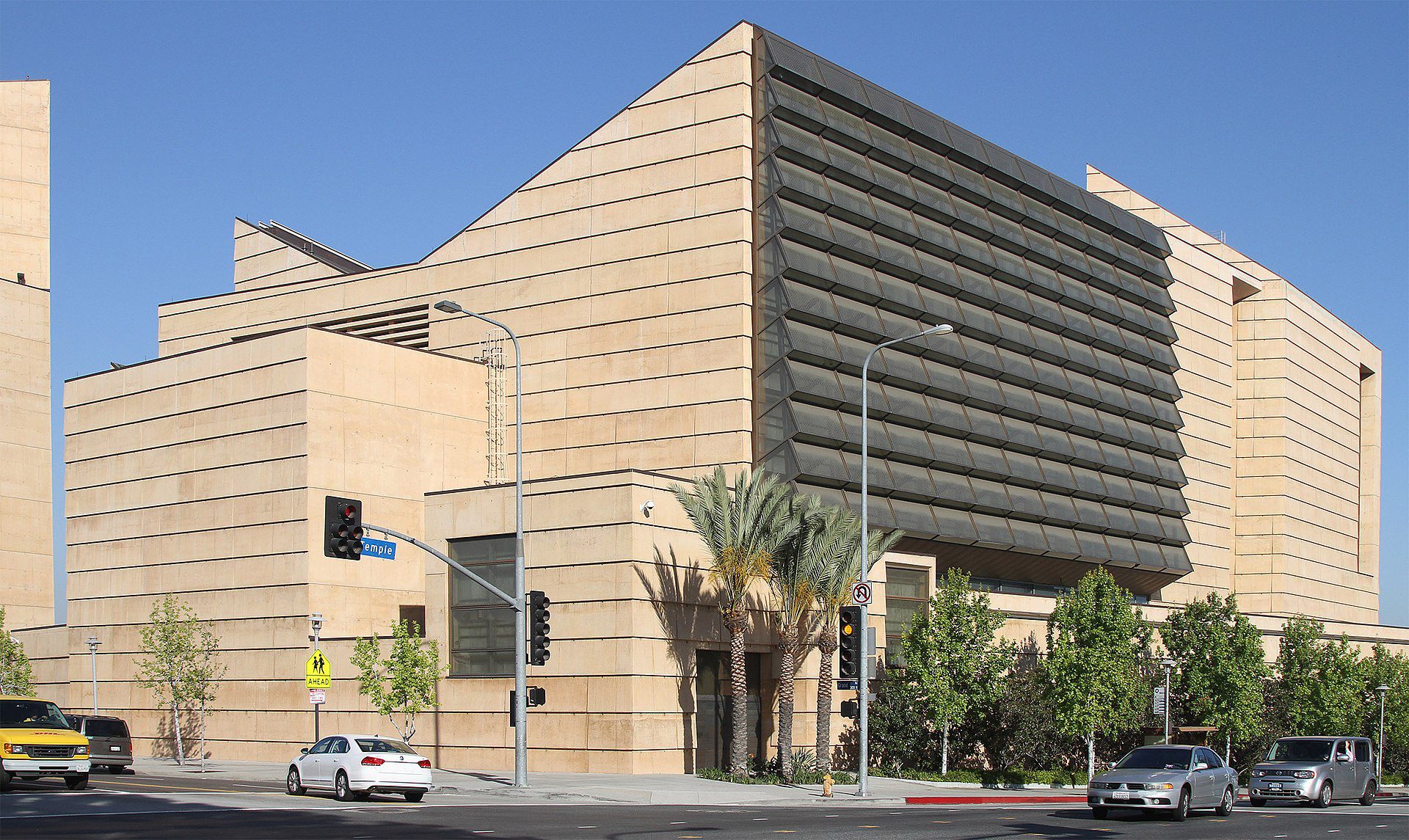
- The building was constructed from architectural concrete, with a color reminiscent of the sun-baked walls of ancient California missions. This pays homage to local architectural traditions and ensures the structure’s longevity.
- Learning from its predecessor’s fate, the cathedral stands on 198 base isolators. This allows the structure to move up to 27 inches during an earthquake up to an 8.0 magnitude, providing crucial seismic protection.
- The geometry of the structure is highly complex, as none of the concrete forms could deviate from the specified parameters by more than 1/16 of an inch. This showcases the incredible level of engineering and architectural precision involved.
A Modern Architectural Masterpiece
The Cathedral of Our Lady of the Angels is more than just a place of worship—it’s a one-of-a-kind masterpiece of modern architecture. Its design seamlessly blends innovative solutions with a deep respect for tradition and the local environment.