

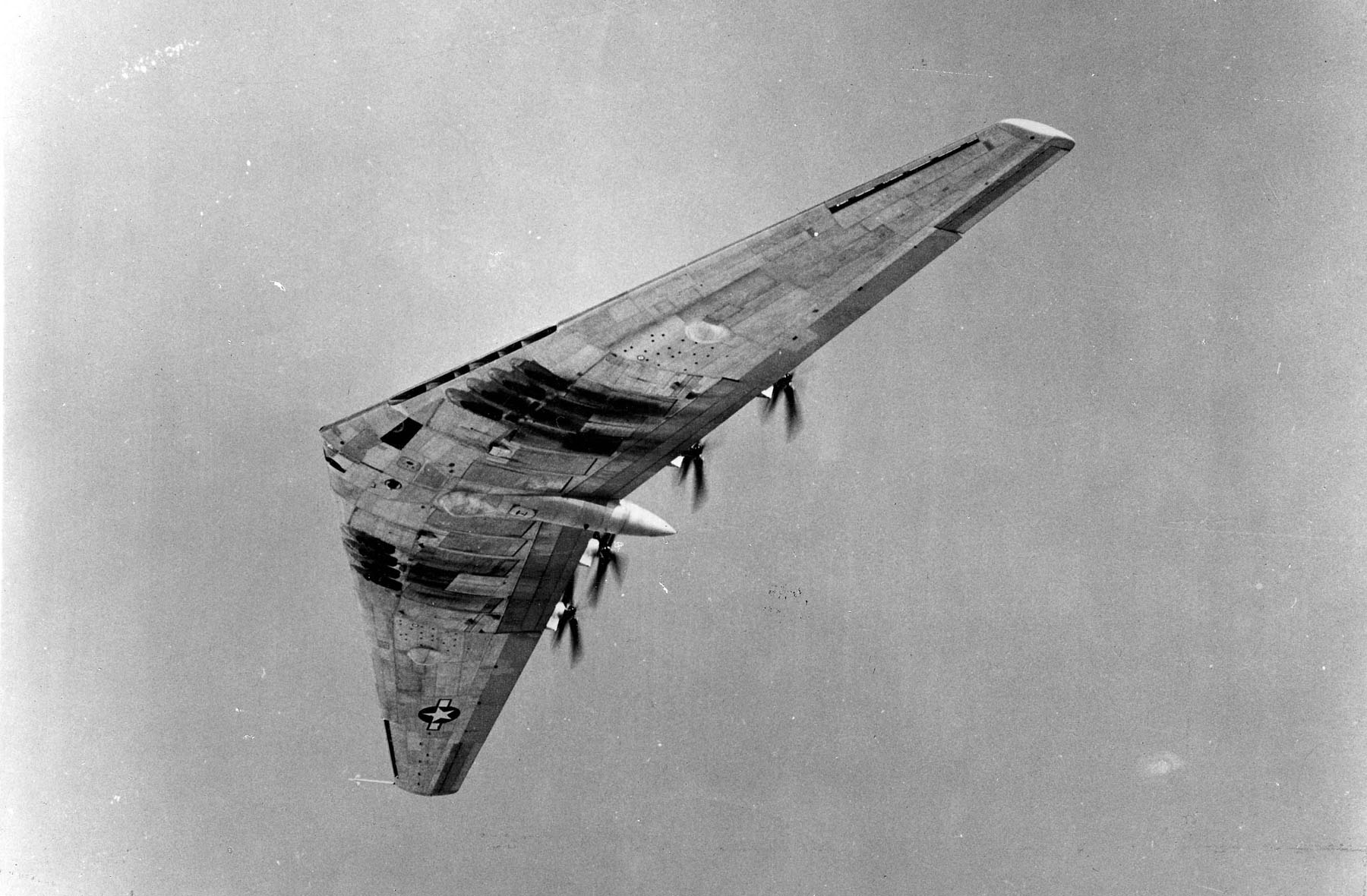
Over a long and brilliant career, Jack Northrop created a series of exceptional aircraft. He was ahead of his time and was at the forefront of three revolutions in aviation technology. La-future will tell the story of John “Jack” Knudsen Northrop, the American aviation industrialist, designer, and founder of Northrop Corporation.
Obsession with Purity of Lines
John “Jack” Knudsen Northrop was born in Newark, New Jersey, and grew up in Santa Barbara, California, where aviation companies were just beginning to emerge. At the age of 16, he watched the assembly of a homebuilt aircraft. Even then, Jack Northrop envisioned perfect and efficient planes, but the technology and propulsion systems were not yet available. The young man was convinced he could design a much better aircraft model, especially since he had experience working in his father’s construction business.
Jack worked as an architectural draftsman at the Loughead Aircraft Manufacturing Company. Allan and Malcolm Loughead, who later changed their surname to Lockheed, met Jack Northrop. He was assigned to work on the F-1 biplane, a twin-engine flying boat designed for 10 passengers. He designed wings 74 feet wide and helped design the hull and tail unit. He also participated in the construction. Despite the fact that the young man did not have a higher education, his mathematical and drafting abilities were impressive. Jack Northrop said:
“Nature did not create birds with a vertical fin. Why should we build airplanes differently?”
The Army and the Return
After the start of World War I, Jack Northrop was drafted into the U.S. Army. He served six months in the Aviation Section of the U.S. Signal Corps until the Loughead brothers petitioned for his return to work in the private sector. Jack Northrop developed the Loughead S-1, a tiny sports biplane with a durable, streamlined fuselage made of molded plywood. The S-1 was a pleasure to fly, but it could not compete in the market with cheaper models.
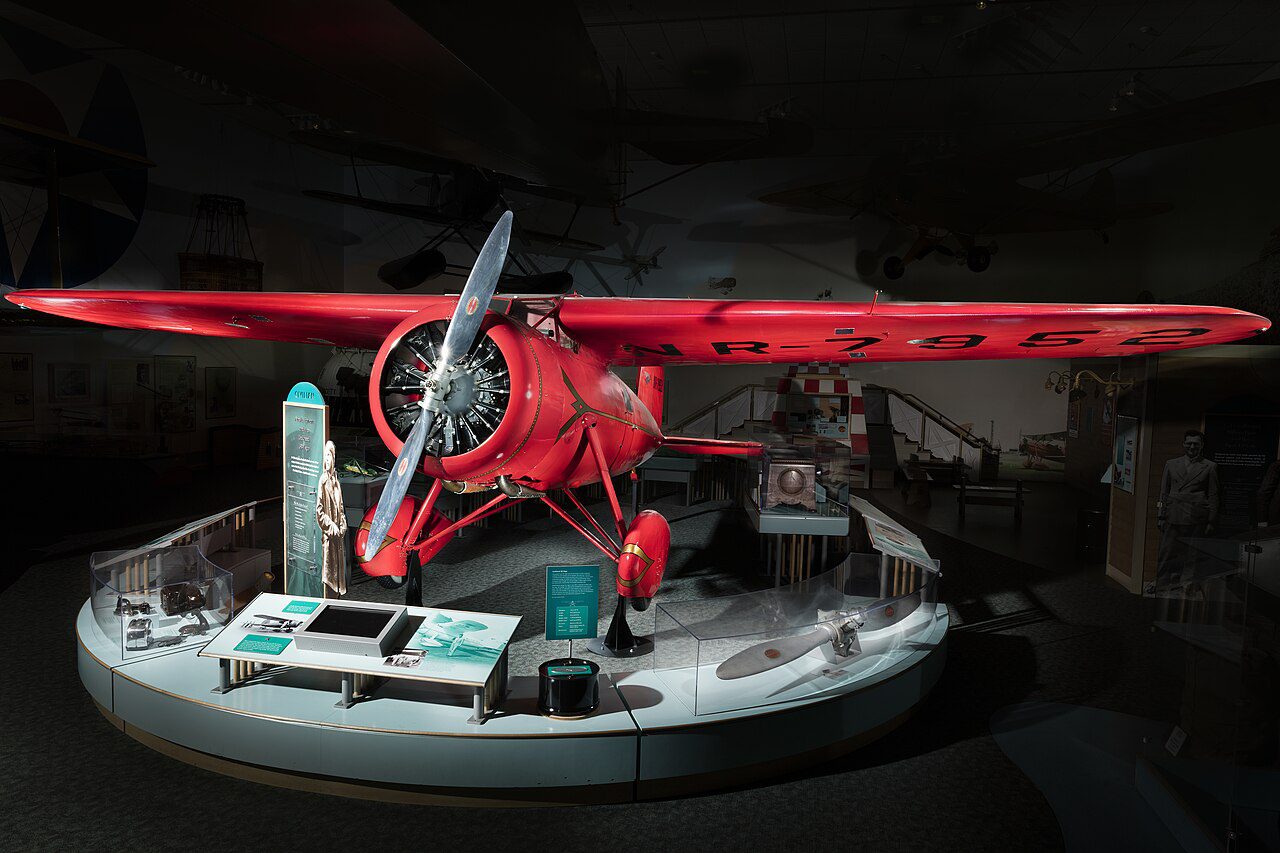
By 1923, the aircraft designer joined the Douglas Aircraft Company. During this time, he participated in the design of the Douglas World Cruiser, holding the position of design engineer. In 1926, Jack Northrop peacefully parted ways with Douglas. In 1927, he joined the Loughead brothers and their Lockheed Aircraft Company. Jack Northrop worked as chief engineer on the Lockheed Vega.
Northrop Corporation
In 1929, Jack Northrop ventured into independent activity. Initially, he founded the Avion Corporation. It was a time of great ambitions but harsh circumstances. The Great Depression dictated its terms, and just a year later, in 1930, Northrop was forced to sell his first creation to the giant United Aircraft and Transport Corporation. However, this did not stop the aircraft designer but only strengthened his resolve.
A real breakthrough occurred in 1932. Having received strategic support from another aviation genius—Donald Douglas (founder of Douglas Aircraft)—Jack opened the new Northrop Corporation in El Segundo, California. This is where the planes that changed the face of civil aviation in the 1930s were born:
- Northrop Gamma — a high-speed mail plane that impressed with its aerodynamics;
- Northrop Delta — a successful passenger monoplane that became a symbol of reliability.
The history of the corporation was full of corporate intrigue. By 1939, the company in El Segundo had become a subsidiary of Douglas Aircraft. But Jack Northrop did not want to be number two. Desiring complete creative freedom, he took a risk again. Together with co-founder Moye Stephens, he found a new location in Hawthorne, California. There, the third—and this time completely independent—Northrop Corporation was founded. This place became the forge where America’s most secret aircraft would later be developed.
Inventions
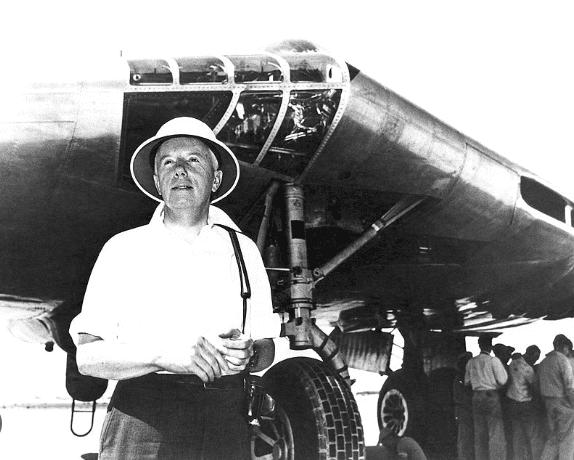
The inventor and aircraft designer Jack Northrop received more than 30 patents during his career, and his ingenuity was not limited to airplanes and aeronautics. In 1944, he became interested in the development of prosthetics for people with disabilities. At that time, these were primitive and inconvenient products.
Another interesting invention is a lightweight anchor used by yachtsmen, as well as a hill-holder attachment for automobiles. The list of inventions also includes a technique for the welded fabrication of magnesium alloy structures based on a helium-shielded arc.
Program Closure
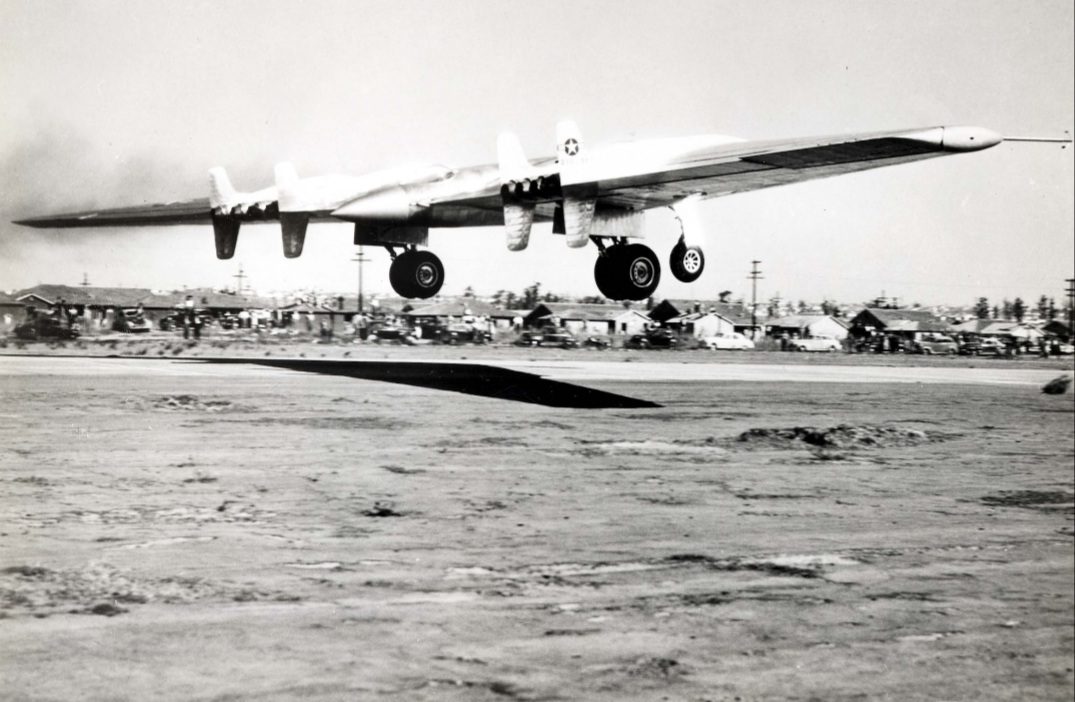
Jack Northrop’s ambitious dream faced the harsh political reality of the Cold War. In 1949, after the closure of the YB-49 program, by personal order of Air Force Secretary Stuart Symington — the finished “Flying Wing” prototypes were towed onto the Hawthorne plant’s runway for public destruction. In front of the designers and engineers who had dedicated decades to developing the aerodynamically perfect form, workers with gas cutters began to dismember the futuristic hulls. This was not a simple disposal of obsolete equipment—it was an act of demonstrative termination of an innovative path that forced Northrop himself, whose health was already undermined, to leave the aviation industry forever with a deep sense of injustice.
The emotional shock was amplified by the fact that the evidence of the concept’s viability was being destroyed along with the metal. There is a version that the order for the immediate turning of the aircraft into scrap was intended to erase any possibility of restoring the project, as Symington pressured Northrop to merge with the Convair company. Jack Northrop watched this process from his office window, seeing unique machines that were forty years ahead of their time turn into piles of mangled aluminum. Only three decades later, a few months before his death, he was secretly shown a model of the future B-2 Spirit, which became a late and bitter vindication of his vision: the “Wing” was indeed the future that was taken from him on that fateful day at the scrapyard.
Northrop Grumman Legacy
Jack Northrop’s legacy is not just a memory of the past, but the foundation of global security. Northrop Grumman turned into a technological giant as a result of the merger of Northrop Corporation with Grumman in 1994. The company’s modern activities are focused on the concept of digital design, where planes first fly in simulations for years before the first rivet is driven into a real fuselage.
Key Projects and Innovations
| Project | Category | Status | Why is this important? |
| B-21 Raider | Strategic Aviation | Active serial production. First units transferred to the US Air Force. | The world’s most advanced stealth bomber (“6th generation”). Main deterrent tool. |
| Sentinel (LGM-35A) | Nuclear Triad | Stage of testing engines and control systems. | Replacement for the aging Minuteman III missiles. New basis of the US ground-based nuclear shield. |
| MQ-4C Triton | Unmanned Systems | Full Operational Capability (FOC); fleet expansion. | High-altitude maritime reconnaissance. Capable of patrolling vast ocean spaces 24/7. |
| Cygnus (NG-22/23) | Space | Regular missions to the ISS. | Cargo ship providing life support for the space station and conducting scientific experiments. |
| IBCS | Air / Missile Defense | Implementation in the US and Polish armies. | System that combines all radars and missiles (Patriot, F-35, etc.) into a single intelligent network. |
| F/A-XX | Aviation of the Future | Concept development for the US Navy. | Next-generation carrier-based fighter that will replace the F/A-18 Super Hornet. |
Awards
The name of the Northrop Corporation founder stands in the same rank as the greatest inventors in human history. During his life and posthumously, Jack Northrop received a series of awards highlighting his status as a visionary: the “Spirit of St. Louis” medal (1947), a place in the International Aerospace Hall of Fame (1972), recognition in the National Aviation Hall of Fame (1974), and posthumous induction into the National Inventors Hall of Fame (2003).
Northrop’s legacy went far beyond blueprints. His passion for “tailless” flights so impressed the scientific world that the Quetzalcoatlus northropi — a giant prehistoric pterosaur—was named after the designer. Jack Northrop Field (Hawthorne Municipal Airport) remains a living reminder of the man who made this city the heart of American aircraft manufacturing.
List of sources:
- https://www.airandspaceforces.com/article/1005northrop/
- https://aircraftdesigners.blogspot.com/2007/05/jack-northrop-1895-1981.html
- https://www.nae.edu/215785/JOHN-KNUDSEN-NORTHROP-18951981
- https://sandiegoairandspace.org/hall-of-fame/honoree/john-k.-northrop
- https://theaviationist.com/2025/04/18/flying-wings-of-jack-northrop-part-one/