

This is not just a hotel. It is a crossroads where history, art, scandal, and the cultural myths that have shaped Hollywood for nearly a century intersect. Built in 1929 as a luxury residential building, the property transformed into a cult destination hosting the most famous actors, musicians, directors, and artists. Its French château-style architecture, strict privacy policy, and countless stories filled with both glamour and darker undertones make Chateau Marmont one of Hollywood’s most recognizable symbols. Read more on la-future.
History of the Hotel
In 1926, attorney Fred Horowitz selected a site at the intersection of Sunset Boulevard and Marmont Lane to construct an elite residential complex designed to withstand earthquakes—an ambitious and rare requirement for the time. Architects Arnold A. Weitzman and William Douglas Lee created a seven-story structure in the Norman Revival style, inspired by the castles of France’s Loire Valley, specifically the Château d’Amboise. The building was distinguished by massive walls, turrets, mansard roofs, Gothic elements, and a reinforced concrete frame for enhanced seismic resistance. On February 1, 1929, the complex opened as an apartment house, but just two years later, it was sold due to the economic fallout of the Great Depression.
In 1931, Albert E. Smith purchased the property and converted it into a hotel. Walls were removed from units, kitchens and living rooms were installed, and the spaces were furnished with pieces bought at auctions. During this period, Chateau Marmont became a sanctuary for Hollywood stars like Jean Harlow, Clark Gable, and Greta Garbo, as well as European artists fleeing Nazism and participants in the 1932 Olympics.
Between 1940 and 1960, under the ownership of Erwin Brettauer, the hotel became a hub of freedom and openness. Duke Ellington, Nicholas Ray, James Dean, and other artists chose it for its atmosphere of creative independence. By the 1960s and 70s, Chateau Marmont had evolved into a cult space for the counterculture. It was here that Jim Morrison fell from a balcony and miraculously survived, Errol Flynn destroyed furniture in a bungalow, and Led Zeppelin threw unprecedented parties. However, by the mid-1970s, the building had fallen into disrepair and was sold.
New owners Raymond Sarlot and Karl Kantarjian purchased the hotel for $1.1 million and launched a massive restoration. They revived original materials, repaired the facade and wooden interiors, and secured historic landmark status in 1976. throughout the 1980s, Chateau Marmont regained its reputation as a quiet, stylish haven for celebrities.
In 1990, André Balazs acquired the hotel. His priority was to modernize while preserving authenticity. He oversaw the upgrading of engineering systems, the creation of a proper lobby, the renovation of rooms and bungalows, and the opening of a restaurant in 2003. It was under his management that Chateau Marmont became a symbol of exclusivity and absolute privacy. Balazs implemented a strict non-disclosure policy, and some rooms do not even have official numbers. During the 2020 pandemic, the hotel faced several scandals regarding staff layoffs and an attempt to convert into a private club. Following loud protests and lawsuits, the administration officially recognized the union in 2022 and signed a collective bargaining agreement later that year.
Architecture of Chateau Marmont
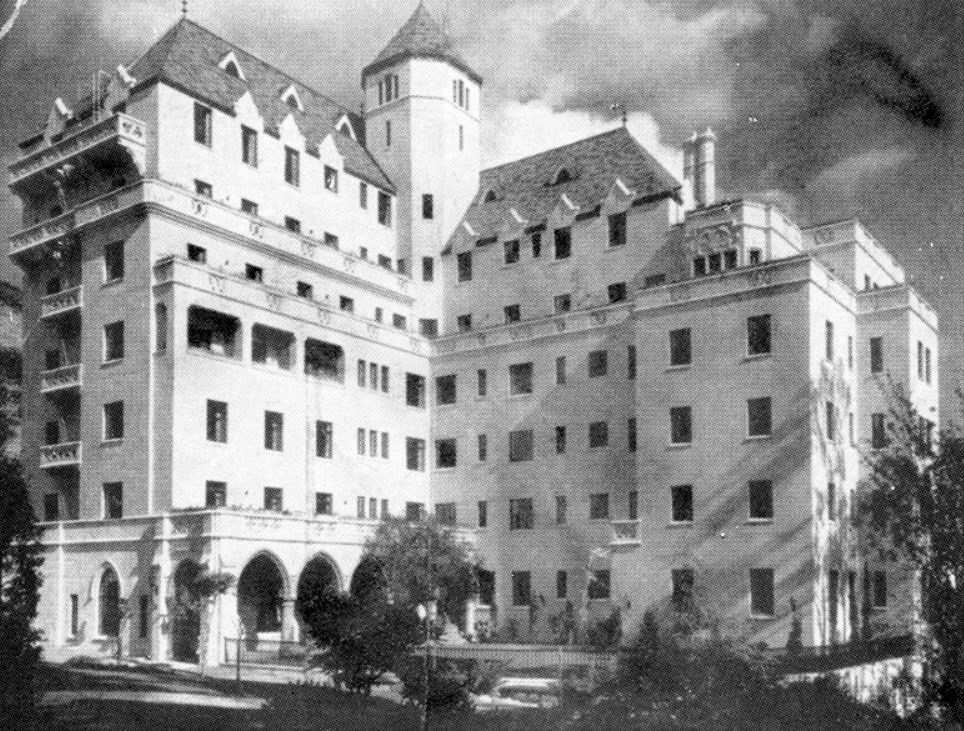
The hotel is built in a style inspired by medieval French castles. The architects sought to transport the spirit of an old European “château” to the backdrop of American Hollywood. The building’s exterior is L-shaped, featuring towers, steep roofs, spires, and narrow windows, giving the structure the appearance of a small fortified manor. Both the interior and facade were designed with “Gothic romance” in mind, featuring arches, tiled or slate roofs, and details reminiscent of medieval European castles.
At the time of construction, technical solutions were applied to ensure superior durability, classified as “steel and concrete construction (class AA).” The building was advertised as “earthquake-proof” and fireproof. History later confirmed the effectiveness of these decisions: Chateau Marmont has withstood a series of strong earthquakes that struck the region without suffering serious structural damage.
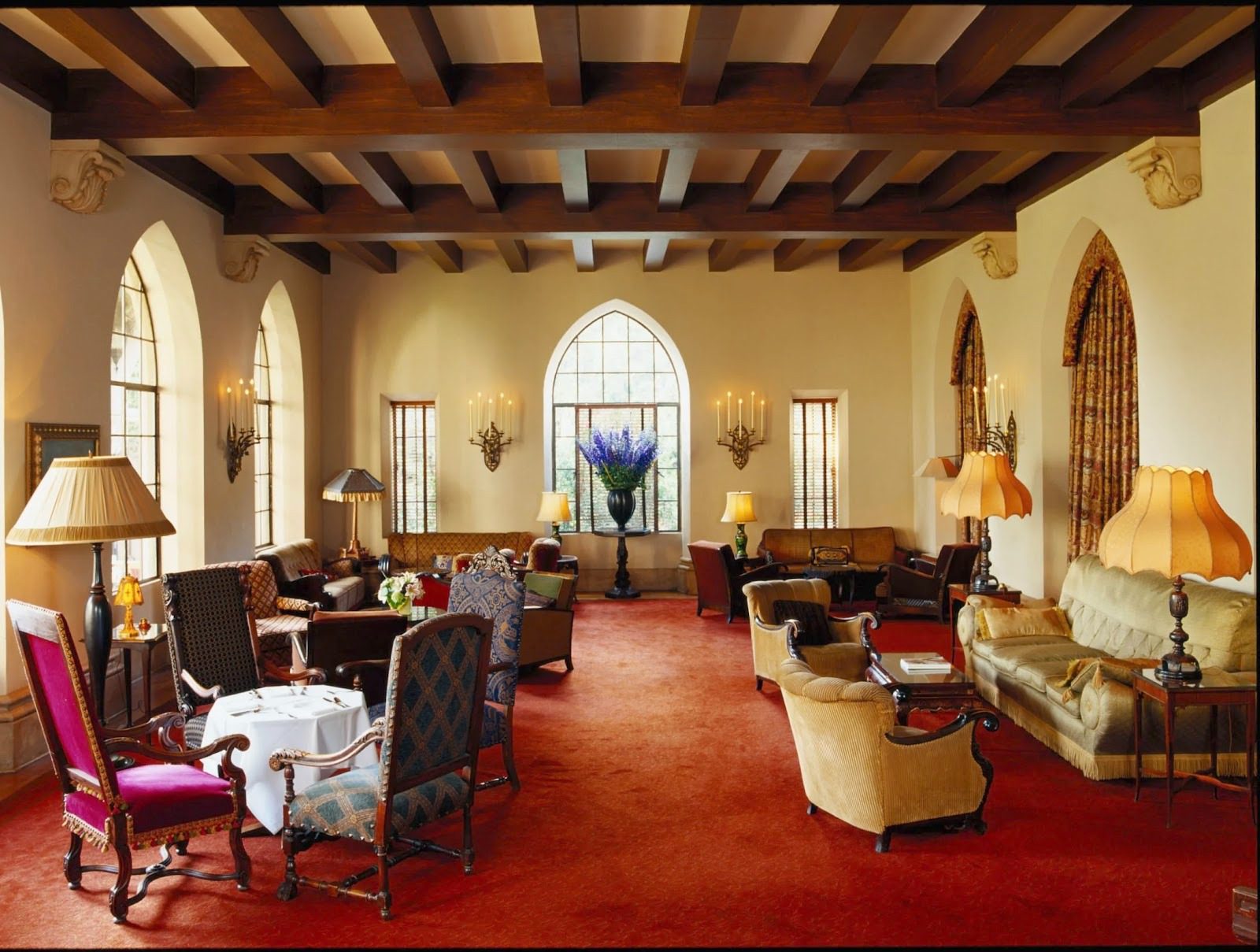
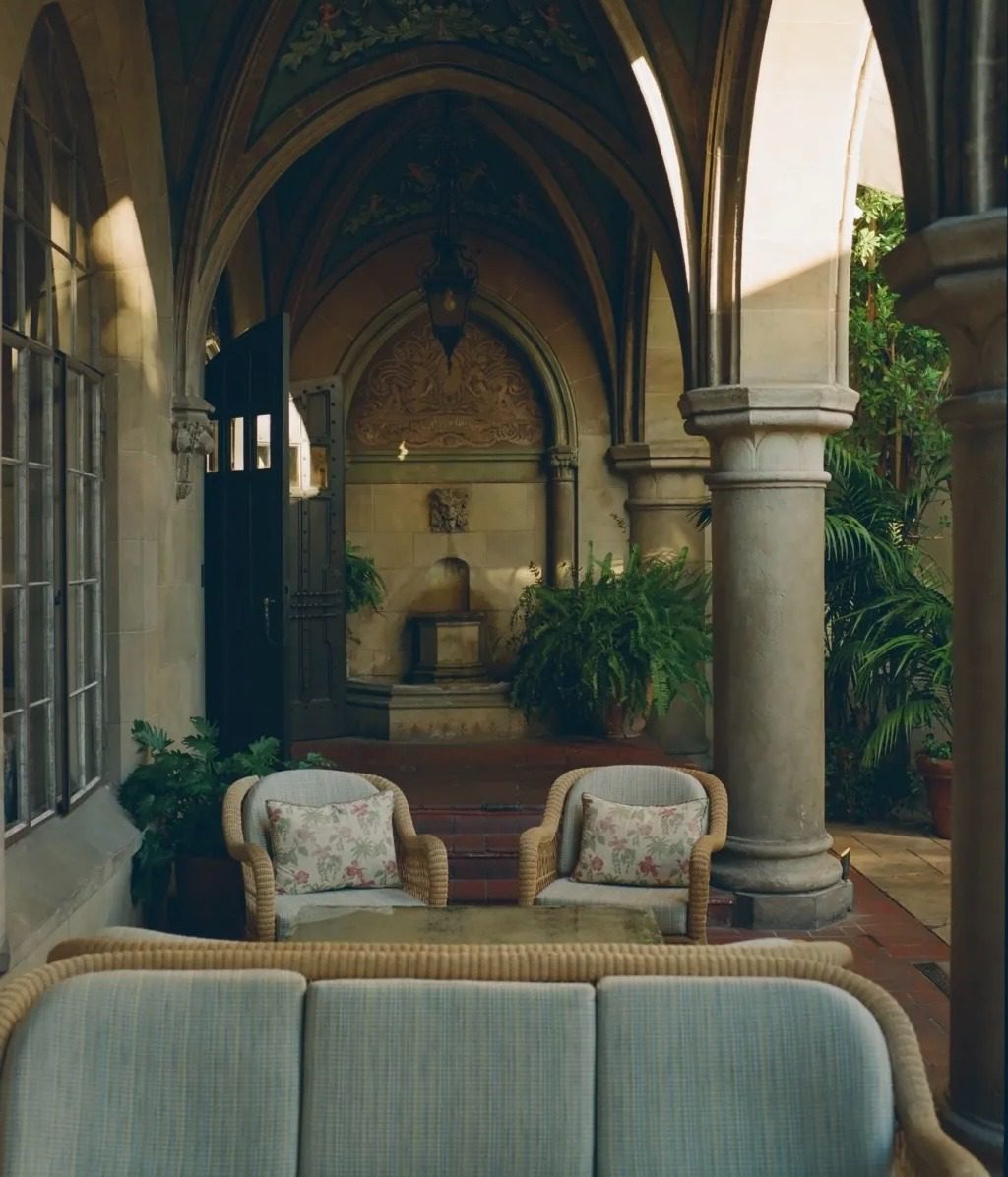
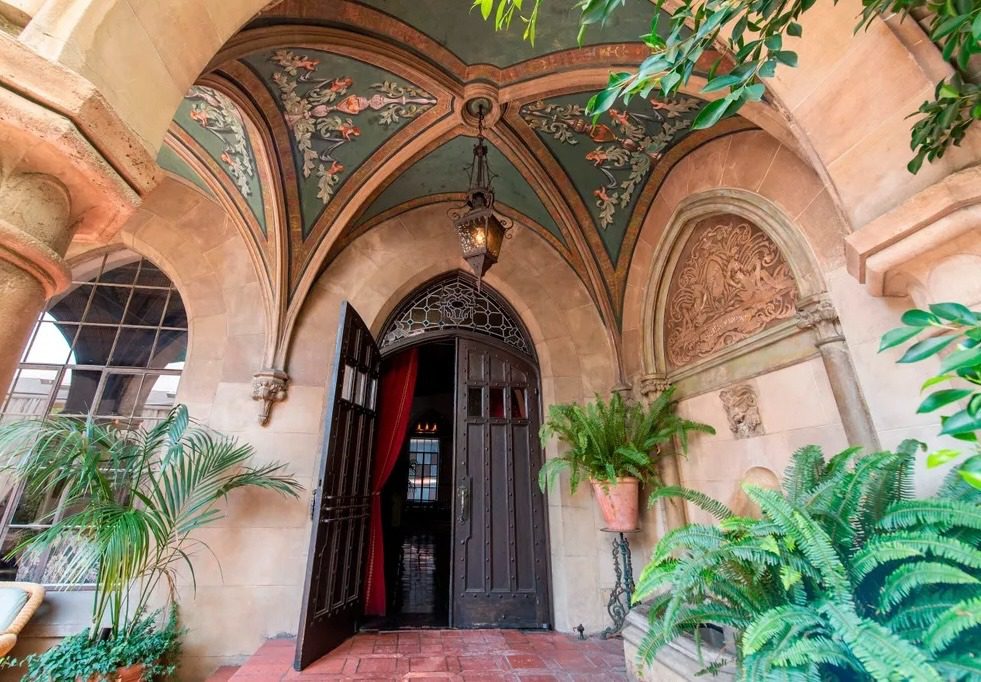
The interiors preserve the atmosphere of Old Hollywood. Classic elements are used throughout—fireplaces, refined wood paneling, decorative plaster, and stylish molding. The garden areas, inner courtyard, and bungalows lend the property a sense of privacy and romance characteristic of medieval estates. The layout includes spacious suites and rooms of various sizes, each featuring elements of vintage European decor: fireplaces, wooden beams, decorative ceiling paintings, and exquisite stucco ornamentation. The interiors harmoniously blend antique style with modern amenities. The architecture of Chateau Marmont defines not only its appearance but also creates a unique atmosphere: romantic, mysterious, and exclusive.
Accommodations and Amenities
The hotel offers guests 63 rooms in various categories. These include classic rooms, spacious multi-bedroom suites with fireplaces, as well as separate cottages and bungalows with private terraces. The bungalows and cottages are the most popular choices. They are favored by actors and high-profile personalities because these units are situated apart from the main building, feature private entrances, and ensure complete isolation from prying eyes.
Guests also have access to a wide range of services. A restaurant serving California cuisine, the iconic lobby bar, a 24-hour fitness center, a pool set in a secluded garden, and a private library create the atmosphere of an exclusive club where every detail has been thoughtfully considered.
Scandals and Tragic Tales
The hotel is known not only for its comfort and atmosphere; over its nearly century-long history, it has been the site of scandalous, tragic, and legendary events. It was here, in Bungalow No. 3, that actor John Belushi died of an overdose in 1982. In 2004, photographer Helmut Newton was killed in a car accident at the hotel’s entrance.
The list of scandalous moments involving celebrities is extensive. Led Zeppelin’s John Bonham rode a motorcycle right through the lobby. Lindsay Lohan left an unpaid bill totaling $46,000. Britney Spears experienced one of her most public breakdowns here in 2008. Musician James Taylor made no secret of his drug use in his room during his stay. Meanwhile, stories of romantic dramas involving Jean Harlow and Clark Gable, and later Johnny Depp and Kate Moss, have become part of the hotel’s lore, passed down from generation to generation.
The hotel frequently appears in films, TV series, and music videos, as its recognizable interiors and mysterious ambiance perfectly reflect the spirit of Hollywood—simultaneously glamorous and tragic. Among the most famous projects are Sofia Coppola’s Somewhere (2010), La La Land (2016), A Star Is Born (2018), The Doors (1991), and Myra Breckinridge (1970).
Chateau Marmont is more than a hotel. It is a place where the history of Hollywood is palpable in every corridor, where legends walk alongside guests, and where privacy is always paramount. Its architecture, atmosphere, scandals, creative highs, and cultural significance have made it a unique phenomenon in the global hospitality industry.