

The building has become an integral part of the city skyline and a landmark on the Downtown map. Thanks to its bold design, technical innovations, and prestigious architectural awards, the Tower has maintained its status as a cultural and engineering beacon for over three decades. Read more at la-future.
Construction History
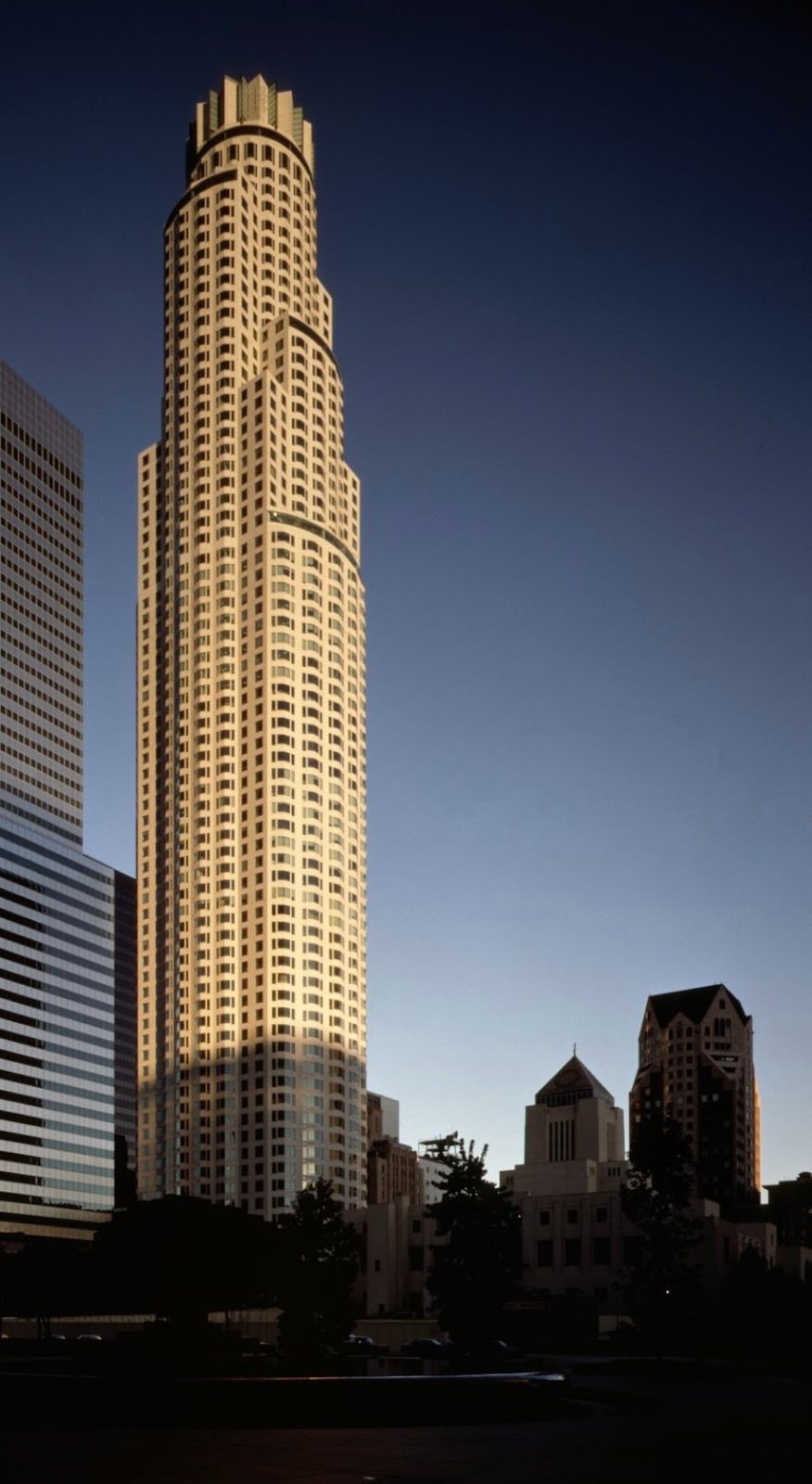
Construction of the skyscraper began in 1987 and was completed in 1989. The $350 million project was executed in a timeframe considered remarkably short for a structure of this magnitude. Originally known as the Library Tower, it served as the centerpiece of a massive redevelopment project for the Los Angeles Central Library. Following two devastating fires in 1986, the city sold air rights to developers to raise funds for the library’s reconstruction. It was this innovative approach that gave rise to one of the tallest skyscrapers in the U.S.
Over the years, the Tower has changed names several times, reflecting its primary tenants:
- Library Tower (1989–1996) – the first official name, highlighting its connection to the Los Angeles Central Library;
- First Interstate Bank World Center (1996–2003) – adopted following major lease agreements with First Interstate Bank;
- U.S. Bank Tower (since 2003) – the current name, established after U.S. Bancorp became a primary tenant.
The building has been mentioned in several official U.S. government reports and statements regarding terrorist plots. The 9/11 Commission Report (June 16, 2004) revealed that the original Al-Qaeda plan envisioned hijacking ten planes, one of which was to be crashed into the Library Tower. In 2005, officials disclosed a thwarted 2002 plot to attack the building. In his 2007 State of the Union address, George W. Bush stated that American intelligence had disrupted a plan by the group Jemaah Islamiyah, which intended to hijack an airplane using Asian accomplices and “shoe bombs” to target the tower.
The Architects
The project’s lead designer was the renowned architect Henry N. Cobb, a partner at Pei Cobb Freed & Partners – one of the most respected architectural firms in the U.S. The work was carried out in collaboration with Ellerbe Becket, which handled part of the technical documentation.
The project brought together a diverse team of experts:
- CBM Engineers – structural engineering;
- Turner Construction Company – general contractor;
- Otis Elevator Company – elevator system design and installation;
- Maguire Partners – project developer;
- Lawrence Halprin & Associates – landscape architecture;
- Gensler – interior design for select spaces.
This broad interdisciplinary collaboration resulted in a building that seamlessly blends aesthetics, engineering complexity, and functionality.
Architectural Style
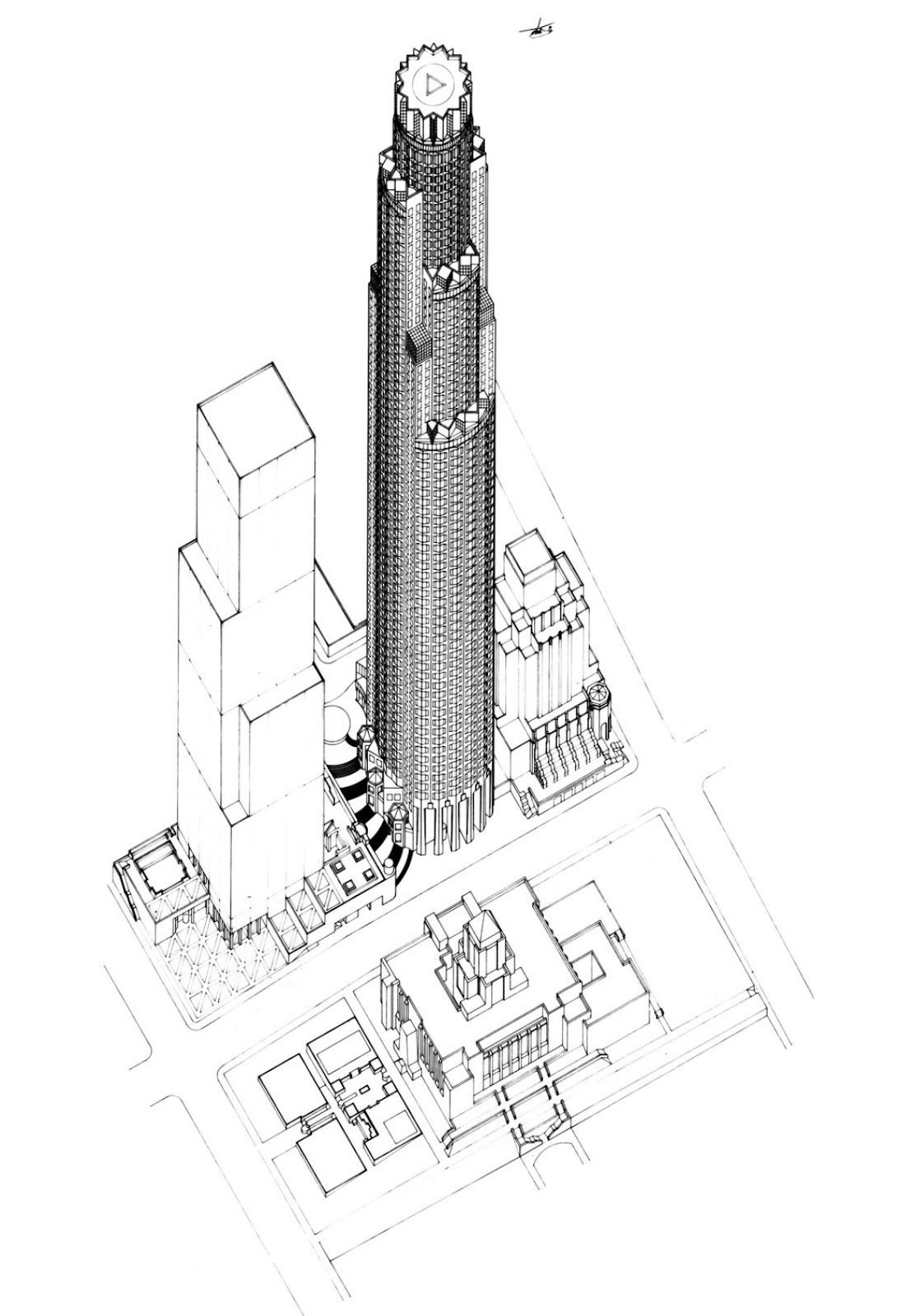
The U.S. Bank Tower is a prime example of Postmodernism – a movement that, in the 1980s, actively countered the strict geometry of the International Style. Postmodernism sought to make architecture more humane, visually engaging, and open to interpretation.
Key stylistic elements include:
- a combination of cylindrical and rectangular volumes that create a unique silhouette;
- four progressive setbacks – terraced indentations that reduce the structure’s mass as it rises;
- a glass “crown” that tops the skyscraper and illuminates the night sky;
- reflective glass panels and light-colored metal, forming a modern facade with a strong vertical rhythm.
The skyscraper is constructed using the “tube-in-tube” principle – a system combining a strong inner core with an outer perimeter of columns.
Notable structural features include:
- the inner core houses elevators, utility shafts, and stairwells;
- the outer “tube” frame consists of steel or concrete columns set away from the facade;
- floor slabs span between the core and the outer perimeter, transferring horizontal loads.
The facade is executed as a curtain wall system: glass modules are attached to the frame and do not bear structural loads. This allowed the architects to create fluid lines and expressive verticals without compromising stability.
Standing at 1,018 feet (310 meters), the building’s highest usable floor is at 968 feet (295 meters). It comprises 75 floors, primarily dedicated to commercial offices. Since its opening in 1989, the Tower has served mainly as a business hub for major corporations. The top is adorned with a large glass crown that glows at night, serving as a beacon for downtown Los Angeles. In 2004, two massive “U.S. Bank” logos, standing 75 feet (23 meters) tall, were installed on the crown. This sparked debate regarding the impact of advertising on the building’s aesthetics – much like the previous First Interstate Bank logos displayed from 1990 to 1998.
The building has received numerous professional accolades:
- Outstanding Project Award (1989);
- Beautification Award (1990).
OUE Skyspace
In 2014, new owners OUE Ltd. announced a massive transformation of the upper floors into the OUE Skyspace tourist complex.
The project included observation decks on the 69th and 70th floors, the 71Above restaurant on the 71st, a renovated lobby, a separate tourist entrance, and an exhibition zone on the 54th floor. The Skyslide – a transparent glass slide suspended on the building’s exterior at over 1,000 feet – became particularly popular. Skyspace opened in 2016, with tickets starting at $25 for the observation deck and an extra $8 for the slide. However, the venue shuttered in March 2020 due to the COVID-19 pandemic. In 2021, plans were announced to dismantle the slide following complaints from office tenants disturbed by the tourist traffic.
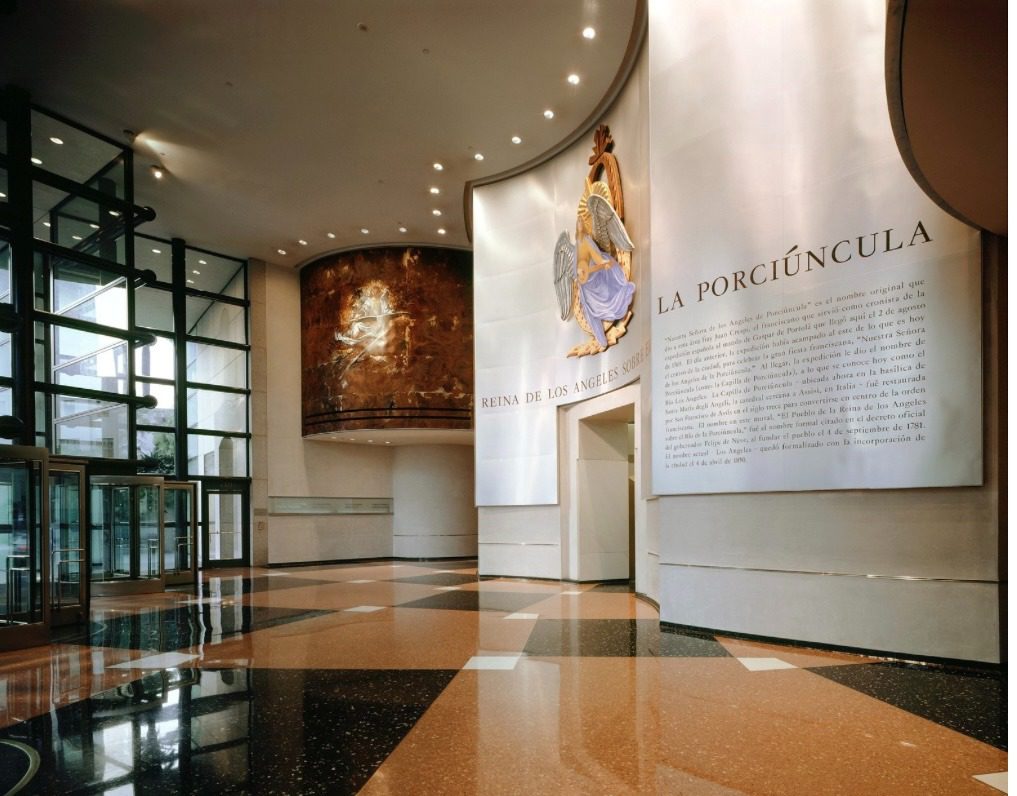
In 2017, the skyscraper underwent a major modernization worth $50 million. Architects Jeffrey Beers and A+I Architecture led the renovation.
The project completely revamped the main entrance and lobby, created a tenant-focused market and bar, and opened “The Vista” event space on the 54th floor. A rooftop observation deck was also opened (though later closed), and the elevator system was modernized. This renovation made the building more contemporary, accessible, and attractive to a new generation of tenants.
In 2021, the building was acquired by Silverstein Properties, who brought ambitious modernization plans. At the time, the skyscraper had an occupancy rate of only 78%, and the new owner aimed to boost its appeal to the business community.
Key changes include:
- tourist floors are being converted back into office or communal spaces;
- the 71Above restaurant will remain in operation;
- the 54th floor is becoming a modern coworking lounge with workspaces, event capabilities, a catering kitchen, and relaxation zones. Thus, the building is returning to its original function – a place for work and business growth.
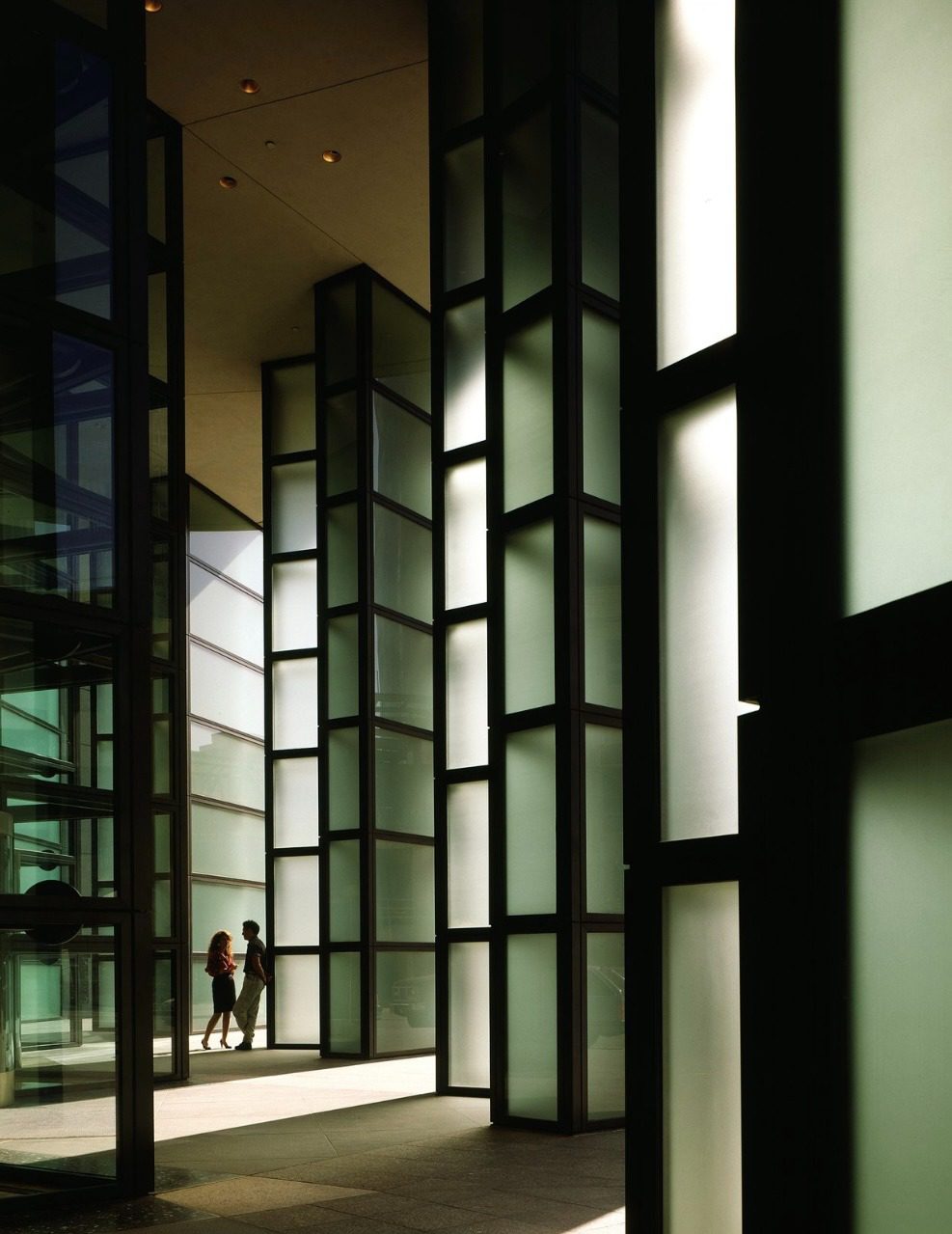
The U.S. Bank Tower is not just a skyscraper; it is a testament to how architecture can shape a city’s cultural and visual identity. Since opening in 1989, it has stood as a symbol of the Postmodernist approach, engineering audacity, and Los Angeles’ urban development. Through its blend of expressive design, technological complexity, and multi-layered history, the building remains relevant today, continuing to define the image of the 21st-century city.