

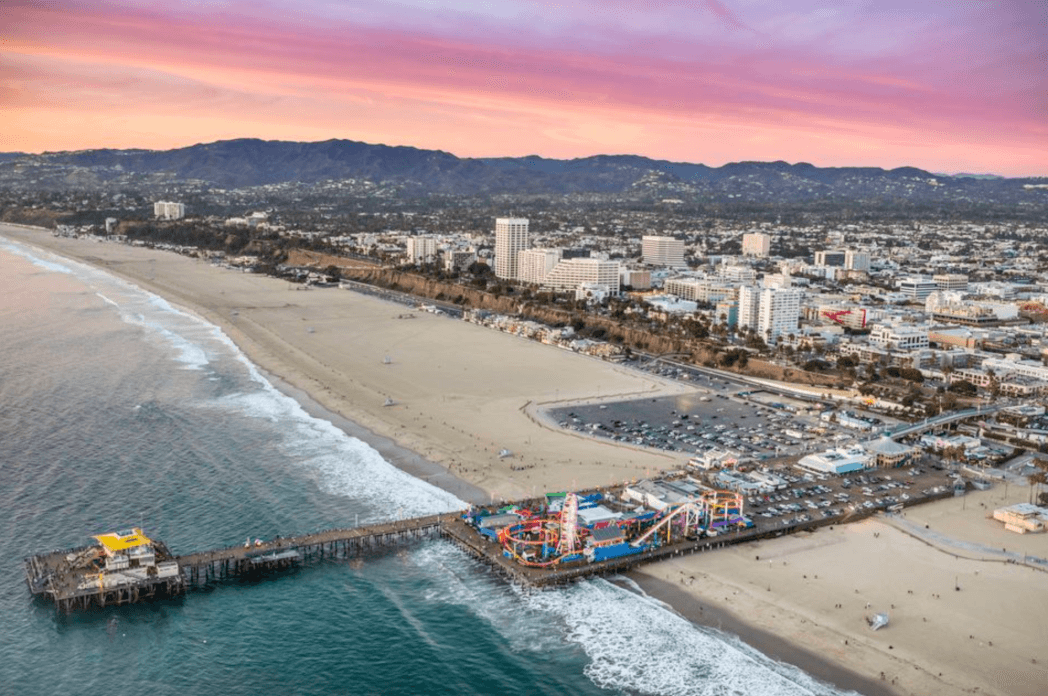
The tech scene in Los Angeles is thriving. The areas with a high concentration of digital technology and startups are known as Silicon Beach. It is a dynamic technology hub located in the western part of Los Angeles, adjacent to the Pacific coast. This region has become a magnet for large technology giants and startups. You can find more about this at la-future.
History
The familiar modern-day Silicon Beach is part of the Santa Clara Valley, located southeast of San Francisco in Northern California. Before the 1980s, the Santa Clara Valley was associated with fruit orchards. Cherries, pears, apricots, and French plums were grown in this area. At that time, plums were harvested, dried, and processed into prunes, then exported. Approximately 30% of the world’s prune supply was provided by the Santa Clara Valley. This atmosphere did not last long.
First, railroad magnate Leland Stanford, who lived in the Santa Clara Valley, founded Stanford University in 1891. Then, the university’s president, David Starr Jordan, invested in the development of the triode (audion) vacuum tube by Lee de Forest. This invention signaled the beginning of a revolution in electrical products. This device was used in many applications: from radio receivers to calculators. Thus, the first seeds of the future technology hub were sown.
Some historians link the beginning of Silicon Beach to Frederick Terman, another prominent figure at Stanford University. Even after the university’s electronics department was transformed into a world-class research center, students still left the valley after graduation. At that point, Frederick Terman invested money in businesses based in the valley. This was intended to encourage talented young people to stay and find employment. One such company was Hewlett-Packard. It was initially a startup founded in a garage by Stanford University graduates, William Hewlett and David Packard.
Expansion of the Valley’s Tech Scene
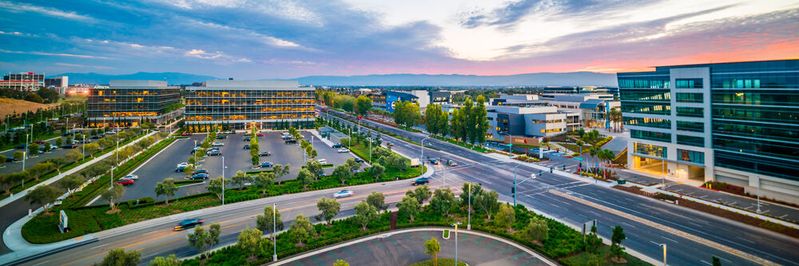
By the 1940s, the Santa Clara Valley had a significant number of engineering and aerospace companies. They provided important services during wartime: manufacturing radio receivers, radar, and electrical equipment for the U.S. government. The real prosperity of Silicon Beach occurred in the 1950s. This period is associated with the creation of an industrial park and the emergence of the electrical engineering company Shockley Semiconductor.
In 1951, Frederick Terman founded the Stanford Industrial Park, which was the result of a fruitful collaboration between Stanford University and the city of Palo Alto. 660 acres of land were allocated for offices, research laboratories, and manufacturing facilities. In 1955, with the creation of the Shockley Semiconductor Laboratory (founded by William Shockley), a center of innovation called Silicon Beach was born. The founder took on the task of recruiting talented engineers (Gordon Moore and Robert Noyce). In 1957, eight members of William Shockley’s company (“the Traitorous Eight”) left the company, creating Fairchild Semiconductor. The talented engineers invented the integrated circuit, which was one of the most important technological inventions of the modern era. It was the beginning of the digital age, the era of modern computing.
Period of Rise
In the late 1950s, the U.S. and the former USSR began a race. Each side sought to be the first to develop the technology to send a person to the Moon. Subsequently, military and statesman, the 34th U.S. President Dwight D. Eisenhower, created the National Aeronautics and Space Administration (NASA) and the Defense Advanced Research Projects Agency (DARPA). In the early 1960s, DARPA funded more than 70% of all computer technology research in the U.S.
Many companies took advantage of this opportunity. Soon, Silicon Beach became a center for the development of U.S. ballistic missiles and technologies used in military satellites, microelectronics, and tracking systems. For example, Fairchild Semiconductor successfully used military contracts, transforming from a small electrical engineering company into a technology giant.
The 1960s are considered the period of Silicon Beach’s heyday. The Cold War and the space race increased the demand for integrated circuits. Approximately 60% of the integrated circuits for NASA were purchased from the Santa Clara Valley. In 1964, NASA acquired 100,000 integrated circuits from Fairchild Semiconductor. By 1965, 40 companies were operating in the Stanford Industrial Park, employing over 11,400 people.
Interestingly, the term “Silicon Beach” was coined in 1971 by journalist Don Hoefler. He was writing an article for Electronic News magazine at the time. After that, the name became commonplace and widely used for the Santa Clara Valley area.

Key Companies
Silicon Beach is one of the most important technology hubs in the world. This term applies to the coastal strip that stretches from Los Angeles International Airport to the Santa Monica Mountains in the north. If the term is viewed more broadly, it also covers other areas where technology companies are concentrated. For businesses and potential investors, the proximity to the airport is an additional advantage.
Silicon Beach is home to more than 500 technology companies, including well-known global brands and startups. This is where Snapchat and Tinder were born and became global phenomena. In addition, many other technology giants have leveraged the innovative atmosphere and talented workforce by opening offices here. Here are some of the most famous of these companies:
- The Google office holds the first place on this list as one of the key players. The company’s office is located in the Venice Beach area. This also includes the office of the popular video hosting service YouTube, which is owned by Google.
- The web portal and search engine Yahoo!
- The BuzzFeed office. This is a media company known for its viral content.
- The Facebook office. The presence of this social network is felt in the region.
- The Salesforce office, a company that provides cloud solutions for businesses.
This list could be continued further, for example, the office of the online services provider AOL, Electronic Arts (EA), Roku, Sony, EdgeCast Networks, MySpace, Amazon, Apple Inc., Netflix, and many others.

Dynamics
In 2012, Silicon Beach was the third-largest technology hub in the world. This reputation is constantly confirmed by the continuous growth of investment and innovation. For example, in the first half of 2013, 94 startups in the region attracted more than $500 million in funding. This choice indicates a high level of trust and potential for Silicon Beach. In addition, 9 company acquisitions were made during this period.
In 2019, Margaret O’Mara’s book titled “The Code: Silicon Beach and the Remaking of America” was released. It is a true behind-the-scenes story of the people who built Silicon Beach and formed the big technology companies in America. Over almost five years of pioneering research, the author wrote a book that revealed much more about the history of the California valley.
Thus, Silicon Beach continues to develop. This place constantly attracts talent, investments, and new ideas. The dynamic technology hub is cementing its place on the world stage.