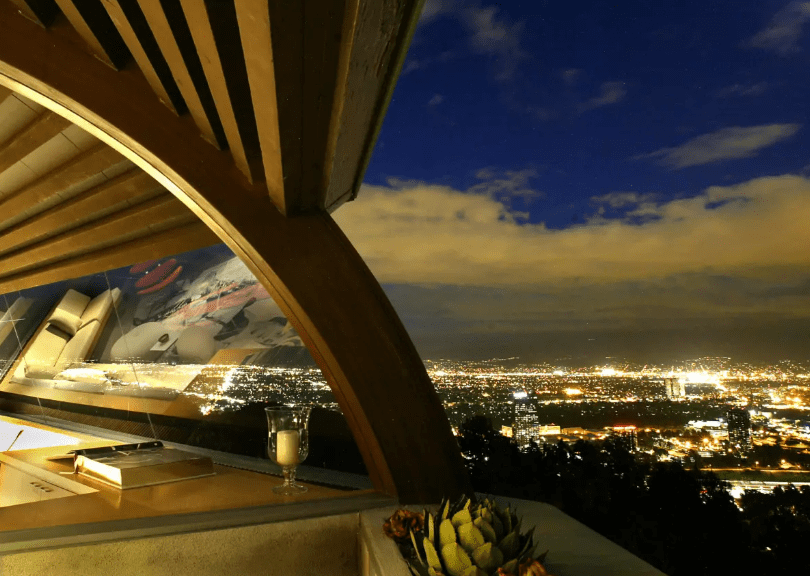

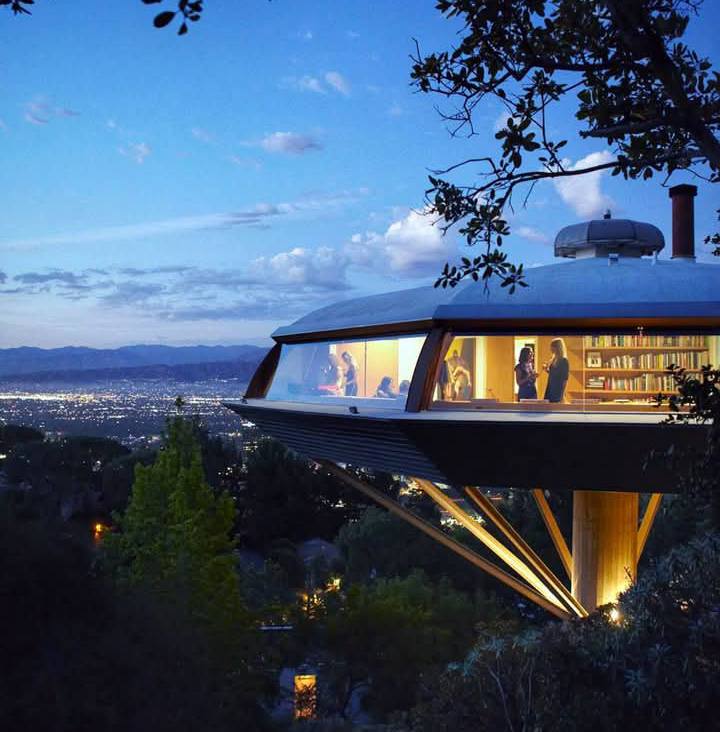
Even for those who aren’t architecture buffs, the Malin Residence, also known as the Chemosphere, is a familiar sight. This iconic octagon, perched atop a concrete column, stands 30 feet (7 meters) tall with a diameter of 5 feet (1.5 meters). From a distance, it looks like a flying saucer on a stick. To learn more about this modern masterpiece with its cult-classic modernist design, check out la-future.
The Story of the Malin Residence
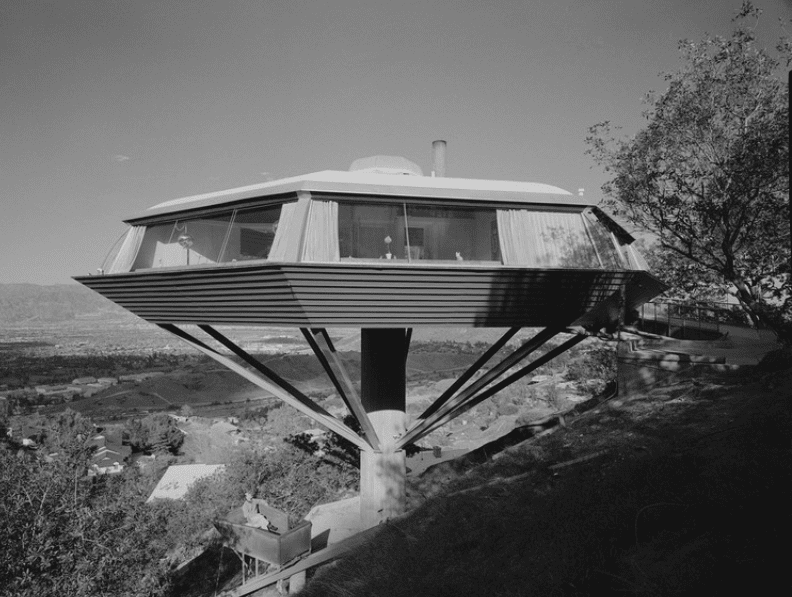
The Chemosphere is located at 7776 Torreyson Drive. It’s the brainchild of visionary architect John Lautner, who designed it for a young aerospace engineer named Leonard Malin.
Malin was given a steep, difficult-to-build lot by his father-in-law and had a modest budget of $30,000. It was a challenging task, but a brilliant design and sponsorship from Chem Seal made it possible to bring the vision to life. The company provided experimental coatings and was later honored with the building’s name. The total construction cost came to $140,000, with some of the expenses covered by a barter system with two companies: Southern California Gas Company and Chem Seal Corporation. Chem Seal provided the experimental coatings and resin for the building, and Malin paid the remaining $80,000 in cash.
The Chemosphere served as the Malin family residence, where Leonard and his wife raised their four children until 1972. The couple was forced to sell the house due to rising costs and a downturn in the aerospace industry.
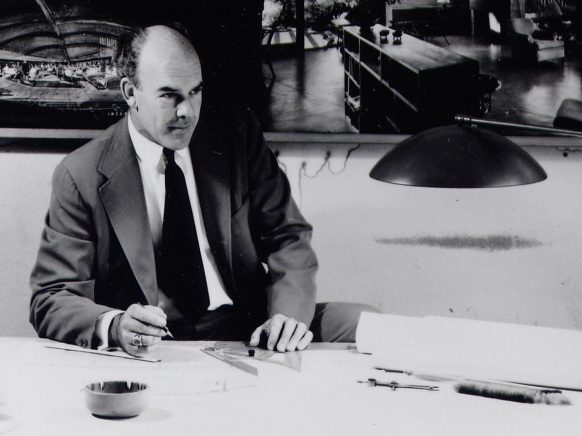
John Lautner
John Lautner is celebrated as one of the most important American architects of the 20th century. He was a pioneer whose ideas were not always understood at the time. Born in Marquette, Michigan, in 1911, he grew up surrounded by beautiful nature, which left a lasting impression on his work. Impressively, he gained his first construction experience at just 12 years old, helping his father build a chalet designed by his mother.
Lautner earned a degree in English from what is now Northern Michigan University. His only formal architecture course was a historical survey. Yet, his passion for architecture was undeniable. After reading a biography of Frank Lloyd Wright, he was so inspired that he applied for Wright’s Taliesin Fellowship, becoming one of its first apprentices, from 1933 to 1939. During this time, he embraced Wright’s philosophy of “organic architecture,” which emphasized harmony between humanity and nature.
By the late 1930s, Lautner had established his own practice in Los Angeles. Over his 55-year career, he made a significant mark on the architectural landscape of Southern California, designing more than 50 notable structures. He was never afraid to experiment, explore new ideas, or use unconventional materials. For example, the Southern California climate and light allowed him to incorporate wood, large glass panels, and other unique elements into his designs.
Many sources describe Lautner as an engineering genius who skillfully blended various angles and forms to create organic, futuristic masterpieces. He was also a pioneer in the use of concrete. One of his most famous works is the Malin Residence, or Chemosphere, built in 1960 in the Hollywood Hills.
In 1996, the John Lautner Foundation was established as a non-profit organization to celebrate, support, and protect the innovative architect’s legacy.
Building Features
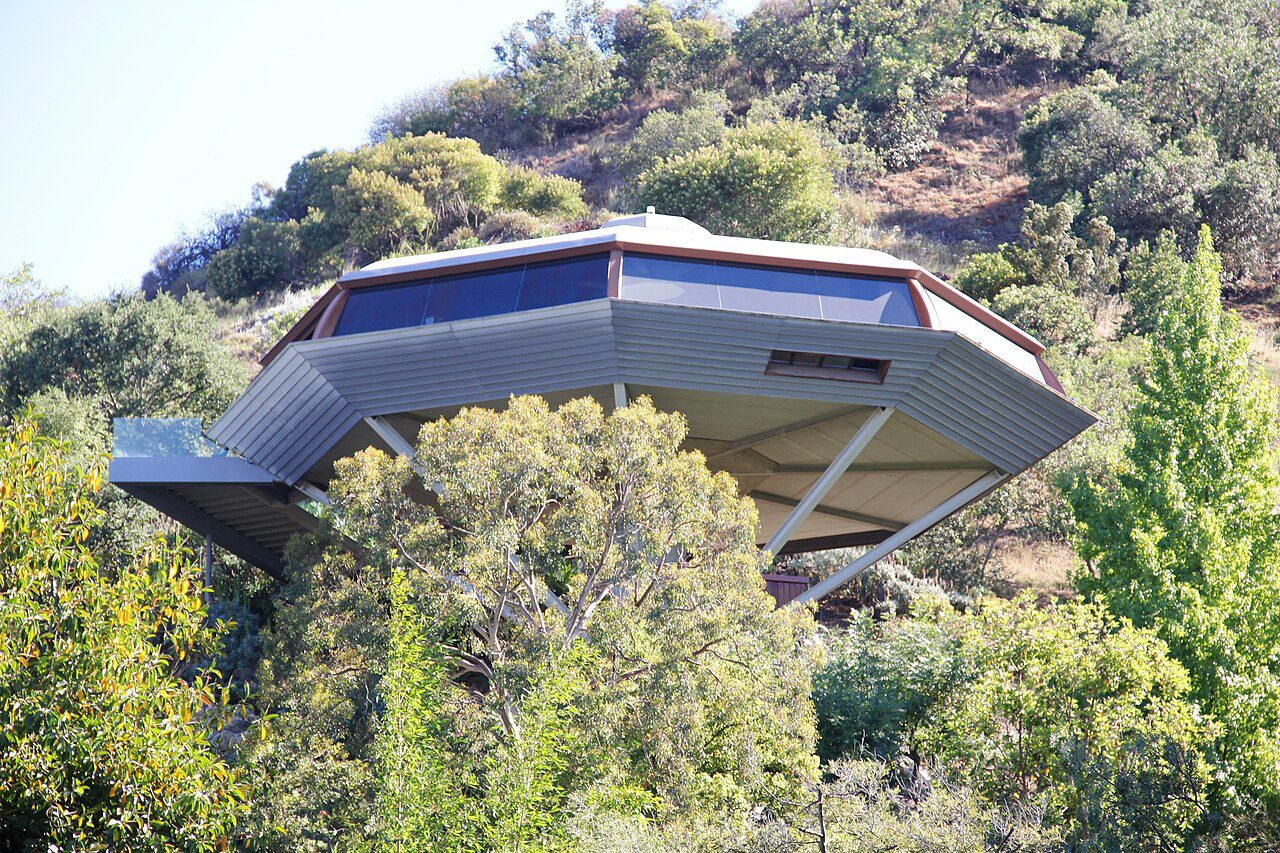
The house truly appears to be floating in the air, offering panoramic views of the San Fernando Valley. While the project initially met with skepticism, it eventually gained worldwide recognition. With the Chemosphere, John Lautner showcased his one-of-a-kind design and structural ingenuity. The house spans approximately 2,200 square feet (200 square meters), and its original interior was crafted by John Smith, the first African-American to be accepted into the National Society of Interior Designers.
Here are some of the key architectural features of the Chemosphere:
- Unusual Location and Construction: The house is built on a plot with a 45-degree slope, an idea other architects considered unbuildable. Lautner solved this problem by designing an octagon that rests on a single 30-foot (9-meter) concrete column. This solution was also more economically viable, proving far less expensive than traditional retaining walls.
- Sturdy Foundation: The column supporting the house is securely anchored into the ground, a feature that helps it withstand earthquakes and heavy rainfall.
- Materials: The architect used materials like steel and wood. The roof, for example, is a glued laminated timber beam structure, chosen for its durability in a seismically active zone.
- Panoramic Windows: Floor-to-ceiling windows line the entire perimeter of the house, providing maximum views of the surrounding landscape and enhancing its visual appeal.
- Interior Layout: The interior is divided into public and private zones. The public areas, which include the living room, kitchen, and dining room, face north. The private areas (four bedrooms and a bathroom) are located on the side facing the hillside.
- Access: A funicular from the parking area, located 30 meters below, provides access to the single-story building.
- Skylight: A circular skylight is built into the center of the octagonal ceiling, providing natural light to the core of the house.
To learn more about American architect John Lautner and his famous creation, the Chemosphere, check out the video below.
Subsequent Owners
Dr. Richard Kuhn became the next owner of the unusual house. In 1976, he was tragically stabbed to death during a robbery carried out by his lover and another man. Both were sentenced to life in prison, turning the Chemosphere into the site of a tragic event.
Afterward, the building was leased out and used for parties. As a result, the interior was damaged, and by 1997, it had fallen into severe disrepair.
In 1998, the house was purchased by German publisher and modern art collector Benedikt Taschen. He was traveling with his wife in 1997 when they saw the house. Although the couple found the building in poor condition, they immediately decided to buy it.
Taschen later noted that the space felt open and serene, reminding him of a mid-century Scandinavian style. He described it as an “eagle’s nest” where one feels safe. The new owners restored the house and enjoyed living in it. Benedikt Taschen enlisted restoration architect Frank Escher, wanting to preserve the original parts of the house. For Escher, the restoration project became a philosophical challenge. The Chemosphere restoration received an award from the Los Angeles Conservancy and was approved by the original tenant.
The only issue with the residence is its relatively high maintenance cost. For instance, utilities like television and internet are ten times more expensive than in any other building.
Cultural Impact
The Malin Residence, or Chemosphere, had more than just architectural influence. The building has appeared in various forms of media, solidifying its status as an iconic Hollywood landmark.
Viewers may recognize the building from “Charlie’s Angels” and an episode of “The Simpsons.” Interestingly, the standalone house was portrayed as a luxury apartment in the films. The house truly embodies the Southern California lifestyle.
In 2004, the Chemosphere was designated a Los Angeles Historic-Cultural Monument. The “Encyclopedia Britannica” has even called it the most modern house ever built. According to owner Benedikt Taschen, it’s impossible to get bored in such a house. The panoramic windows offer a view of the world. He added:
«It’s like a movie on a big screen. The picture is always changing.»