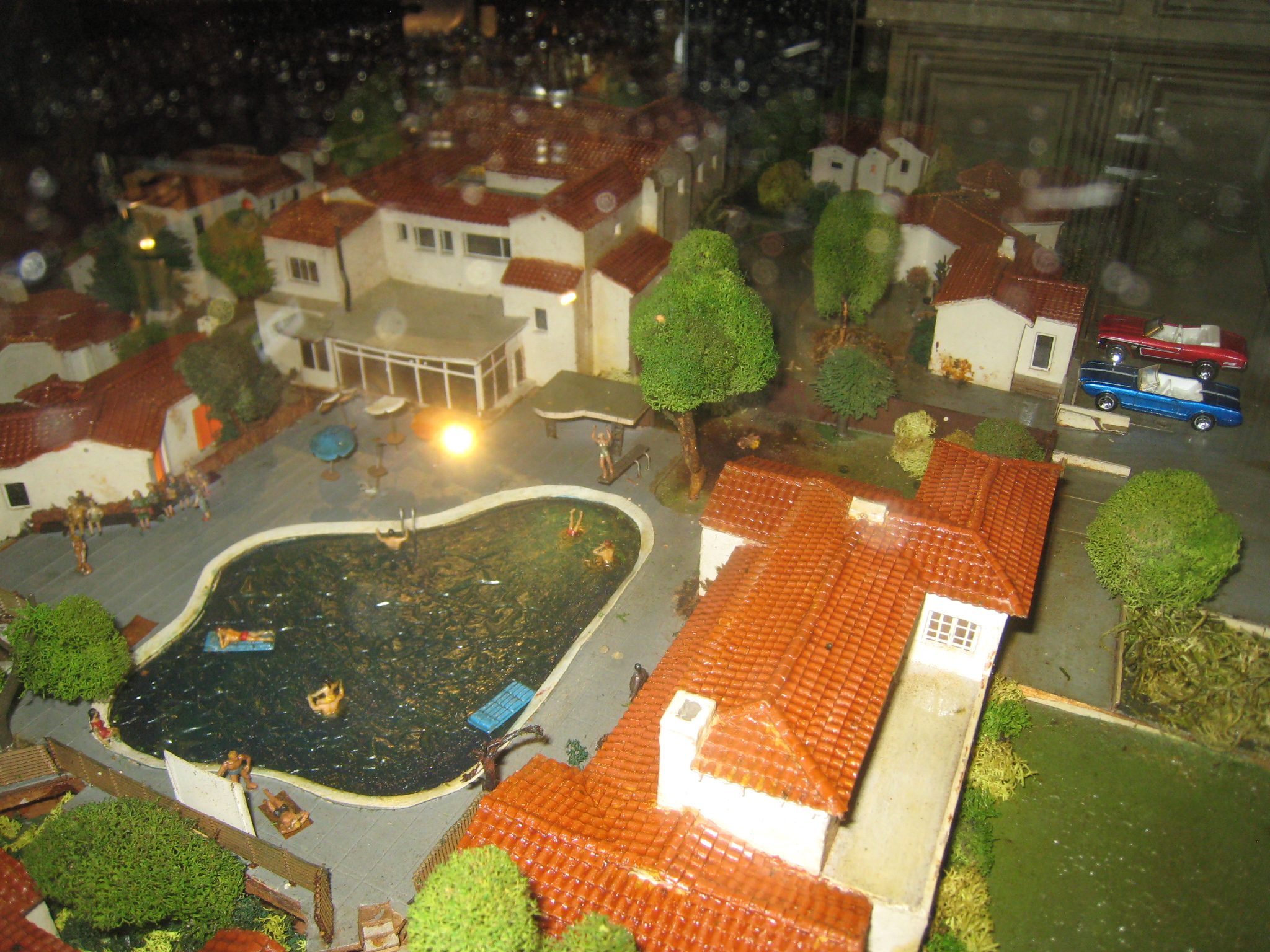

When Alla Nazimova opened this hotel on her luxurious Los Angeles estate, many called it frivolous and unrealistic. Descriptions varied, with some enchanted and others outraged, but one thing remained constant: the Garden of Allah Hotel left no one indifferent. Dive into its incredible rise, eventual decline, and demolition with LA Future.
A Lavish Estate
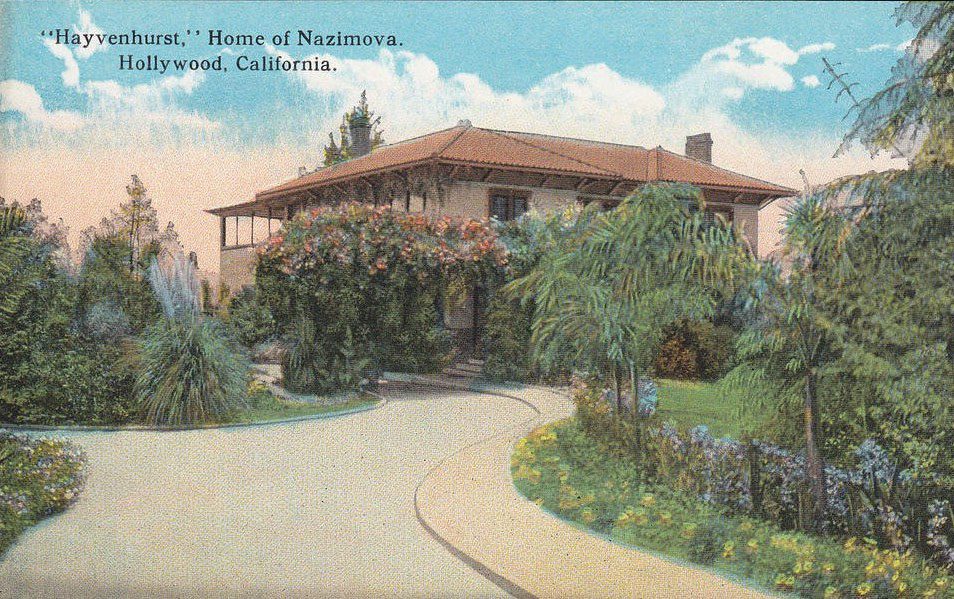
In 1913, developer William H. Hay built a private residence. While his name is rarely heard today, this Los Angeles developer was once a well-known figure who significantly shaped the landscape of West Hollywood. For instance, in 1905, Hay developed the Crescent Heights neighborhood. It’s worth noting that creative individuals are often inspired by love. By 1913, William Hay had divorced and remarried. This new chapter inspired him to build an estate on the then-unpaved Sunset Boulevard. This 2.5-acre property was named “Hayvenhurst.”
The couple personally managed the estate, which featured 12 rooms, 4 bathrooms, and exquisite Circassian walnut finishes. The Hays collected the walnut material themselves during a trip to the Philippines in 1912. Interestingly, the interior walls were covered with hand-painted canvas. Live-in servant quarters, located upstairs, were a rare luxury for the time. The garage was designed to accommodate two cars. The construction and landscaping costs totaled $30,000.
William and Katherine didn’t stay long in their lavish family estate. Around 1915, William Hay built a second mansion, which now houses the Directors Guild of America. Additionally, the developer acquired a large plot in the San Fernando Valley, transforming it into the upscale Encino neighborhood of Los Angeles.
So, what happened to Hayvenhurst? The house remained empty until the arrival of one of the era’s most famous and highly paid actresses.
Alla Nazimova
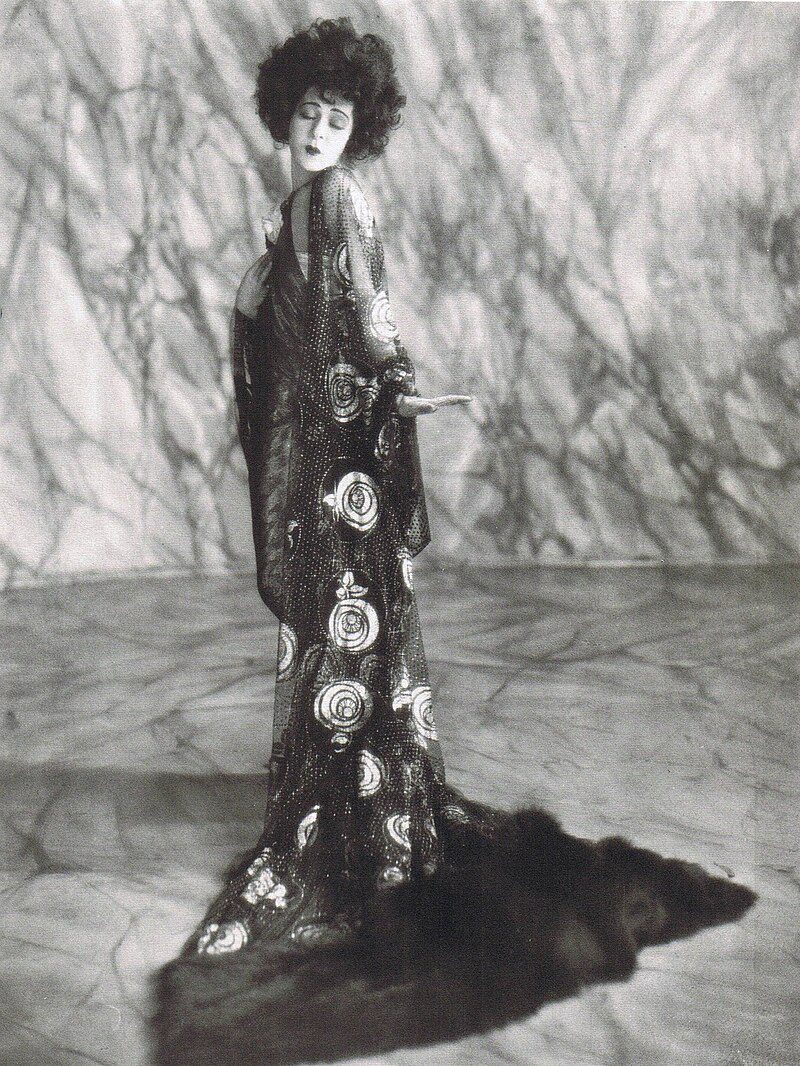
Alla Nazimova was a Russian-American actress, director, producer, and screenwriter. Initially, she rented the estate in 1918 after moving to Los Angeles. At the peak of her popularity and fame, the actress purchased the Hayvenhurst estate from developer William Hay in 1919.
Nazimova’s impressive body of work includes “War Brides” (1915), the American silent drama “Revelation” (1918), “A Doll’s House” (1922), and the iconic classic “Salomé” (1923), which was added to the National Film Registry. Alla Nazimova was also openly known for her relationships with women, despite being married to a man. She’s even credited with coining the coded phrase for lesbian and bisexual actresses: “the sewing circle.”
Born to Jewish parents who emigrated from Moldova, Alla was the youngest of three children. Her childhood was challenging, as she was shuffled between boarding schools, foster families, and relatives. Despite this, the young girl fell in love with acting. Alla Nazimova later toured Europe, performing in London and Berlin, before moving to New York in 1905. By 1906, she debuted on Broadway, quickly achieving success and earning the adoration of both the public and critics.
Financial Crisis and a New Chapter
By the mid-1920s, the actress faced a financial crisis. It was then that she decided to leverage her property for income. In 1926, she converted the estate into a hotel, adding 25 villas around the main residence. Thus, in the summer of 1927, “Alla’s Garden Hotel” officially opened.
A grand opening party was held on January 9, 1927. However, Nazimova soon discovered that her unscrupulous partners had nearly driven her to bankruptcy. Consequently, in 1928, she sold her share of the property and auctioned off most of her furniture and household items. After this, she returned to her true passion: the Broadway stage. But the hotel’s story didn’t end there.
The Garden of Allah Hotel
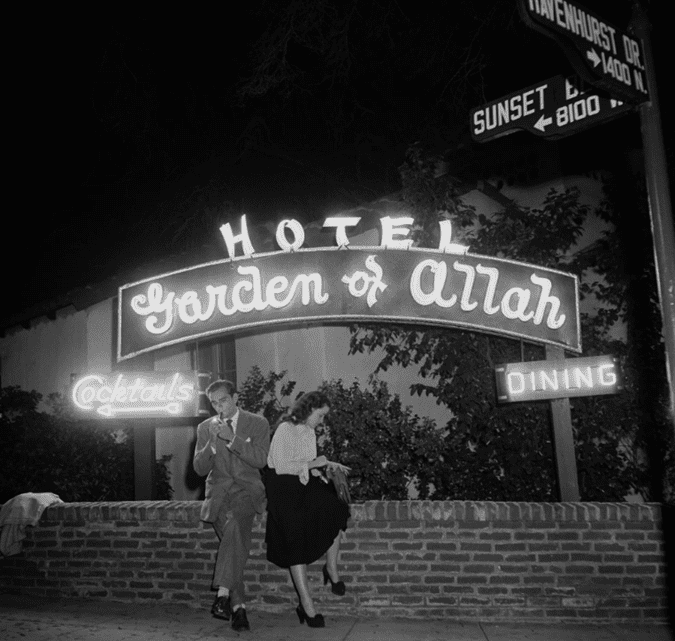
In 1930, new owners acquired the hotel and decided to rename it. The Garden of Allah Hotel catered to both short-term and long-term guests, quickly earning a reputation as a celebrity favorite. Famous and successful individuals could enjoy peace and privacy there. Tourists, autograph seekers, and other curious onlookers never disturbed the hotel’s exclusive atmosphere.
Many celebrities resided at the Garden of Allah Hotel. Here are just a few names:
- American novelist, essayist, and short story writer, F. Scott Fitzgerald;
- British columnist, gossip columnist, and journalist of Hollywood’s “Golden Age,” Sheilah Graham;
- American humorist, actor, and newspaper columnist, Robert Benchley;
- Swedish-American actress, Greta Garbo, a leading star of the silent film era and early Golden Age of Hollywood;
- American politician and actor, Ronald Reagan, the 40th U.S. President (1981–1989);
- American actor, Humphrey Bogart, famously known as “Bogie”;
- Dance band leaders, Benny Goodman and Artie Shaw;
- American singer and actor, Frank Sinatra;
- American writer, singer, and dancer, Kay Thompson. Interestingly, while living at the hotel, she wrote the children’s book about Eloise, a young resident of the Garden of Allah Hotel.
This is just a glimpse of the impressive roster of celebrities who frequented this beloved spot.
Demolition
Owners continued to change hands. The building’s architectural style fell out of fashion, and the surrounding area lost its glamour. Meanwhile, the value of the land soared.
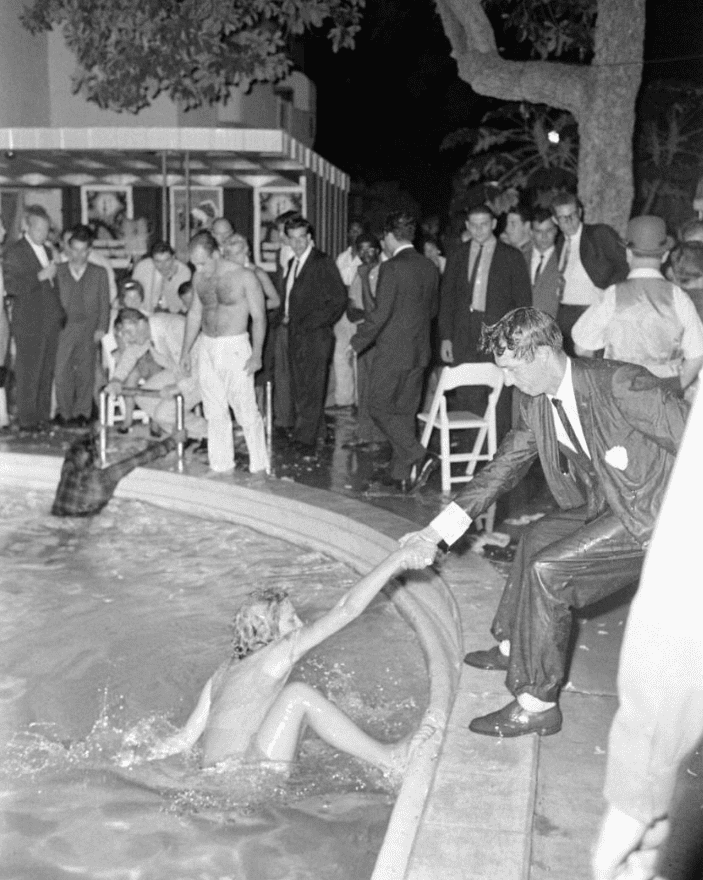
The last owner of the Garden of Allah Hotel was Bart Lytton, who owned Lytton Savings & Loan. He purchased the hotel for $755,000 and decided to demolish it, replacing it with his bank’s main branch. On August 22, 1959, he hosted a farewell party on the grounds before the demolition. Guests arrived in costumes of past stars, and the silent film “Salomé” was projected onto a large screen by the pool. All permits were obtained on November 2, 1959, and the architectural landmark was torn down.
The bank’s main building, designed in the brutalist architectural style by Los Angeles architect Kurt Meyer, was subsequently built. Later, a museum and auditoriums called “The Lytton Center” were added. After Lytton Savings & Loan went bankrupt, the building was transformed into a shopping center. It’s known that another bank, Chase, occupied the building for some time.
Eventually, this building too was demolished. Despite being recognized as a Los Angeles historic-cultural monument in 2016, the developer managed to secure all necessary permits. A brief campaign to preserve the building was unsuccessful. As a result, the site was cleared for the construction of a mixed-use complex designed by Frank Gehry.
As of 2023, the site remains a vacant lot.
It’s hard to imagine that this very spot once hosted celebrities, vibrant parties, and provided a secluded retreat from adoring fans. Thus concluded the story of the Garden of Allah Hotel, though a miniature replica was created in the 1960s. In the early 2010s, this miniature found its way into private hands, and its miniature electrical lighting system was restored. Photos from the official blog of Martin Turnbull, author of the “Hollywood Garden of Allah” novels, have also been preserved.