

Los Angeles is a city in constant flux. It’s a place of reinvention, with new construction always on the horizon. In this continuous cycle of development and self-improvement, some buildings that once symbolized architectural value and authenticity are torn down and seemingly forgotten. But are they truly forgotten? Memories linger, photographs remain, and they come alive for new generations curious about the past. LA-Future will tell you more about the Hollywood Hotel, a lost architectural landmark.
Hotel and Developer History
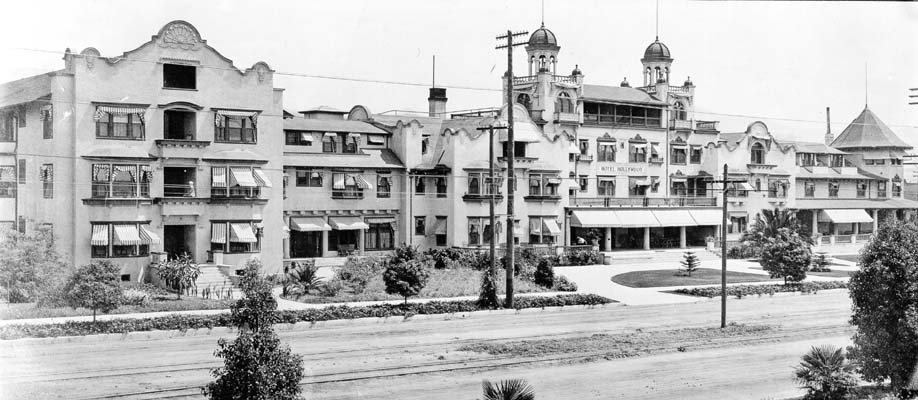
The hotel was built in 1902 at 6811 Hollywood Boulevard and Highland Avenue. It was a prominent social hub, an early Hollywood landmark right at the center of all the action. It even became the first Hollywood home for many famous movie stars.
Lyman Farwell and Oliver Perry Dennis designed the Hollywood Hotel for American businessman and developer Hobart Johnstone Whitley. Interestingly, Whitley is best known for helping create the Hollywood district in Los Angeles. He was often called the “Father of Hollywood,” a nickname even engraved on his tombstone at Hollywood Memorial Park Cemetery (now Hollywood Forever Cemetery). Hobart Johnstone Whitley was a great philanthropist, donating land and money to the community, which funded churches, public schools, libraries, landscaping, streetlights, and more. However, in his later years, he suffered significant real estate losses and was almost insolvent. His contributions to the city’s development are still remembered today, as several streets are named in his honor: Hobart Boulevard, the Whitley Heights residential area, Whitley Avenue, Whitley Terrace, the Whitley Terrace Stairs, and even a main street in Corcoran, California—Whitley Avenue.
The Vision Behind the Development
Hobart Johnstone Whitley aimed to boost sales of residential lots to potential buyers who arrived in Los Angeles via the Los Angeles Pacific Railroad’s Balloon Route electric streetcar. The Hollywood Hotel was built on land owned by Hobart Whitley, American developer George W. Hoover, and Harrison Gray Otis, a Union Army officer during the American Civil War.
As business boomed and the hotel thrived, a decision was made in 1905 to add a 40-room wing. Whitley surrounded the hotel with 3 acres (1.2 ha) of gardens, envisioning the Hollywood Hotel as a country resort.
In 1906, socialite, businesswoman, developer, and philanthropist Almira Hershey purchased the hotel. She was captivated by its beauty and grandeur. Hershey hired Margaret Jane Anderson to further expand and enhance the hotel. Their efforts were fruitful, as the hotel grew from 16 to 250 rooms, boosting the Hollywood Hotel’s popularity even further.
Interestingly, in 1922, Almira Hershey lost a breach of contract dispute to George Krom, who had managed the Hollywood Hotel for many years. As a result, he became the next owner.
Architectural Features
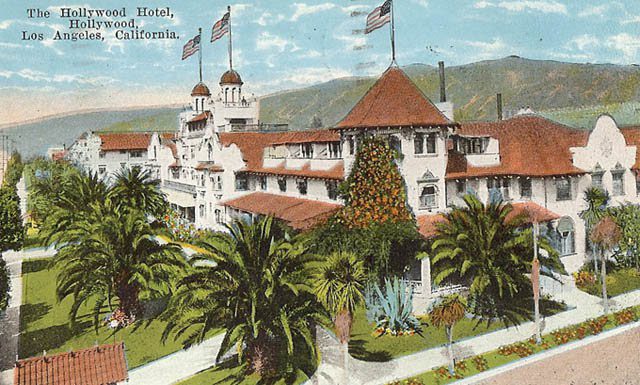
Writers described the hotel as being in the “Mission Victorian” style. This refers to a blend of Mediterranean architectural elements with Victorian details, featuring wide verandas and towers. Such a combination might seem unusual, given it mixes two prominent Southern California architectural styles: Mission Revival and Victorian architecture.
The Victorian style was undeniably dominant in the United States in the late 19th century. It was recognizable by its intricate details, turrets, spires, and domes. Asymmetrical layouts and decorative elements also characterized Victorian architecture. At the time, homes in California were built with Victorian elements, often incorporating wide verandas into their designs.
In the late 19th and early 20th centuries, the Mission Revival style, inspired by the country’s colonial missions, gained popularity in California. Its defining features included wide arches, red tile roofs, broad eaves with minimal overhangs, and smooth, light-colored walls. Compared to the Victorian style, Mission Revival was simpler. The Hollywood Hotel showcased a seemingly impossible combination of these styles, blending Victorian opulence with the romantic arches of Mission Revival. It was an attractive look, perfectly suited to the California of that era.
The Building’s Significance
For decades, the Hollywood Hotel in Los Angeles was a central gathering place for Hollywood’s elite. It became the hub for anyone looking to make a career in film or who had already reached the pinnacle of fame. Pioneers of the industry and stars of the era frequently stayed at the Hollywood Hotel and attended its legendary dance parties. These lively events, traditionally held on Thursdays, were a must-attend for all of Hollywood’s high society. Some were there to dance, while others expanded their networks, exchanged news, and observed the world around them.
According to some sources, it was here that deals were struck, intrigues unfolded, and even romances blossomed. Some notable names from that era include American film producer Jesse Lasky, German-American film producer Carl Laemmle, Canadian-American film producer Louis B. Mayer, American studio executive Harry Warner, and American film producer from early cinema history, Irving Thalberg.
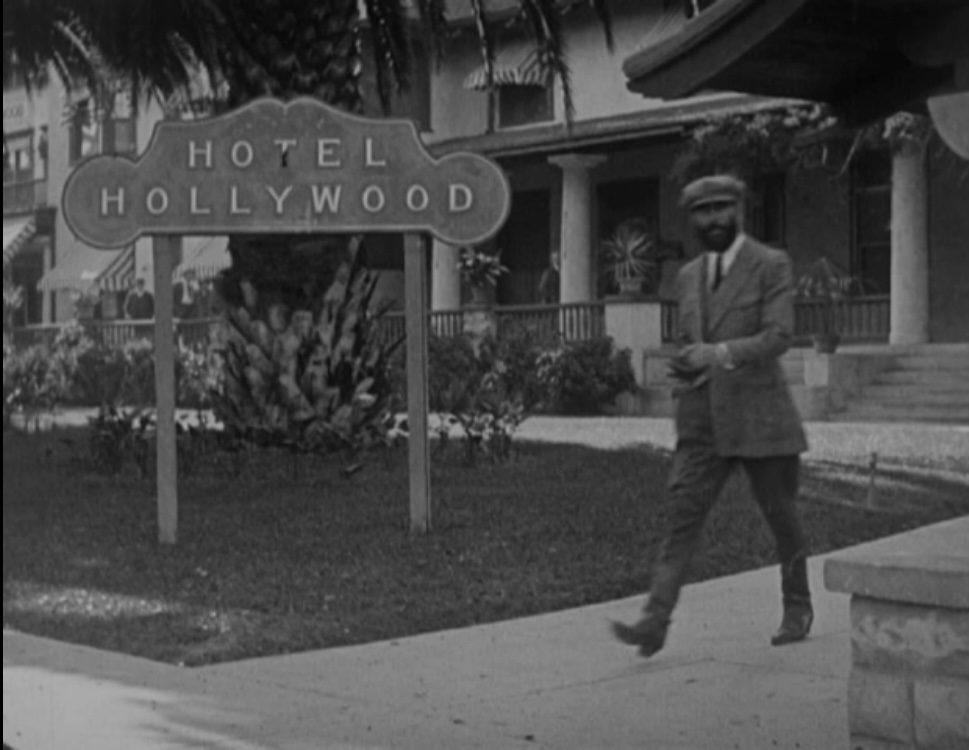
The hotel’s guests also included silent film stars, movie moguls, and other film industry representatives. A screen grab from a 1922 promotional film called “Hollywood Snapshots” even survives, further demonstrating how much celebrities adored this place.
Demolition of the Hollywood Hotel and Its Legacy
In the early 1940s, Charles E. Toberman, famously known as “Mr. Hollywood,” acquired all shares of the “Good Hope” company. Since the company also owned the Hollywood Hotel, he became its next owner. Toberman immediately planned to demolish the hotel and redevelop the block, but his plans were put on hold by World War II.
Even after its bustling days were over, the hotel lingered. Its original sparkle and glamour began to fade by the 1950s. Not even its historical significance and architectural value could save the structure. The developer decided that restoration simply wasn’t cost-effective.
In August 1956, the architectural landmark was demolished to make way for a $10 million development. New, modern structures quickly rose in place of the Hollywood Hotel. This included a 12-story office building for the First Federal Savings & Loan Association of Hollywood, a shopping center, and parking. In 2001, these buildings were also torn down and replaced by the Hollywood and Highland Center, an entertainment complex that includes the Dolby Theatre, where the annual Academy Awards ceremony is held.
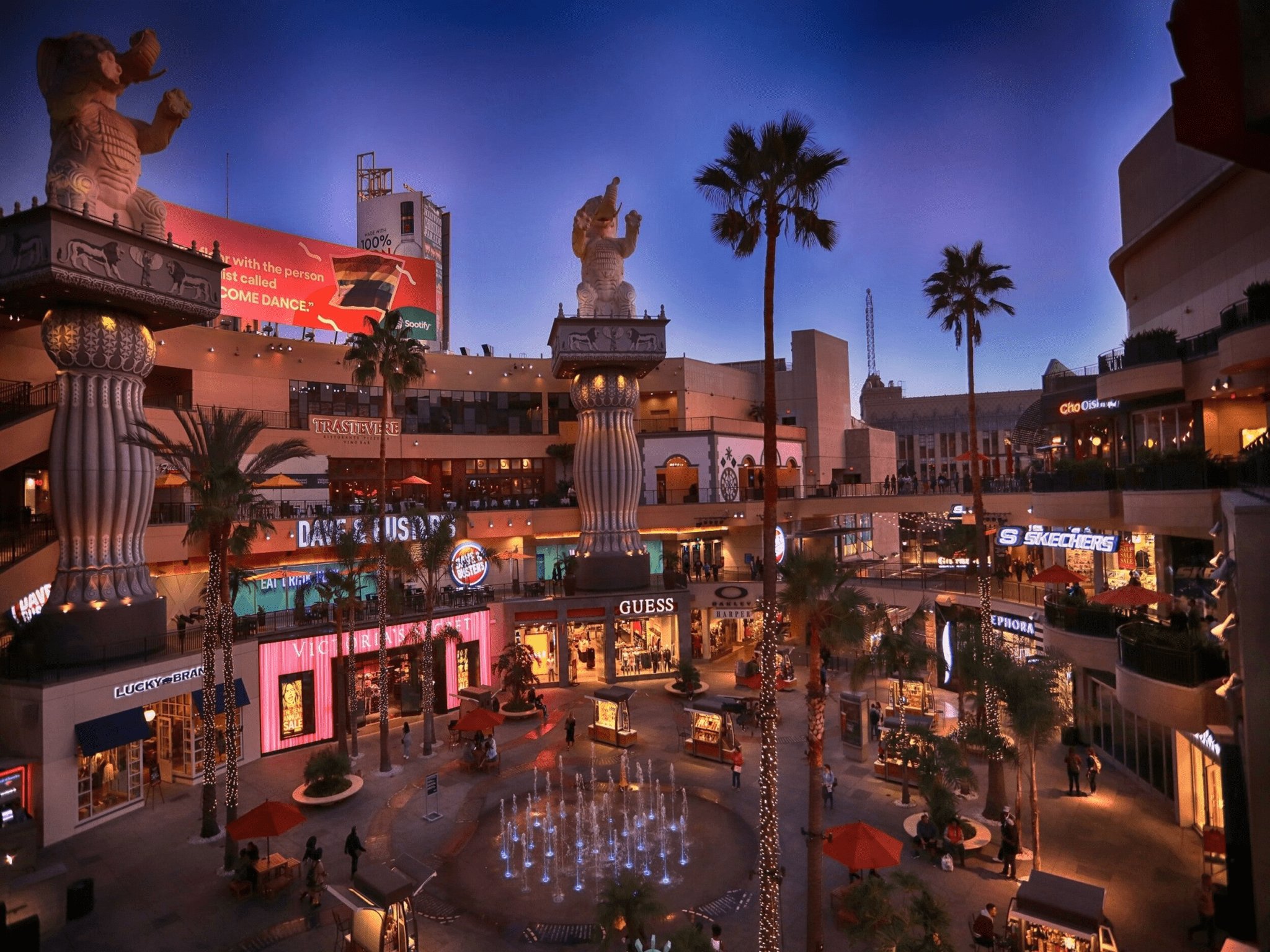
What then is the legacy of the once-famous Hollywood Hotel? According to some sources and a popular legend, the memory of this place lives on today thanks to the Walk of Fame. It’s said that stars of celebrities who stayed at the hotel were painted on the ceiling of the ballroom or dining room. This reportedly inspired the creation of the stars on the Walk of Fame. It’s astonishing how a simple idea could transform into one of Hollywood’s most iconic landmarks.