

Electric scooters have swiftly zoomed into the lives of Californians. This mode of urban transport has revolutionized the perception of speed and convenience in getting around. The popularity of e-scooters is growing every day. To learn more about the history of the first electric scooters in the Golden State and their impact on modern urban mobility, we turn to la-future.
The History of Electric Scooters
Their story is quite fascinating, often associated with youth, novelty, and ingenuity. It’s tough to pinpoint the exact invention date of the very first versions. Black-and-white photos preserved from before World War I already show children pushing a board with two wheels. That was followed by the wooden kick scooter, until someone had the brilliant idea to add a motor.
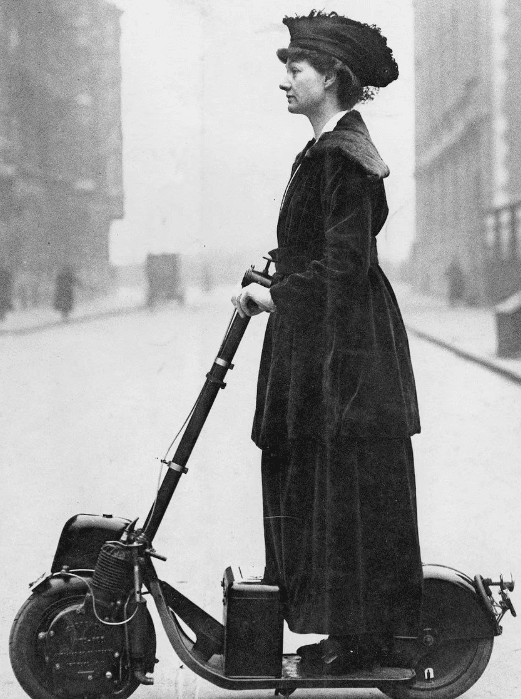
Back in the 1900s, the Autoped company released the first mass-produced motorized scooter. The manufacturer claimed a top speed of 30 mph (48 km/h), but the vehicle reportedly became unstable once it hit 20 mph (32 km/h).
The next development phase came when Autoped was acquired. The new owner was Eveready Battery Co., which bought the company in 1918 and installed a battery coil on the vehicle. This created the first version of the electric scooter, dubbed the Eveready Autoped.
This model spread across Europe and the US, becoming a fixture among the upper crust. Photos from that era show women, often without helmets, zipping around on e-scooters. For example, suffragettes rode these vehicles to London, while New York gangs reportedly used early motorized scooters to commit crimes. One preserved photograph, taken in 1916, features Lady Florence Norman.
The 1990s Scooter Craze
Following the Eveready Autoped’s release, electric scooters failed to gain widespread acceptance; they remained a novelty item. Over the following decades, various companies introduced different variations that earned greater public favor.
The peak of e-scooter popularity hit in the 1990s. This transportation method grabbed global attention, though the frenzy subsided in the 2000s.
In 2001, a self-balancing electric scooter was released. The concept was a flop, as the vehicle looked heavy and awkward. Since then, models manufactured by lesser-known companies appeared periodically, only to vanish just as quickly. Time was the missing ingredient.
Travis VanderZanden Enters the Scene
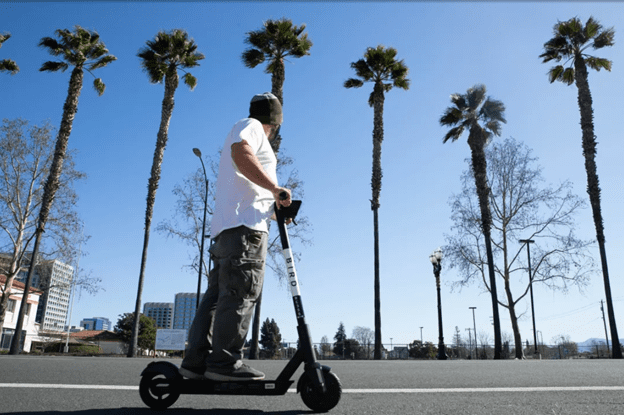
Travis VanderZanden is the founder and former CEO of Bird (full name: Bird Global, Inc). In 2016, he gave his daughters electric scooters for Christmas. The girls loved the gift, sparking an idea in Travis: maybe adults would like this too. He ordered adult-sized e-scooters from Chinese manufacturers and took a ride with his wife along the San Diego boardwalk. This debut was the perfect, unplanned marketing move, immediately catching the attention of locals.
VanderZanden bought Xiaomi M365 electric scooters, then installed a mini-computer connected to his company’s software platform on them. This allowed him to track the location of the scooters, remotely lock the wheels and motor when needed, and generally control the devices. This marked the beginning of the modern electric scooter era in California.

The First Companies in California
The first electric scooters hit California’s streets in 2017. Initially, they were vehicles from Bird, followed by Lime and Neuron. These companies pioneered a new transit trend. In 2017, they began deploying e-scooters onto city streets without permission, quickly increasing the number of interested riders.
It’s vital to note that the first companies entering any given market simply cannot afford to make mistakes. It’s the only way to hold onto their position. It’s interesting to look back at how things unfolded in 2017 and how city residents reacted to the arrival of those first scooters.
Bird
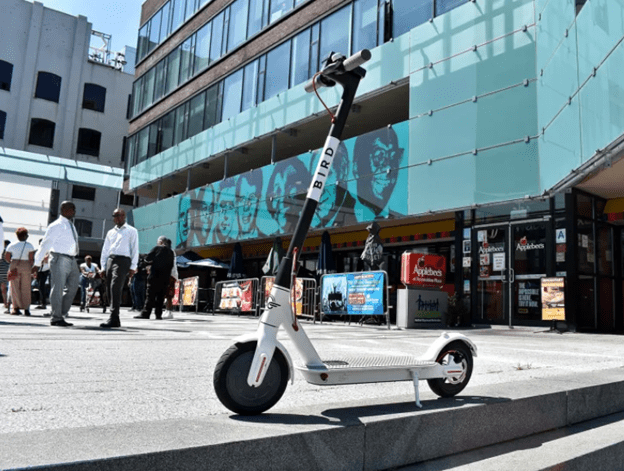
In September 2017, Bird launched its scooter-sharing service in Santa Monica. Unlocking a scooter cost $1, plus 15–30 cents per minute of riding. Residents could rent an e-scooter through the company’s app.
Since then, the company has expanded its operations to over 100 cities, facilitating more than 10 million rides. Bird was raising cash at an incredible pace.
In 2018, the company became the fastest startup to reach a $2 billion valuation. That same year, the scooter-sharing startup expanded into foreign markets, moving beyond Santa Monica, California, to the streets of Paris and Tel Aviv.
Patrick Studener became the Head of Europe, the Middle East, and Africa for Bird in 2018. Bird’s leadership tasked him with finding external markets for the e-scooters. Studener had previously worked at Uber alongside Bird founder and former CEO, Travis VanderZanden.
In 2016, Patrick Studener served as the COO of Wolt, a Finnish on-demand food delivery service, and he joined Bird in February 2018.
The search for external markets for e-scooters was driven by the environmental concerns of many cities grappling with traffic congestion and pollution from cars and other sources.
Bird’s Future Prospects
In an interview with “The Verge,” Travis VanderZanden discussed the company’s future development and its impact on urban mobility.
- Increased collaboration with “GovTech” cities (developing and implementing technological solutions for government agencies). This means expanding cooperation with local authorities and using technology to improve urban infrastructure and services. Bird aims to integrate its services into the urban ecosystem to provide a convenient and efficient transport option for city dwellers.
- Focus on community needs and wishes. Potential methods for achieving this include organizing public hearings, conducting surveys, and collecting feedback data.
- Safety and ease of use. This involves developing an intuitive interface, conducting training programs, and providing technical support.
- According to the company’s founder and former CEO, Bird’s mission is to reduce dependence on cars and promote eco-friendly transport. E-scooters can serve as a viable alternative to cars for short trips. This helps lessen traffic jams and reduce harmful emissions.
The Problems Emerge
The popularity of electric scooters quickly sparked the following issues:
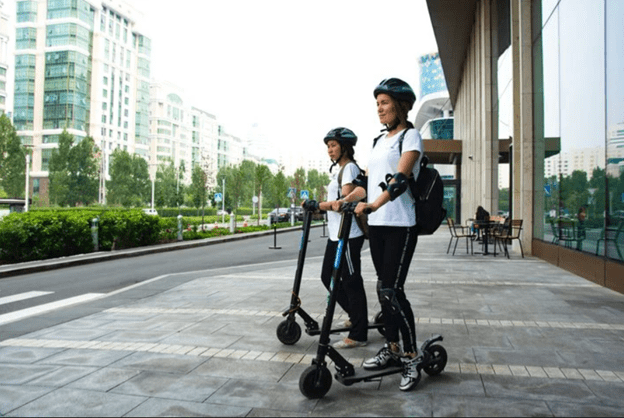
- Illegal riding on sidewalks without helmets at speeds up to 15 mph (24 km/h);
- Teenagers openly flouting traffic laws;
- Scooters being chaotically dumped in the middle of pedestrian walkways.
A Look at Travis VanderZanden’s Life
It’s worth noting that the American businessman and former CEO of Bird studied at the University of Wisconsin-Eau Claire and later at the University of Southern California. He faced significant criticism during the pandemic for laying off employees en masse without notifying them personally. He delegated the task to the company’s Chief Communications Officer.
In September 2023, Bird was delisted from the New York Stock Exchange due to its low share price, and its market capitalization also plummeted. In 2024, the company was acquired by Third Lane Mobility to avoid bankruptcy.
In 2020, Travis VanderZanden purchased a house in Bel Air, a residential area in the Westside of Los Angeles, and in 2021, he bought a $22 million mansion in Miami.