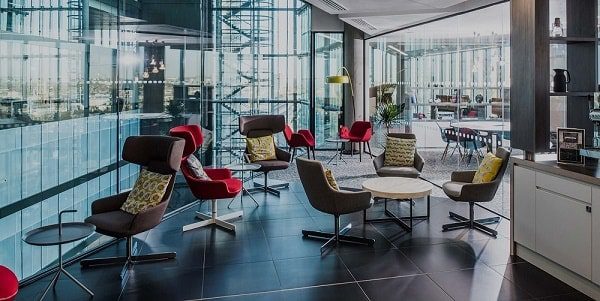

Their popularity has skyrocketed in recent years. It may come as a surprise to some, but the very first open-plan workspace was designed by Frank Lloyd Wright back in 1903. Over time, office spaces have continuously evolved to meet the trends and needs of each era. You can learn more about the history of coworking in Los Angeles from la-future.
History
The history of coworking can be broken down into these key phases.
- The 1980s saw many technological breakthroughs, including the first mobile phones. This is when the idea of coworking truly began to take hold. Mark Dixon founded Regus with the idea of flexible office solutions for business travelers. He created a model of serviced offices, and interestingly, some of his innovative solutions are still in use today. At the same time, a global recession hit, and companies looked for ways to cut costs. Flexible office spaces became the solution. With Tim Berners-Lee’s invention of the World Wide Web, remote access to office files and resources became a reality, and employers started to consider remote work as a viable option.
- In the 1990s, companies tried a new approach. The idea was to encourage people to work together by removing individual desks and equipment, so employees would sit together and generate ideas. While initially successful, more and more workers began to complain that they couldn’t focus on their tasks. In 1999, Bernard DeKoven coined the term “coworking,” which referred to people “working together as equals” on projects.
- The 2000s were when coworking really gained momentum, becoming a popular alternative to working from home. It offered a way for professionals like architects, freelancers, and PR consultants to connect and collaborate. The next step was combining coworking spaces with coffee shops to boost productivity. In 2004, Schraubenfabrik opened Hutfabrik, and these spaces operated under the umbrella of Konnex Communities, creating the first-ever coworking network. By 2005, Brad Neuberg had opened the first official coworking space.

“Gate 3 Workclub”
In 2004, the “Gate 3 Workclub” opened in California, founded by Neil Goldberg. Its main idea was to combat the isolation of the modern work world and boost productivity. Spanning 14,000 square feet, the Gate 3 Workclub offered private offices, quiet zones, and collaborative workspaces. Members could also enjoy a cafe, comfortable furniture, and access to high-quality technology. Despite its many benefits, the coworking space only lasted a year before it was forced to close.
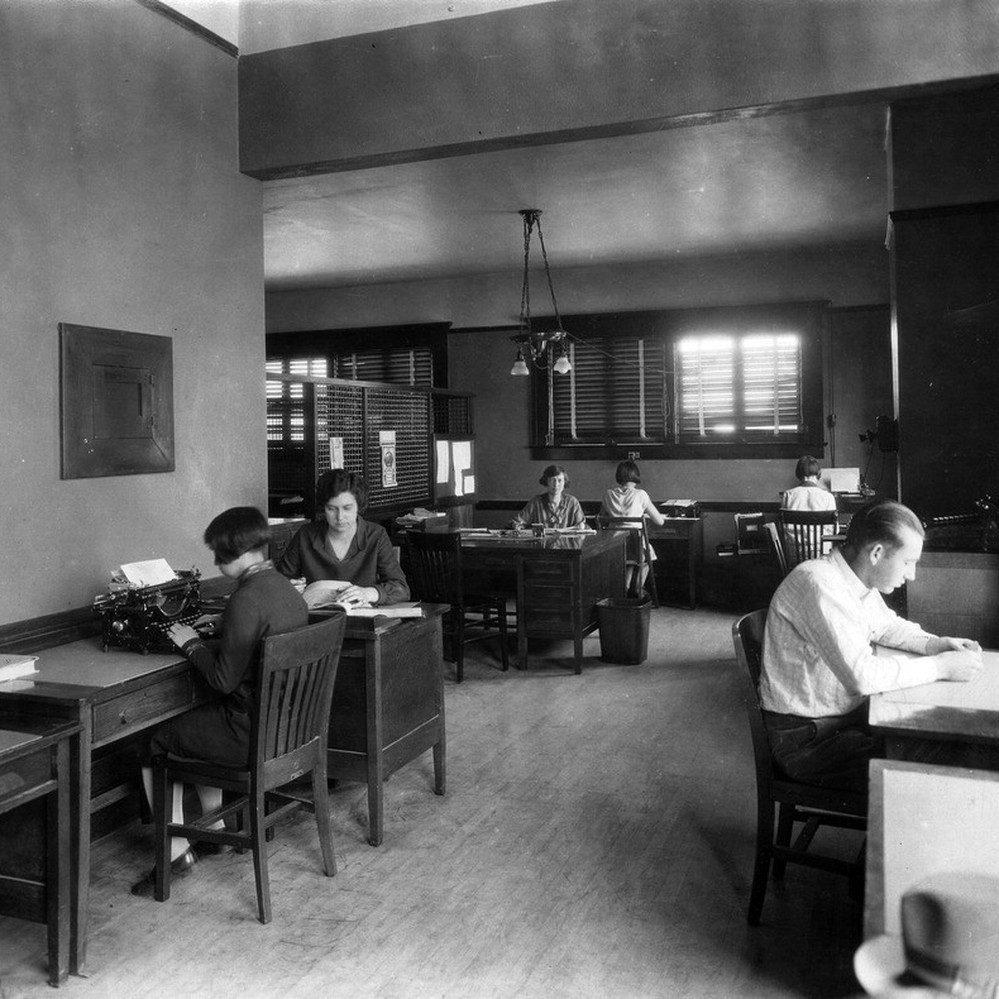
The Office Transformation
Over the last century, office spaces have completely transformed—from minimalist beige cubicles to bright, open-plan environments. Since workers spend a significant portion of their lives in the office (at least eight hours a day), they began demanding more from their employers. Companies, in turn, started to think about how they could improve the work environment.
With the rise of social media, the term “Coworking Revolution” emerged. The number of coworking spaces grew at an incredible rate, and by 2007, the word “coworking” officially appeared in Google’s search index. The mobile phone revolution also meant that people could access Wi-Fi from anywhere. This led to the realization that working from anywhere was not a distant dream, but a reality. This shift in perception impacted physical workspaces. Companies saw the need to adapt and stay ahead of the competition. Some companies began offering on-site childcare services as part of their membership packages, while others aimed to create more flexible options for employees. In 2008, the term “coworking visas” was introduced, providing free access to other coworking spaces within a network.
In 2009, Drew Jones, Todd Sundsted, and Tony Bacigalupo published the book, “I’m Outta Here! How Coworking is Making the Office Obsolete.” It was the first book ever written about coworking. The authors detail the journey of the people and places involved, explaining how coworking has changed the perception of the traditional office.

Coworking Pioneers in Los Angeles
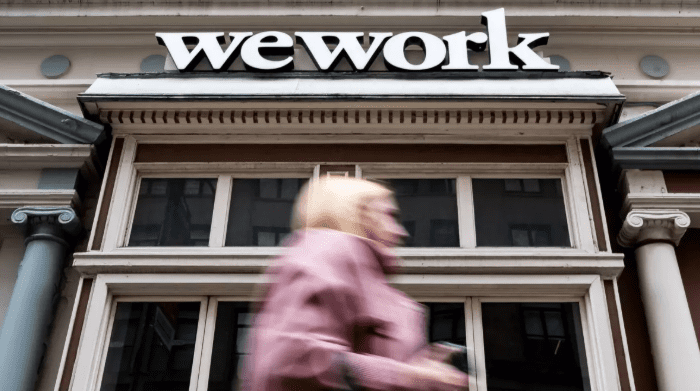
The company WeWork is a prime example of a coworking pioneer. It follows the internet-based business model of “get big first, then get profitable.” In 2024, WeWork was named the best service provider in the Space to Places’ London Brand Index Report. With 13 locations in Los Angeles, freelancers, entrepreneurs, and small teams can find the perfect coworking space, whether they need a private desk, a day pass, or a conference room. By choosing WeWork, you’ll get access to high-speed Wi-Fi, on-site support, beautifully designed common areas, and other premium amenities to help your business grow.
One of the most well-known coworking spaces was the West Hollywood branch of “The Wing,” founded by two female entrepreneurs. They took a niche approach, adapting their offices and services to women’s needs. Zara Rahim, one of the founders, talked about the small details designed for working women, such as soft-upholstered chairs that wouldn’t snag dresses, and on-site childcare to help women balance business with parenthood. This formula proved to be incredibly successful.
“The Wing” expanded the concept of coworking by also offering “support circles” to discuss parenting, mental health, and physical well-being. But the COVID-19 pandemic, along with accusations of discrimination, dysfunction, and a toxic work culture, led to the brand’s collapse. The West Hollywood branch of “The Wing” permanently closed its doors, and its custom-made furniture, commercial kitchen equipment, and high-end items attracted bargain hunters from all over Southern California.
Popular Options
The history of coworking in Los Angeles is truly fascinating. Residents can explore some of the highest-rated coworking spaces in the city, including Union Cowork, 1001 Wilshire Coworking, Phase Two, Carr Workspaces, and Village Workspaces. Modern Angelenos have the freedom to work remotely or on a flexible schedule, and this structure has proven to boost employee satisfaction and productivity, while improving the overall work environment. It is predicted that coworking spaces will become the norm for most offices in the future.
Forecasts
Analysts at Green Street Advisors believe that the popularity of coworking will create financial risks for landlords. For example, it is predicted that by 2030, the demand for office space in the country will decrease by 3%. Los Angeles has evolved from a market of small, independent coworking spaces for freelancers and startups to one with major players and specialized niches. For example, CBRE, the world’s largest commercial real estate services and investment firm, launched a coworking subsidiary called Hana. The company opened its first California location at the Park Place office complex in Irvine in partnership with the property owners. The history of coworking in Los Angeles continues to unfold, as companies adapt to meet the modern workforce’s need for flexibility and efficiency.