

It’s more than just an administrative building. Los Angeles City Hall is one of the city’s most recognizable symbols, an architectural gem of the Art Deco era, and a vital piece of United States history. Since its construction between 1926 and 1928, it has remained the heart of the city’s governance and a favorite tourist attraction. Learn more on la-future.
A Look at Its History
Construction began in 1926 and was completed in 1928. Even then, the structure was a major architectural breakthrough, seamlessly merging modern engineering solutions with Art Deco aesthetics. In March 1976, the building was officially added to the Los Angeles Historic-Cultural Monument list, recognized for its distinctive style, innovative design, and significance to 20th-century American architecture. The architectural project was designed by the firm Parkinson & Parkinson—one of the most influential in Los Angeles in the early 20th century. Founders John Parkinson and Donald B. Parkinson made a huge contribution to shaping the city’s modern skyline. Architect Austin Whittles also worked on the building’s design.
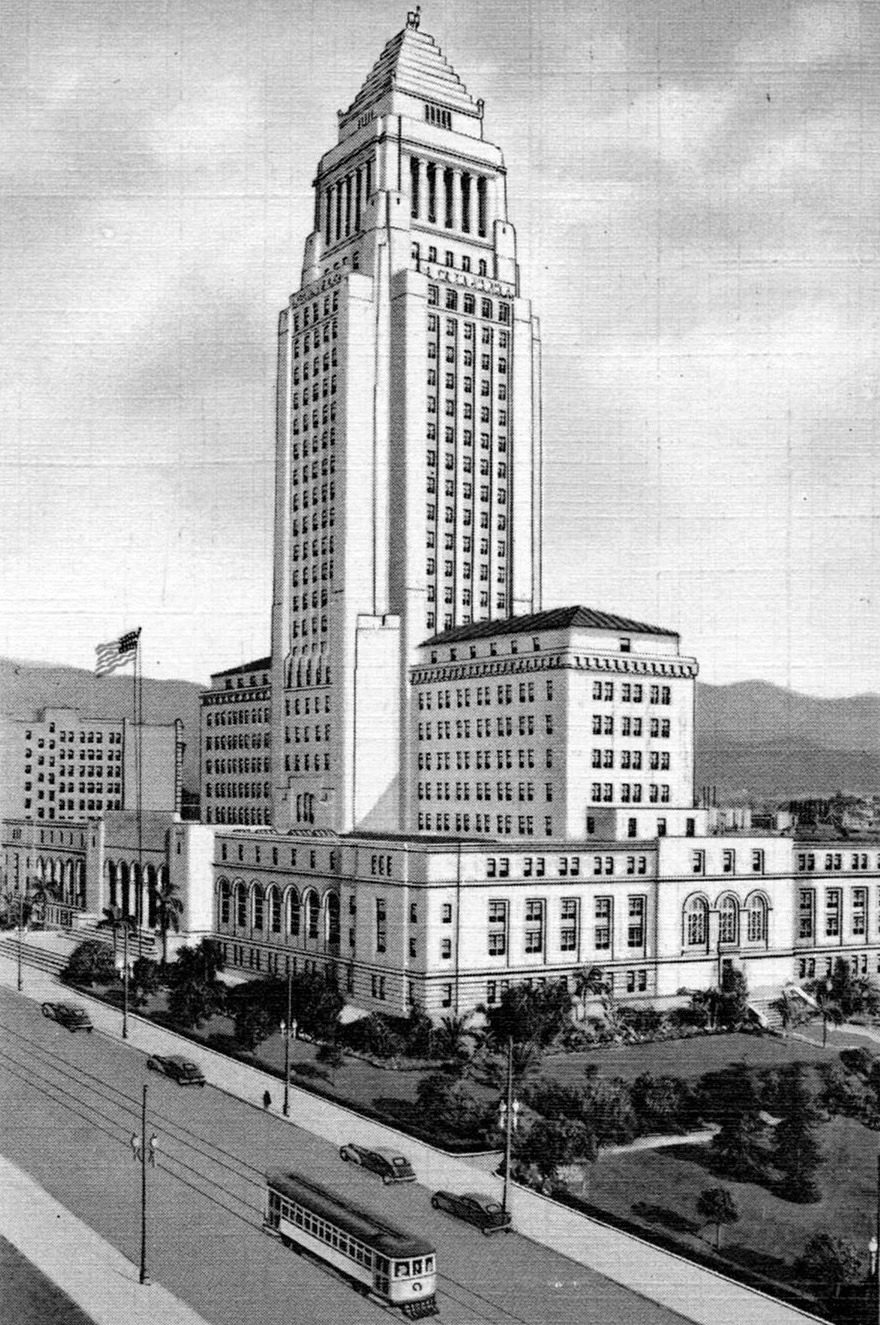
With 32 stories and standing 454 feet (138 meters) tall, City Hall reigned as the tallest building in Los Angeles for many decades. Construction materials included concrete mixed with sand from all 58 counties in California and water from the state’s 21 historic missions. The City Hall tower itself was modeled after the Mausoleum at Halicarnassus, one of the seven wonders of the ancient world, and also drew influence from the Los Angeles Public Library. Since 1940, the building’s image has been featured on the badges of the Los Angeles Police Department (LAPD). Due to its special status as a public building, it was allowed to exceed the 150-foot (46-meter) height limit that had been established for private structures in 1905.
What Makes the Building Unique?
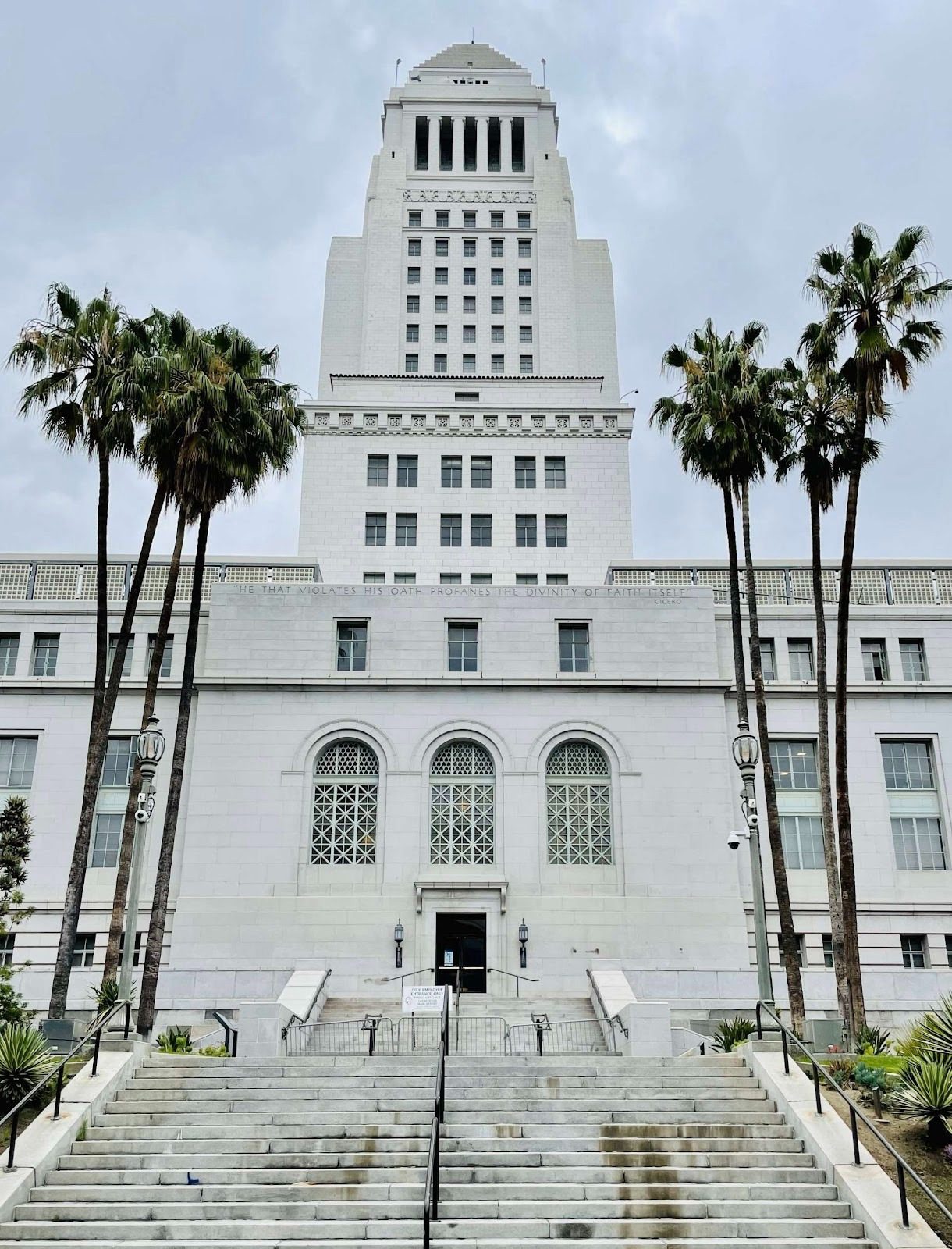
Los Angeles City Hall is a premier example of Art Deco architecture. This style, popular in the 1920s and 1930s, rejected traditional historicism and introduced geometric forms, sharp lines, symmetry, and decorative elements inspired by the industrial age and ancient cultures. The building’s facade reflects the classic restraint of Art Deco: geometric massing, a strong vertical composition, and decorative accents using terracotta and granite.
The building utilizes a frame system where steel columns and reinforced concrete slabs bear the load. This approach allowed for spacious, open interiors free of load-bearing walls. The facade features gray terracotta, Californian granite, and bronze, which was also used for decorative elements in the elevator cabs. The structure is based on a steel frame with concrete floors, and for seismic resistance, it is equipped with 416 rubber base isolators, 90 flat sliding bearings, and 52 viscous dampers. Additionally, two-story concrete shear walls were added beneath the tower to evenly distribute loads. This advanced system reduces acceleration and deformation during an earthquake, preserving both the structure and the building’s historic features.
Materials Used
The structure is composed of three main vertical masses: the base, the middle section, and the tower. The base is clad in granite, which at the time was considered a mark of reliability and monumental quality. The middle segment and the tower are covered with glazed terracotta blocks—a popular cladding material of the era that provided a smooth, finished surface and contrasted with the base.
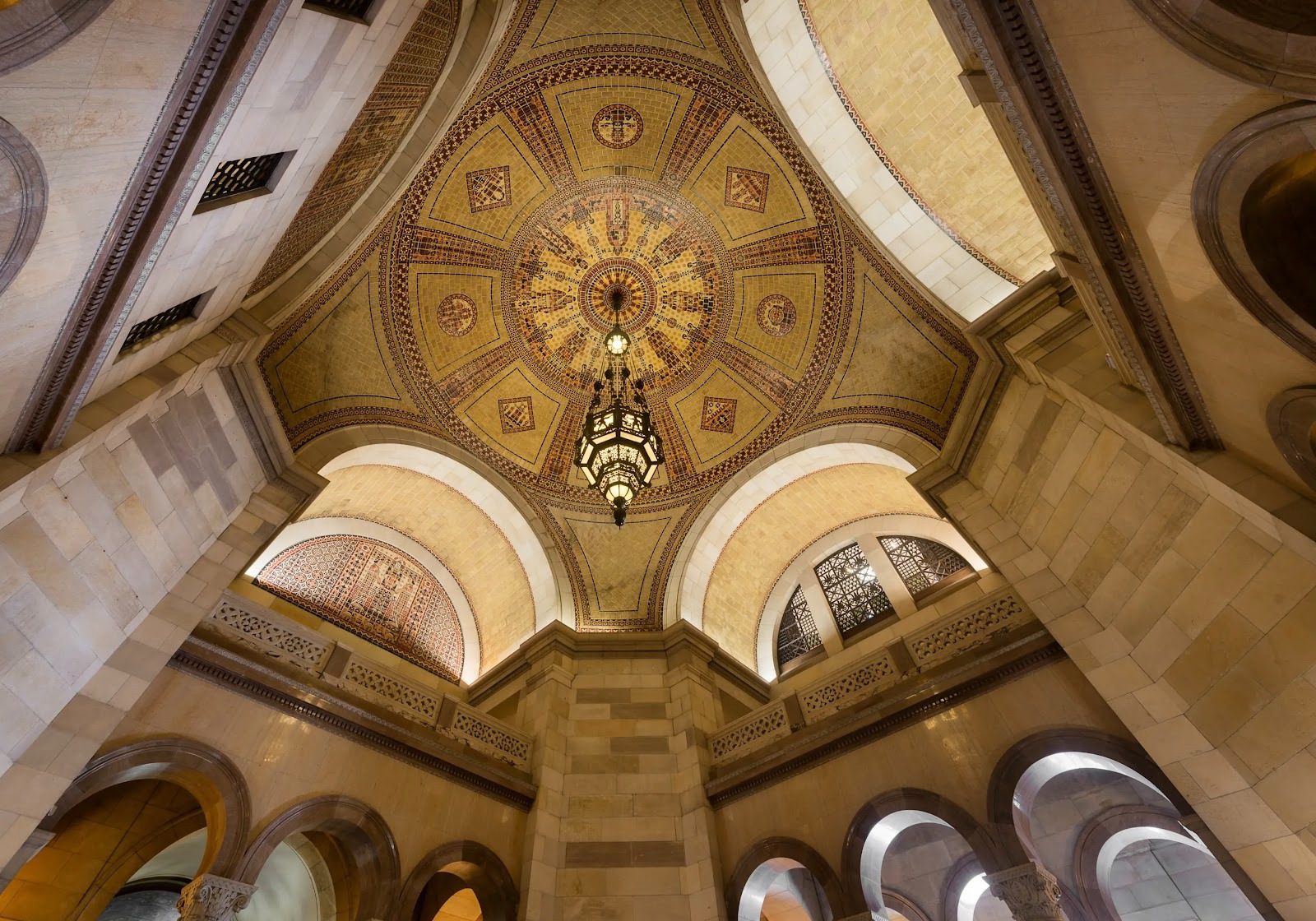
The space around the base and lower sections is designed like a classic administrative structure, featuring broad plazas, marble rotundas, and large bronze doors cast with historical Californian motifs, including early water systems and iconography of the future state. While the interiors have been updated over time, original decorative elements—such as carving, ceiling designs, artistic murals, and finishes—that recall the late 1920s and early 1930s era were preserved during restorations.
One of the most critical engineering transformations of the building took place between 1998 and 2001. A massive seismic retrofit was carried out to ensure stability against an earthquake of up to magnitude 8.2. During the renovation, hundreds of base isolators and dampers—developed by engineers from Nabih Youssef Associates—were installed beneath the structure. Additionally, reinforced concrete “shear walls” and dampers were added to dissipate the energy of seismic waves, protecting both the structure and the historic interiors. Thanks to this pioneering engineering scheme, Los Angeles City Hall remains a leading example of how historic architecture can be adapted to meet modern safety standards while retaining its authentic look.
Public Spaces
City Hall is the administrative center of the city, with the Mayor’s office located in Room 300. Visitors can access the Observation Deck on the 27th floor, and the pyramid’s peak is topped with the Lindbergh Beacon, an aviation light. The interior of the 27th floor, known as the Tom Bradley Room, is a spacious hall with tall columns and is used for ceremonial events. The building is connected to public transit via the Civic Center and Historic Broadway stations, as well as a J Line stop near the entrance.
The building has frequently appeared in movies and TV shows, including While the City Sleeps (1928), Adventures of Superman (1950s), Dragnet (1951), Perry Mason, L.A. Confidential (1997), Tower of Terror (1997), and Gangster Squad (2013). City Hall has also inspired artists, musicians, and even sports teams. In 2018, the Los Angeles Dodgers honored the building with a special patch logo on their uniforms.