

The tragedy that occurred on August 31, 1986, over Cerritos, California, served as a painful reminder that aviation is vulnerable and requires constant safety system improvements. The mid-air collision between a Piper PA-28-181 and an Aeromexico DC-9-32 claimed dozens of lives and exposed critical flaws in the protocols and technologies in place at the time. More details on la-future.
How It Happened
On August 31, 1986, a Piper aircraft entered the Los Angeles Terminal Control Area (TCA) without authorization, resulting in a collision with an Aeromexico jet that was on approach to land. The tragic mid-air crash killed 67 people aboard both planes. An additional 15 people died on the ground when the wreckage fell.
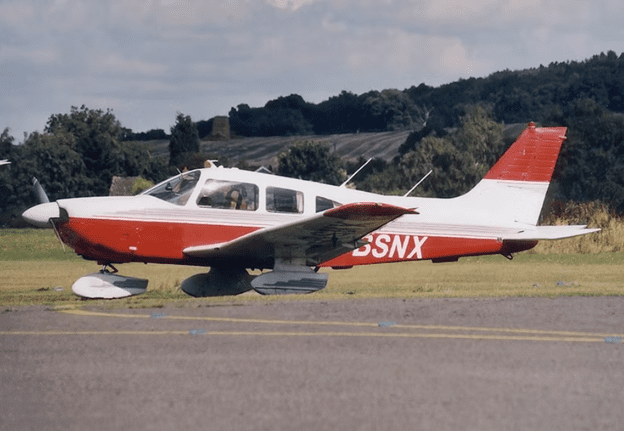
It is known that William Kramer, a 53-year-old resident of Redondo Beach, California, wanted to treat his wife and 26-year-old daughter to a lovely family vacation to Big Bear Lake. Kramer was a private pilot. They were scheduled to fly in his Piper PA-28 Archer aircraft. Big Bear Lake is a well-known resort area in the San Bernardino Mountains, east of Los Angeles.
William Kramer prepared his plane for the trip on the morning of August 31, 1986. Nothing suggested disaster, as the weather was excellent. The three main airports in the area reported clear skies with visibility at 14 miles.
Timeline Leading to the Collision
It’s important to understand the sequence of events that preceded the tragic 1986 collision over Cerritos.
- William Kramer departed in his single-engine Piper PA-28 from Zamperini Field in Torrance, California, heading for Big Bear City Airport. To reach his destination, the pilot had to navigate the controlled airspace of the Los Angeles Terminal Control Area (TCA), a significant obstacle.
- Entering the TCA required permission from Air Traffic Control (ATC) and a Mode C-capable transponder (a device that transmits a signal in response to a received signal). William Kramer’s aircraft was equipped with only a Mode A transponder, meaning he was not authorized to enter the TCA.
- The TCA boundaries were complex, and Torrance Airport was less than 10 nautical miles south of Los Angeles International Airport (LAX), restricting the altitude of VFR (Visual Flight Rules) aircraft. Kramer had previously filed a flight plan with an altitude of 9,500 feet, which would have allowed him to bypass the TCA.
- At 11:41 AM, pilot William Kramer and his family lifted off, heading east over the suburbs of Los Angeles.
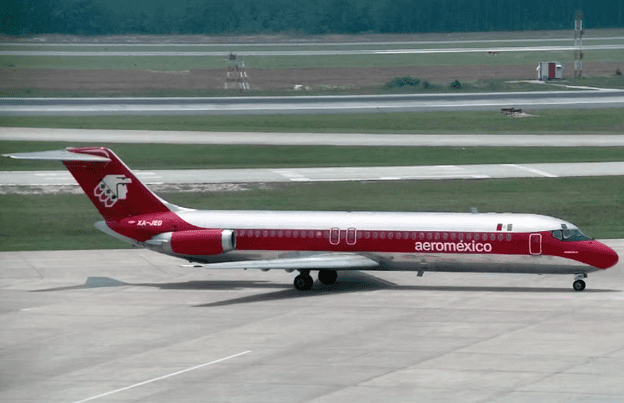
Aeromexico Flight 498
Meanwhile, Aeromexico Flight 498 was operating a scheduled service from Mexico City to Los Angeles. The 1969-vintage aircraft was named “Hermosillo” (Spanish for “beautiful”). On board were two pilots, four flight attendants, and 58 passengers. At 11:44 AM, the plane began its descent from 10,000 feet for landing at LAX. At 11:47 AM, the flight connected with air traffic controller, 35-year-old Walter White. He provided Aeromexico with clear flight instructions.
Walter White informed Flight 498 about a possible runway change to 24R instead of the planned 25L. He relayed this information to the crew, telling them to be ready for changes and to maintain their current speed.
The crew was notified about the presence of a small Piper PA-28 aircraft, which Walter White believed posed no threat. The air traffic controller then turned his attention back to a Grumman AA-5B Tiger flying under VFR rules. Walter White was attempting to guide it through the center of the TCA. It is worth noting that the controller was handling numerous incoming calls from aircraft trying to enter the congested airspace at that time.
The Moment of Impact
The Piper PA-28 crossed the TCA boundary without permission, deviating from its previously filed flight plan. Air traffic controller Walter White did not spot the aircraft on his radar, as he was busy processing numerous other requests.
Neither pilot William Kramer nor the Aeromexico crew saw the other aircraft, despite the clear sky. At 11:52 AM, the Piper PA-28 slammed into the tail of the Aeromexico jet at an altitude of 6,650 feet. The leading edge of the Piper’s engine cut through Kramer’s plane at window level, decapitating the three occupants instantly.
The Aeromexico jet lost its stabilizers and began an uncontrolled plunge. The cockpit voice recorder captured the captain’s final, desperate cry:
“Oh God, this can’t be.”
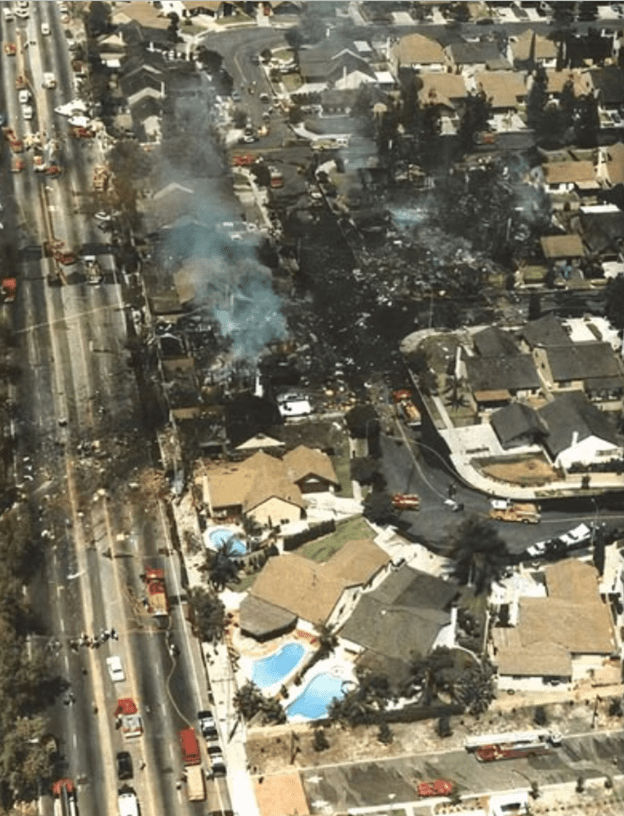
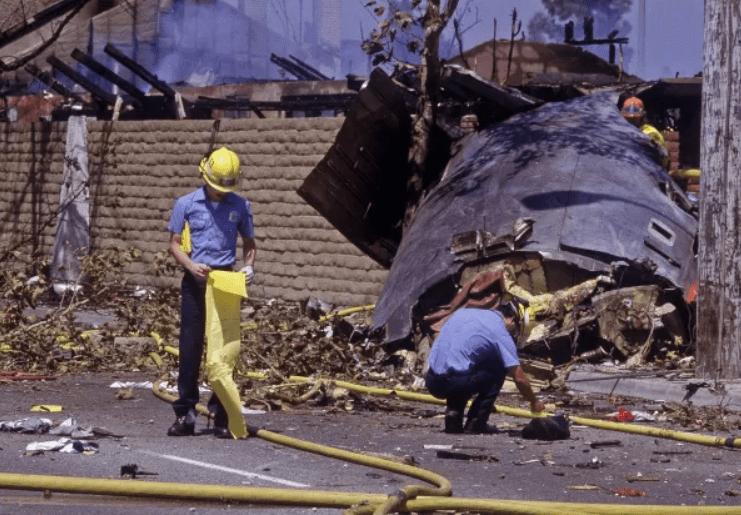
The Aeromexico pilots tried to regain control, but to no avail. The plane crashed nose-first into homes at the corner of Holmes Avenue and Ashworth Place in the suburb of Cerritos, then exploded. The Piper PA-28 wreckage crashed near the playground of Cerritos Elementary School.
The chain of events—airspace violation, air traffic controller overload, and lack of visual contact—led to the catastrophic collision. According to This Day in Aviation and the crash reports, five houses were destroyed and seven were damaged. 67 people aboard both aircraft were killed, along with 15 people on the ground. Eight other people on the ground were injured but survived.
It was a Sunday, so there were no children on the school playground, and many local residents were at home. Tragically, one of the destroyed houses was hosting a pool party, which contributed to the high number of ground fatalities.
How Could This Happen Again?
The public was devastated by the terrible air disaster, which occurred just eight years after the tragic mid-air collision between a Pacific Southwest Airlines Boeing 727 and a Cessna over a San Diego suburb. The question was the same; everyone wondered how this could possibly happen again.
Some people were convinced that William Kramer was to blame, while others pointed the finger at the air traffic controller. It is worth examining both sides.
William Kramer violated the rules for entering the TCA. The man was not a professional pilot, but he held an FAA license for six months with 231 hours of total flight time. A year before the tragedy, he had moved to Los Angeles, having only 5.5 hours of flying experience in the busy airspace around his home.
As for the air traffic controller, he failed to notice the aircraft on his display screen. This raised the question: if Walter White hadn’t been so overworked, could he have prevented the crash? During questioning, he stated he did not see the Piper PA-28 on his radar. However, it’s likely that even if White had seen the aircraft, it still might not have changed the outcome.
The Investigation
The investigation was led by the National Transportation Safety Board (NTSB). Their conclusion did not place blame on any single individual. Instead, the Board focused on systemic flaws that contributed to the air disaster.
The findings emphasized that the air crash was the result of a combination of human errors and system deficiencies.
Fundamental Changes
The crash investigation underscored the importance of the “see and avoid” concept for preventing mid-air collisions. The horrific Cerritos air disaster became a catalyst for fundamental changes in aviation safety, including:
- Accelerated development and implementation of the Traffic Collision Avoidance System (TCAS);
- Redesign of the national airspace system. This step allowed for better separation between VFR and IFR aircraft.
In conclusion, this tragic event spurred the development and implementation of systems that would go on to save passenger lives worldwide. The measures listed above significantly reduced the number of mid-air collisions involving commercial aircraft. These were necessary changes in aviation safety.
The 30th anniversary of the Cerritos air disaster was in 2016. KCAL News reminded residents of the tragedy.
References
- https://simpleflying.com/los-angeles-cerritos-air-disaster-history/
- https://admiralcloudberg.medium.com/cruelty-of-chance-the-cerritos-mid-air-collision-and-the-crash-of-aeromC3A9xico-flight-498-c5cb0202303a
- https://www.presstelegram.com/2016/08/30/cerritos-plane-crash-30-years-ago-you-either-died-or-you-didnt/