

Once known as the Banc of California Stadium, this modern soccer venue in Los Angeles’s Exposition Park is a familiar sight to locals. To dive deeper into the history of the BMO Stadium, explore la-future.
Stadium Unveiled
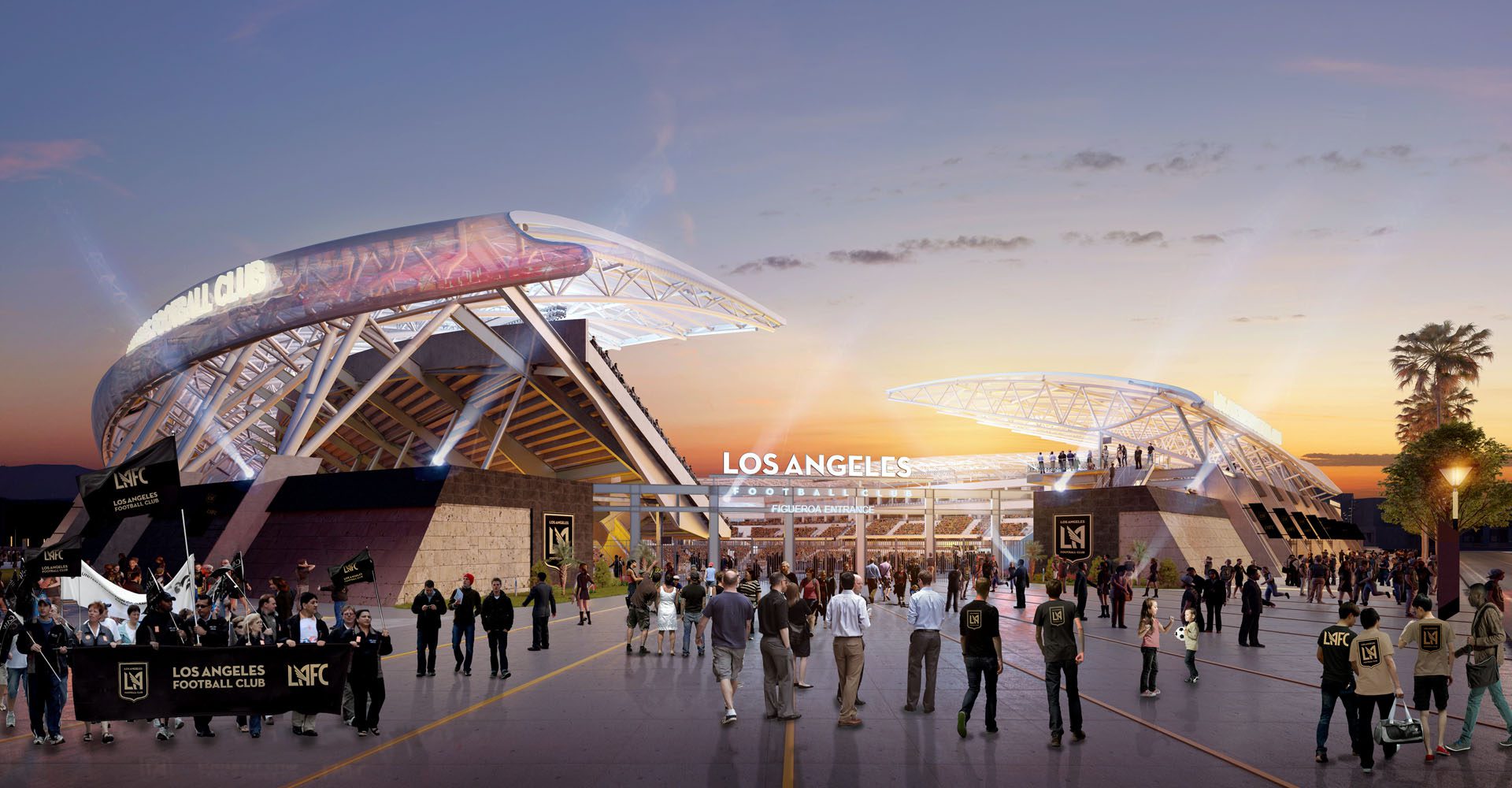
The stadium officially opened its doors on April 18, 2018. It marked a significant milestone as the first open-air stadium built in Los Angeles since Dodger Stadium in 1962. Construction was a swift affair, completed in just 20 months, quickly solidifying its status as one of the city’s premier sports arenas.
So, how did it all begin? On May 17, 2015, the Los Angeles Times announced the selection of a new site for a state-of-the-art stadium. Projections estimated the creation of 1,200 temporary construction jobs and 1,800 full-time positions once operational. This employment boom was expected to generate an impressive $2.5 million in annual tax revenue for the city.
The Los Angeles City Council gave the stadium project the green light on May 6, 2016, authorizing site clearance. The groundbreaking ceremony followed on August 23, 2016, leading to the grand opening on April 18, 2018. The first public event was an open practice, with the inaugural match against the Seattle Sounders held on April 29, where the home team clinched a 1-0 victory.
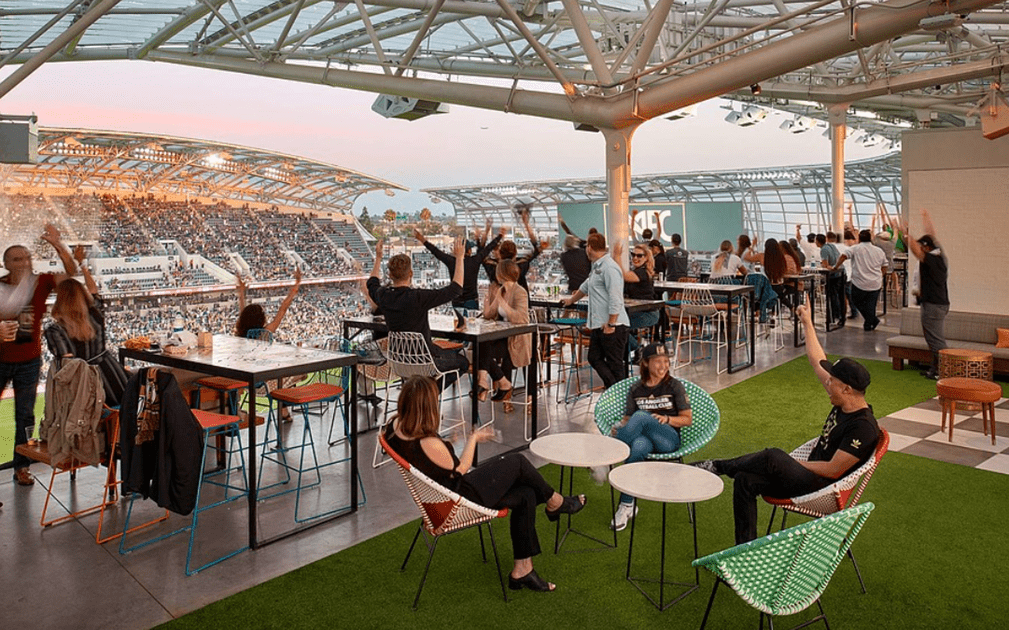
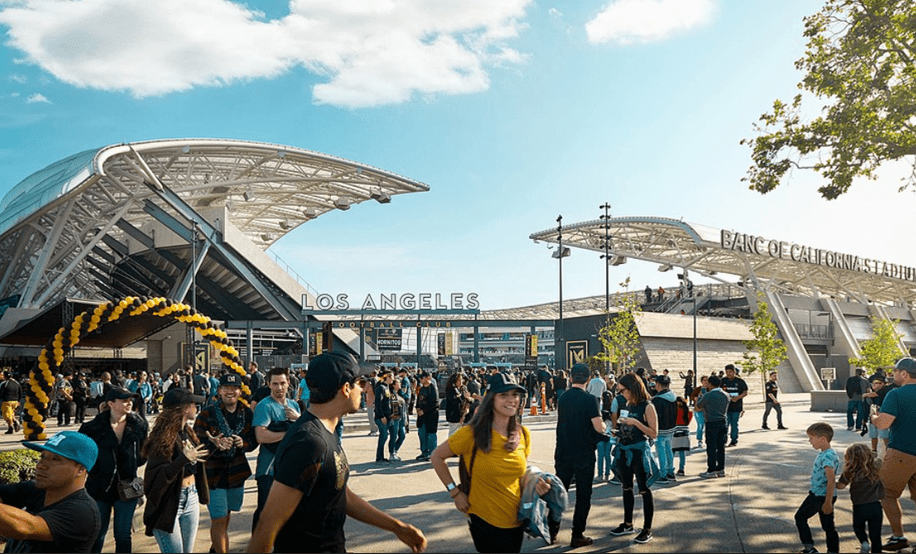
The northwest plaza offers ample space for various events. The stadium also features a team store and Fields LA, a food hall boasting local culinary delights and beverages. For an enhanced game-day experience, a rooftop terrace garden provides additional space and can even be rented for private parties.

Design and Architectural Highlights
BMO Stadium stands on the site of the former Los Angeles Memorial Sports Arena, nestled beside the iconic Los Angeles Memorial Coliseum. Just south of this location lies the main campus of the University of Southern California.
The stadium’s unique “open-air arena” design was brought to life by a talented team, including structural engineer KPFF, architect Gensler, mechanical/electrical engineer ME Engineers, Inc., and structural engineer Thornton Tomasetti. The playing field was excavated 22 feet into the ground, and a remarkable 2,300 tons of steel were used in its construction.
Affordably priced seating is steeply angled at 34 degrees, with the closest seats a mere 12 feet from the pitch. Remarkably, every seat is within 135 feet of the field. Spectators rave about these features, which ensure excellent, unobstructed views of the action.
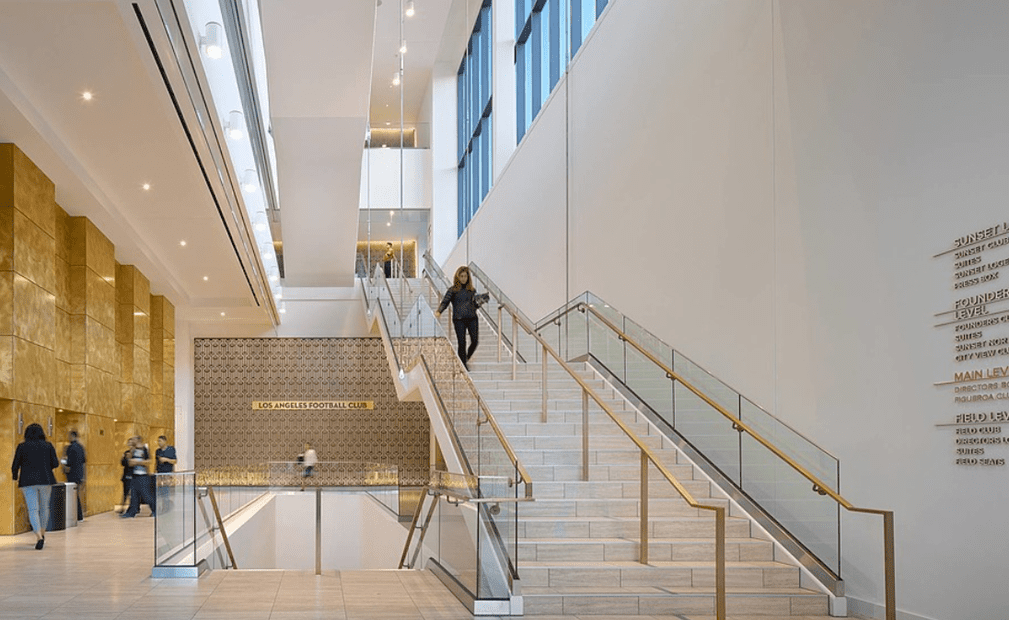
The design also incorporates premium amenities for corporate clients, including expansive clubs, lounges, 22 private suites with retractable glass facades, and business clubs on the north and west stands. An added perk? Stunning sunset views and a pool area.
Eco-Friendly Construction
It’s also worth noting that the stadium holds a LEED Silver certification from the U.S. Green Building Council. Here are some key elements that helped BMO Stadium achieve this prestigious recognition:
- Pre-construction Energy Efficiency: This involved an optimized building design to reduce the need for artificial lighting and air conditioning, the installation of innovative HVAC systems, the use of local materials, and the implementation of intelligent building management systems.
- Rainwater Harvesting: Collected rainwater is used for irrigating the stadium’s green spaces, gardens, and landscaping, as well as for toilet flushing and other technical needs.
- Green Spaces: Surrounding the stadium are gardens, relaxation areas, walking paths, and public spaces, further integrating the urban park with the surrounding neighborhood.
- Sustainable Transportation Solutions: The stadium features 440 bicycle parking spaces, 5% of parking spots with charging stations, and 20% with infrastructure for electric vehicles. There’s also a strong emphasis on public transportation, including a dedicated bike lane to the stadium on Figueroa Street, a major north-south artery in Los Angeles County.
These comprehensive measures highlight BMO Stadium as a prime example of a responsible and sustainable approach to the construction and operation of large-scale venues.
General Information
The stadium boasts a capacity of 22,000 for soccer matches and up to 24,000 for concerts. The north terrace alone accommodates 3,252 seats.
It serves as the proud home of the Los Angeles Football Club (LAFC), the city’s Major League Soccer team. Since November 2020, BMO Stadium has also been the home arena for the Angel City FC of the National Women’s Soccer League.
The Los Angeles Football Club leases the stadium site from the University of Southern California. USC, in turn, holds a master lease agreement with the Los Angeles Memorial Coliseum Commission for the operation and management of not only the Coliseum but also adjacent facilities, including the stadium site. This lease agreement extends until December 31, 2054.
Beyond soccer, the stadium hosts a diverse range of events, including rugby, lacrosse, and boxing. It’s also a popular venue for concerts and other musical performances. The city council even utilizes it for local cultural events in Los Angeles’s Ninth District.
Interestingly, the stadium has also been a venue for esports events, showcasing its versatility.
Sponsors
With a budget of $350 million, the stadium was entirely privately funded.
In 2016, the Los Angeles Football Club inked a 15-year, $100 million naming rights deal (through 2023) with Banc of California. While this agreement was one of the largest of its kind at the time, it was prematurely terminated in 2020. Consequently, Banc of California paid $20.1 million for the early termination, though the organization remained a club sponsor.
In January 2023, the Bank of Montreal (BMO) became the stadium’s new sponsor. This resulted in a 10-year, $100 million agreement, translating to $10 million annually. This deal set a new record as the largest naming partnership in history.
In 2018, BMO Stadium received an award from the American Concrete Institute for its decorative use of concrete in construction. That same year, the Southern California Development Forum honored the stadium in the “Development Team of the Year” category.
The Los Angeles Business Council recognized BMO Stadium in 2019 in the Hospitality & Attractions category, where the stadium took home the top prize.
2028 Olympics
BMO Stadium is slated to be part of the Downtown Sports Park, hosting flag football and lacrosse competitions during the 2028 Summer Olympics in Los Angeles.
BMO Stadium stands as a modern, multi-functional facility. Beyond being the home of the Los Angeles Football Club, it’s a vital part of Los Angeles’s sports and entertainment landscape. Numerous publications have highlighted the stadium’s role as an anchor and catalyst for the city, significantly contributing to the region’s economic development.