

Located on Carroll Avenue, this historic site in Los Angeles stands as the last Victorian house, silently witnessing the glory days of the late 19th century. Both residents and visitors are captivated by the stunning mansion, designed in the Queen Anne style, featuring intricate decor and generous living spaces. This historical landmark illustrates the transformation of Los Angeles for its current residents. The Future Los Angeles will reveal more on this topic.
The story of Haskins House
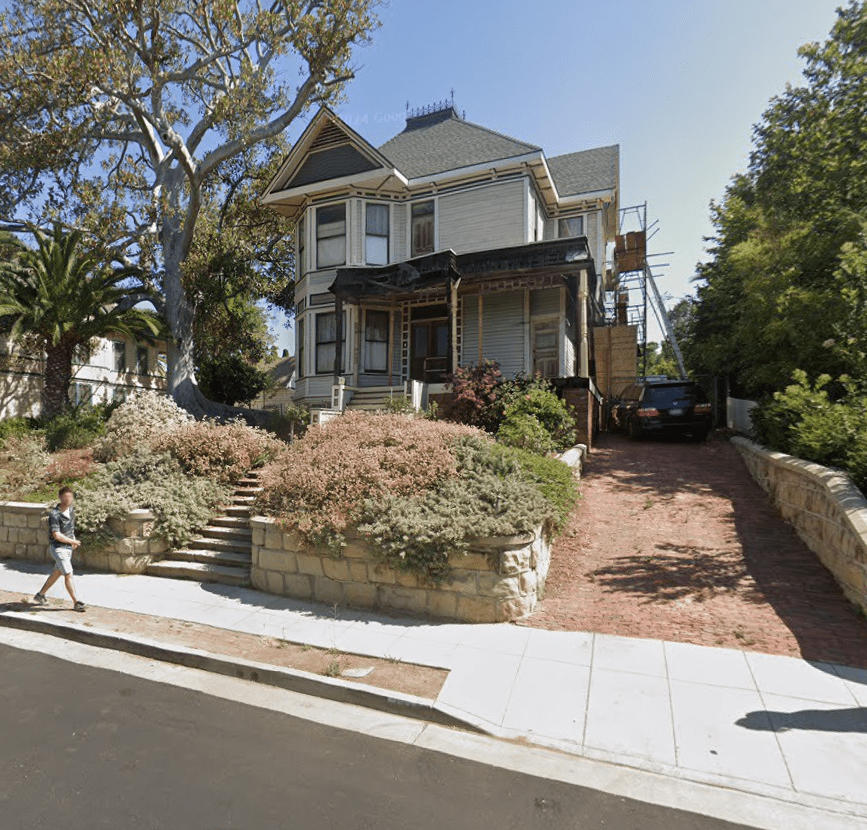
In Los Angeles, historic buildings with remarkable architecture can be found throughout the city. One such building that captures attention is Haskins House, located at 1344 Carroll Avenue, although the identity of its architect remains unknown. This Victorian-style house, constructed in 1894, is located in a designated historic district. It functions as a private residence, intended for a single family. The interior has been fully restored and as of 2018, the house includes four bedrooms and one bathroom.
Architectural features
The building exemplifies the flourishing of late Victorian architecture, showcasing several distinctive features:
- Intricate sunburst designs, a hallmark of Victorian architecture, where sunbeams represented divine light.
- Fish scale roof shingles. They were popular in earlier periods for their texture, depth and effectiveness in protecting against rain and wind.
- Gracefully curved columns that enhance the building’s elegance, commonly found in many Victorian-style homes.
- Spindles are prevalent throughout, from the porch railings to the main entrance and various other areas. The diverse patterns emphasize the uniqueness of each building.
- Art glass adorns the transoms of the front window. Stained glass and other artistic glass types were typical of the Victorian period and often used to embellish windows, doors and other architectural features.
- Spindles display a variety of alternating patterns, featuring intricately carved semicircular details. This variety enhances the overall beauty of the building.
All of these elements were popular in the Victorian era. A closer look at the reasons for this reveals that the wealthy residents of Los Angeles used them to showcase their status and refined taste, with numerous aspects also holding religious importance.
The house’s exterior is asymmetrical, highlighted by rounded shapes and a mansard roof that elegantly represents the Queen Anne style. At times, you can sense the link to the Italianate design of the nearby Foy house. This style features bay windows with sloping sides instead of flat ones, along with cornices that have prominent brackets. An unnamed architect highlighted vertical elements through the slender tower and narrow windows.
As a result, Haskins House truly embodies the essence of its time.
Who was Charles C. Haskins?
He was a prominent real estate developer in the city. In 1894, a house was constructed for him and his wife, Ida Chadwick. Patrick McGrew’s book, Landmarks of Los Angeles, mentions that this house was built in 1888, while another source cites it was completed in 1895.
Two Los Angeles directories confirm that Charles C. Haskins was involved in real estate. Before moving to Los Angeles in 1880, Charles Haskins resided in Elkhart, Indiana, where he worked as a salesman.
Charles C. Haskins (1852 – 1899) was originally from Wisconsin. He resided at Haskins House until at least 1897. His wife passed away in 1912 and together they had two children named Charlton and Hazel.
Los Angeles Conservancy
Haskins House is a historic site affiliated with the Los Angeles Conservancy. This non-profit membership organization focuses on acknowledging, preserving and revitalizing the historic, architectural and cultural treasures of Los Angeles County by promoting education and informed policies.
The organization was established in 1978 with the mission of preventing the demolition of the Los Angeles Central Library. Over the years, the Los Angeles Conservancy has grown to have the largest membership of any local preservation group in the United States. They hold the belief that in Los Angeles, the past holds significance for both the present and the future.
Through walking tours and special events, they effectively engage both residents and visitors with the city’s historic buildings and unique sites that define Los Angeles. This approach is fostering a new generation of historic preservation advocates, bringing history to life for thousands of students each year.
Why is it important to preserve landmarks in Los Angeles?
Haskins House serves as a prime example of a historic building that has been maintained in the city. As the last surviving example of Victorian architecture, its rarity adds to its significance and worth. This raises an important question: why should we advocate for the preservation of such sites?
For one, it allows us to connect with places that have become integral to our identity. These landmarks symbolize our cultural values and embody a shared history. The older, historic neighborhoods of Los Angeles offer authenticity, showcasing features that reflect the cultural essence of their time. Additionally, historic sites draw in tourists, enhancing the city’s tourism sector.
Haskins House, the last remaining Victorian-style structure, stands as a cherished landmark in Los Angeles. This house, like many others of its time, plays an essential role in preservation as it represents a piece of living history. It inspires and brings people together, enhancing their appreciation of the city’s vibrant past and strengthening ties within the community.