

St. Vibiana’s Cathedral stands as a cornerstone of Los Angeles history. For over a century, this Catholic cathedral served as the Mother Church for the Archdiocese of Los Angeles, leaving an indelible mark on the city’s cultural and architectural evolution. In the 21st century, the building has been reimagined as a premier cultural and event venue, preserving its historic soul and unique design. Discover more at la-future.
The Birth of a Landmark
The vision for St. Vibiana’s Cathedral dates back to 1859. The land, situated at the southeast corner of Main and Second Streets in the heart of Downtown LA, was donated by Amiel Cavallier. Upon its consecration in 1876, the project’s total cost reached $80,000 — a significant sum for the era.
At the time of its opening, the cathedral could accommodate roughly one-tenth of the city’s entire population. In 1895, the interior underwent a luxurious upgrade featuring onyx and marble, followed by a major facade renovation between 1922 and 1924 inspired by Roman design. Pope Pius IX chose the cathedral’s name in honor of Saint Vibiana, a third-century Christian martyr. Her relics were transported from the Roman catacombs and placed in a marble sarcophagus above the high altar. By the 1940s, the complex grew to include a rectory and a school, though the latter closed in 1969 due to funding shortages.
As Los Angeles boomed, the cathedral eventually outgrew its capacity. The situation reached a breaking point after the 1994 Northridge Earthquake, which severely damaged the 1,200-seat sanctuary. While the Archdiocese initially planned to demolish the structure to build a new mother church, they were met with fierce resistance from historic preservationists. A compromise was struck in 1996: the Archdiocese moved to a new site to build the Cathedral of Our Lady of the Angels, and the historic St. Vibiana’s was handed over to the City of Los Angeles. Many of its original treasures, including its stunning stained glass and Saint Vibiana’s sarcophagus, were integrated into the new cathedral.
A Masterpiece of Design
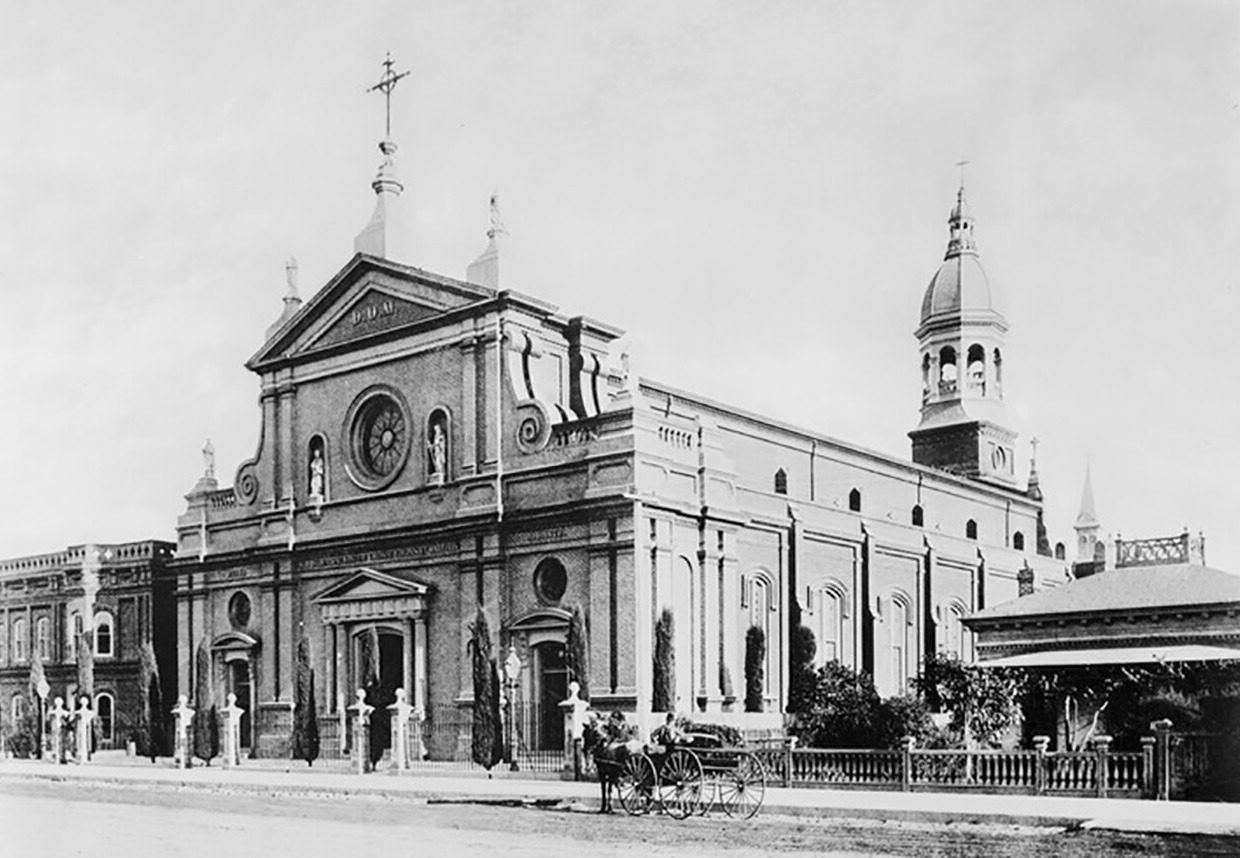
The cathedral was designed in the Italianate style with distinct Baroque flourishes—a hallmark of 19th-century Catholic architecture that lent the building its grand and solemn presence. The architectural vision was brought to life by Ezra F. Kysor and later John C. Austin. Kysor, one of LA’s first professional architects, already had landmark projects like the Pico House under his belt. Austin was the visionary behind the massive facade overhaul in the 1920s.
The exterior was celebrated for its symmetrical composition and classical elements, such as arched windows that emphasized its architectural formality. The building’s visual centerpiece was its 83-foot-tall domed bell tower, which was meticulously restored in 2007. In its early years, the cathedral leaned heavily into Baroque and Roman influences, blending decorative details with traditional classical lines to create a majestic anchor for the growing city.
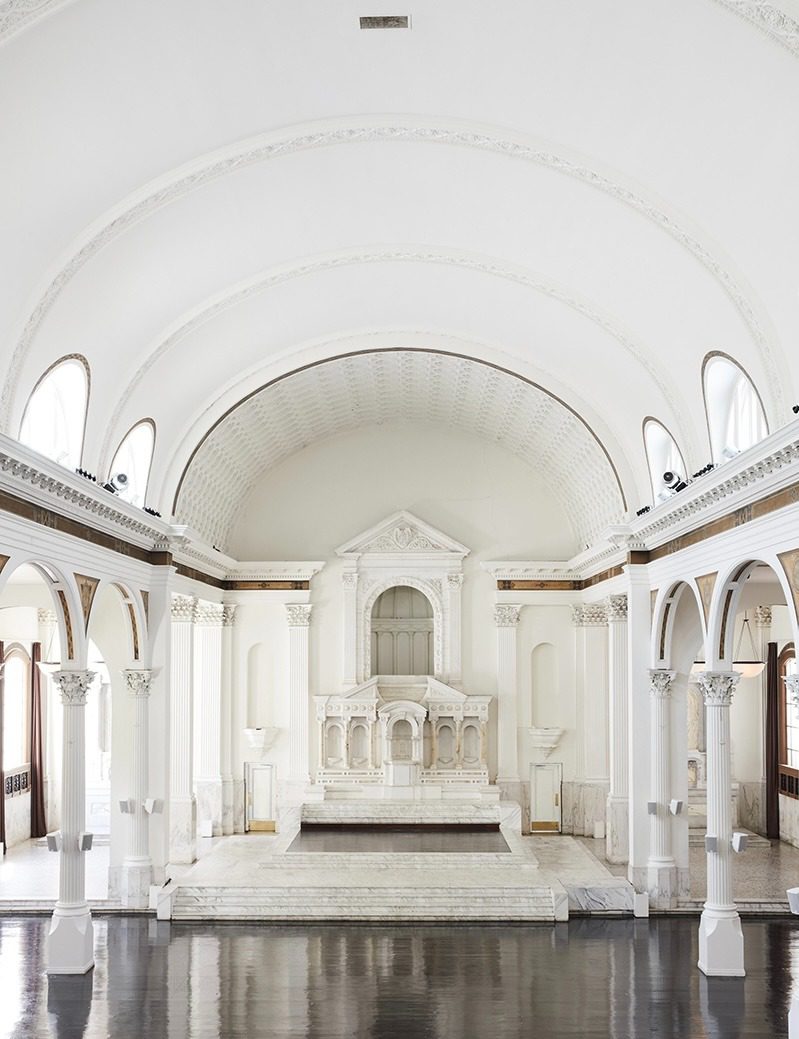
From its inception, the design included intricate details like statues, ornate window frames, and religious symbolism above the entrance. Archival photos from the early 1900s reveal small towers, a rose window above the main entrance, and elegant balustrades. Inside, the cathedral followed a classic basilica layout, featuring a high-vaulted central nave flanked by side aisles and a raised altar.
A New Chapter as a Cultural Hub
In 1999, the city sold the cathedral to private developer Tom Gilmore for $4.6 million. The outdated 1940s school building was cleared to make way for the Little Tokyo Branch Library. After an extensive renovation, the doors reopened in 2005 as a world-class venue, and in 2007, the iconic 3.5-ton cupola was finally returned to the bell tower.
Today, the former cathedral is a sought-after destination for luxury weddings, galas, and cultural events. It has hosted the annual Art of Elysium charity galas, Warner Music Group parties, and even segments of the final season of “American Idol.” Since 2017, the National Trust for Historic Preservation has recognized the building as a premier example of successful historic adaptive reuse.
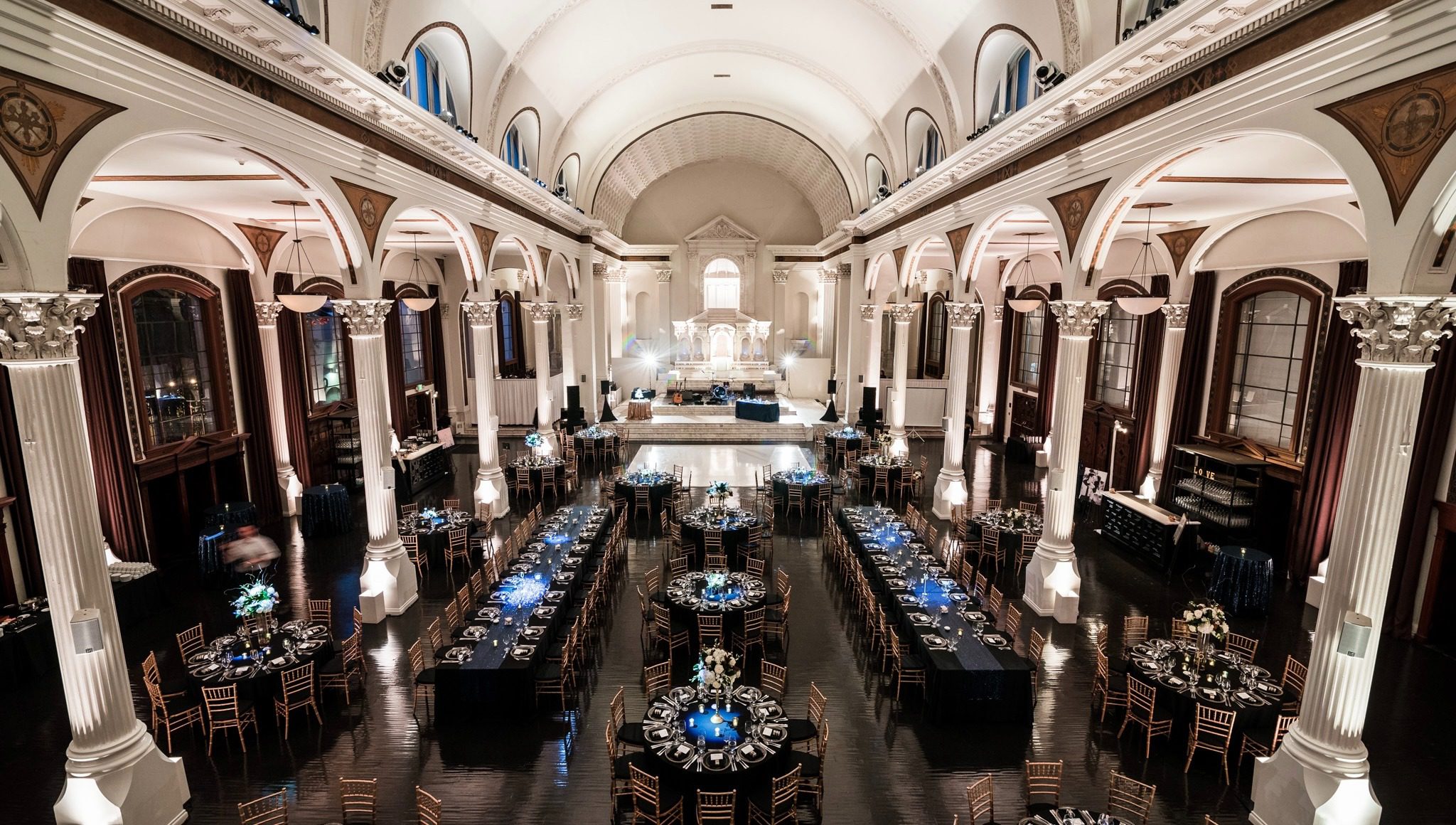
Managed as “Vibiana” and home to the acclaimed restaurant “Redbird,” the space is owned by Amy Knoll Fraser and Chef Neal Fraser. Together, they have transformed the site into a vibrant hub for the arts and high-end events while scrupulously maintaining its historic authenticity and architectural grandeur.
St. Vibiana’s Cathedral remains a powerful symbol of Los Angeles’ past and present. Its journey from a primary place of worship to a modern cultural sanctuary demonstrates a perfect balance between preserving heritage and urban progress, ensuring the heart of Downtown LA remains a living center for art and community.