

Located in the heart of historic Downtown Los Angeles, the Broadway Theater District is a unique American cultural treasure. As the first and largest theater district listed on the National Register of Historic Places, it preserves a dense concentration of movie palaces spanning eight blocks. The area was central to both the cultural life and commercial boom of the city during the first half of the 20th century. Today, the Broadway Theater District stands as the only remaining large-scale cluster of vintage movie theaters in the US, drawing tourists, film buffs, and architecture enthusiasts alike. Read more on la-future.
The Golden Age of Broadway
The district’s story began in 1910 with the opening of its first movie theater. By 1931, twelve theaters had sprung up, boasting a combined seating capacity of over 15,000. Back then, Broadway was the beating heart of LA’s entertainment industry—a vibrant hub where Hollywood stars rubbed shoulders with soldiers, pilots, and everyday locals.
A major turning point came in 1905 with the announcement of Hamburger’s, a massive department store at the corner of Broadway and Eighth Street. While skeptics questioned the location, the five-story Beaux-Arts building was an instant hit. Featuring the only escalator west of St. Louis, it drew 35,000 shoppers on opening day. This massive success was a green light for other investors, sparking a wave of commercial and office developments. From 1905 to 1950, Broadway doubled as LA’s premier shopping destination. Hundreds of thousands of square feet of retail space drove the city’s economic engine. The streets buzzed with constant energy, illuminated by the bright glow of neon signs. As critic Jack Smith noted in 1986, it remains “the only large concentration of vintage movie theaters left in America.”
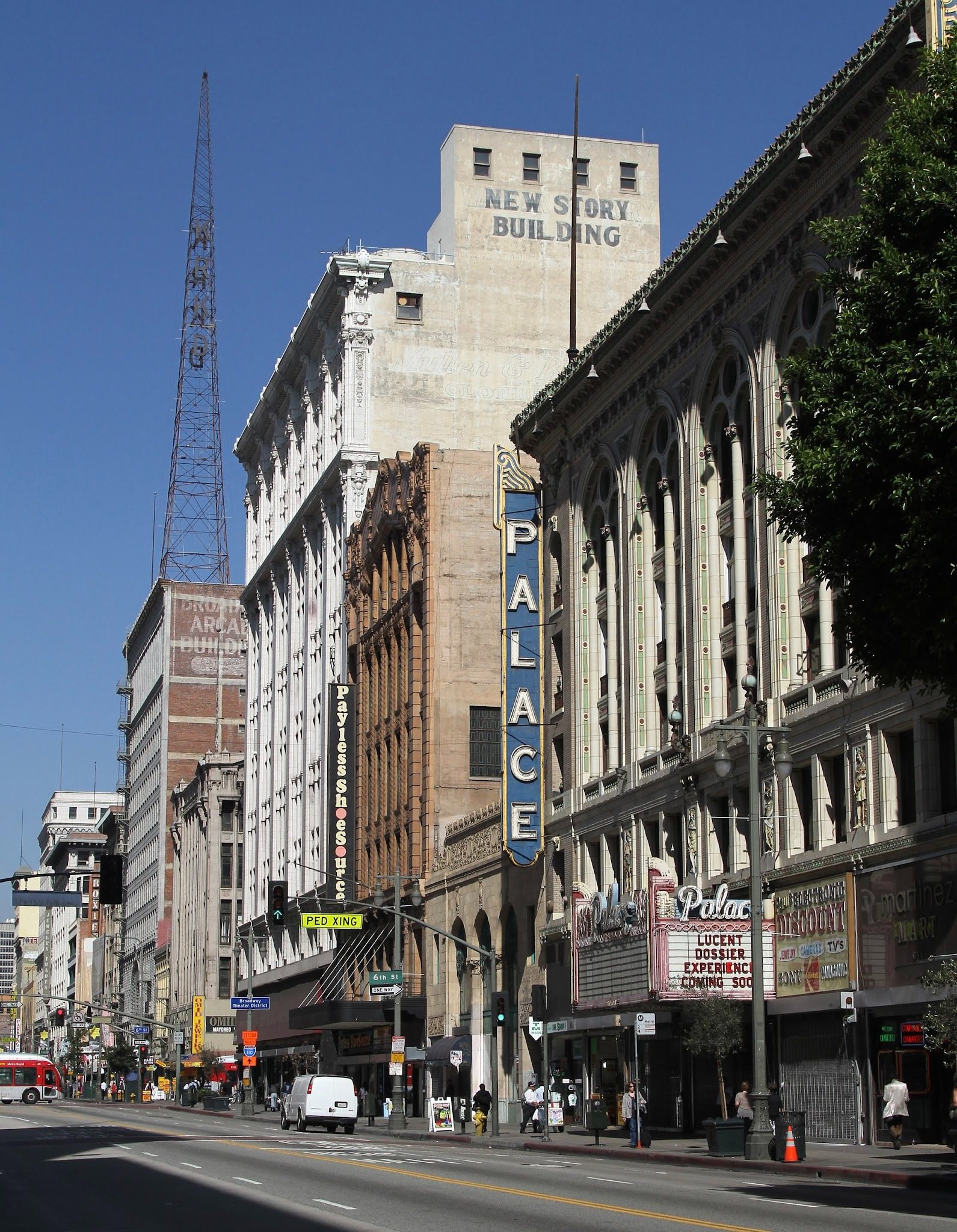
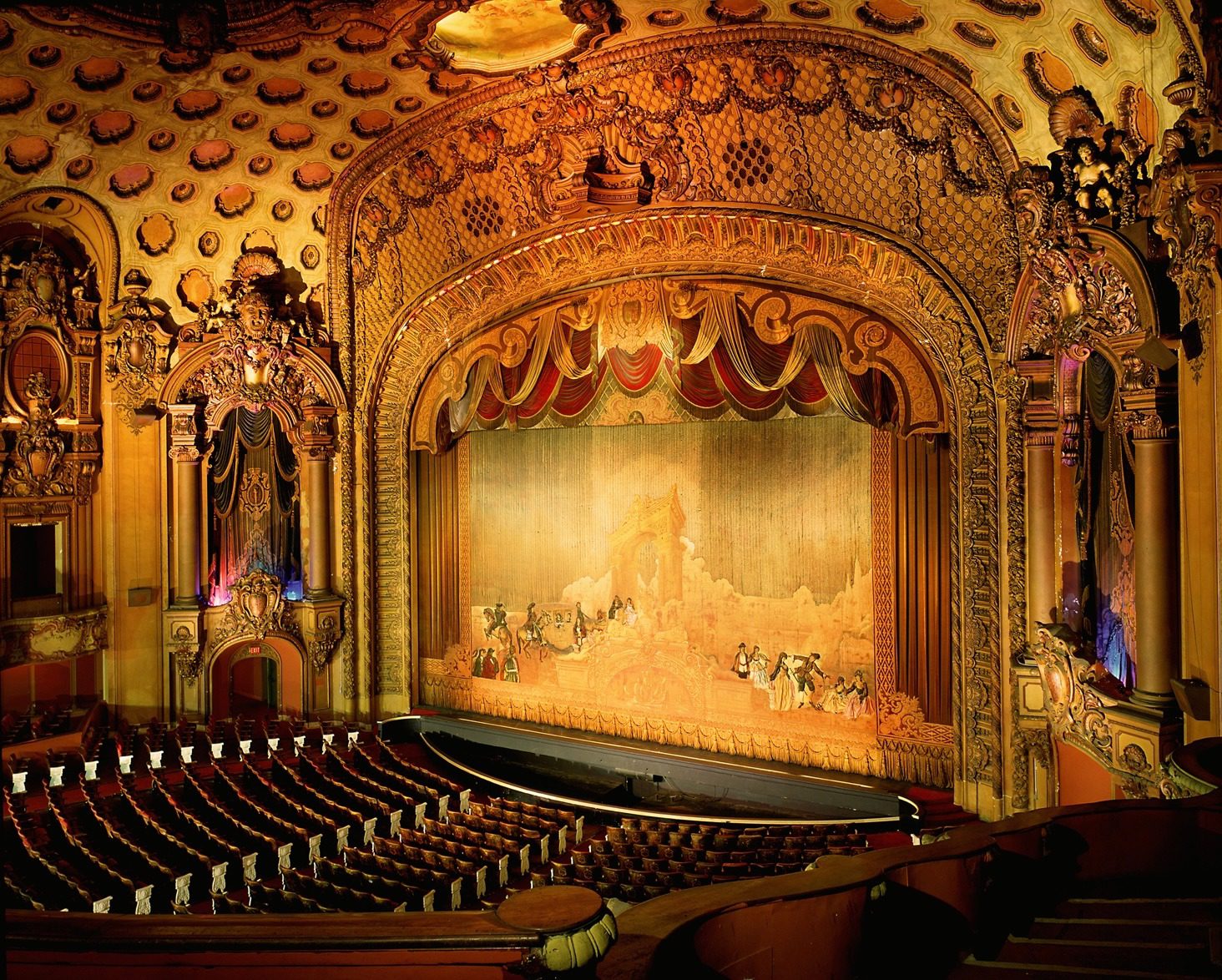
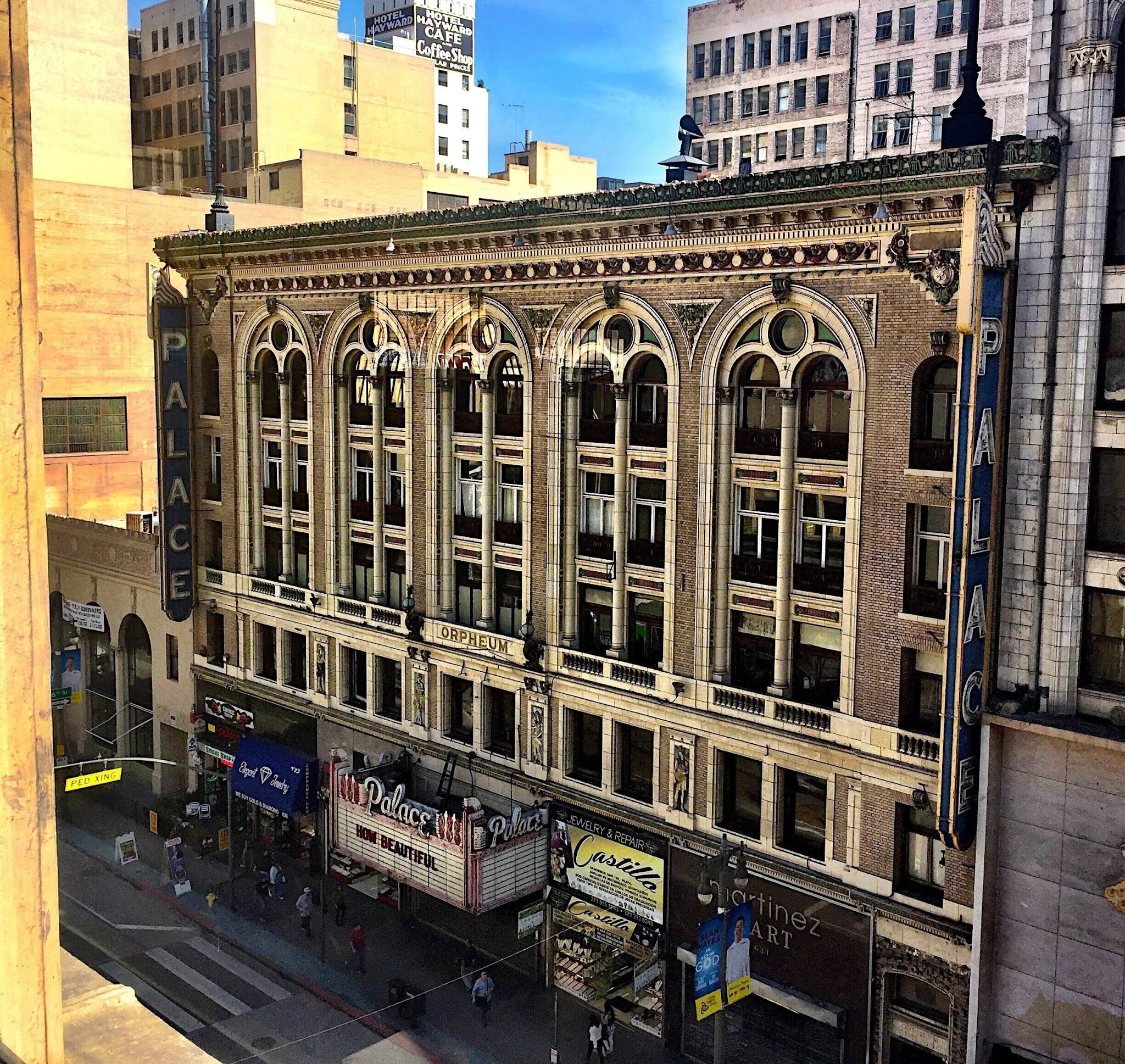
The Mason Opera House opened on Broadway in 1903, paving the way for larger venues like the Orpheum (now the Palace Theatre). The architecture of these buildings reflected the sheer luxury and grandeur of the era. You could find French Renaissance influences at the Palace Theatre, Beaux-Arts at the Globe, intricate bas-reliefs and eagles at the Los Angeles Theatre, and striking Art Deco at the Roxie. Between 1910 and 1931, twelve movie palaces were built, and remarkably, most still stand today. Now used for special events, film screenings, commercial shoots, and retail, they continue to give the district its unmistakable elegance and historic charm.
The eight blocks along South Broadway, stretching from Second Street to Olympic Boulevard, create a unique urban landscape where grand theaters blend seamlessly with department stores and office buildings. Between 1926 and 1936, Broadway served as the western terminus of the legendary Route 66. It was the finish line for tourists and Dust Bowl refugees arriving in Los Angeles, acting as a dazzling “display window” of California for a national audience.
Decline and Revival
Following World War II, the district fell into a slump. First-run movie premieres shifted to Hollywood, Westwood Village, and the sprawling suburbs, while major department stores relocated to newer shopping malls. To survive, some theaters pivoted to screening Spanish-language films or hosting variety shows. By the end of the 20th century, only the Orpheum and the Palace remained open as functioning movie theaters.
The area’s revitalization kicked off in the 1980s, driven by the Los Angeles Conservancy’s “Last Remaining Seats” program. By opening these historic venues for classic film screenings during the summer, the initiative did more than just preserve architectural heritage. It reminded audiences of the magic of watching movies in vintage, balcony-lined auditoriums with lavish interiors.
Since the early 2000s, the district has become a testing ground for adaptive reuse, transforming old office and retail spaces into trendy loft apartments. The Broadway Theater and Commercial District was added to the National Register of Historic Places in 1979, with its boundaries officially expanded in 2002. In 1999, the Los Angeles Conservancy teamed up with the city to launch the “Bringing Back Broadway” campaign, aimed at preserving the area’s architecture and cultural potential. However, the revitalization hasn’t been without controversy; the local Latino community has raised valid concerns that the campaign could accelerate gentrification.
The Theaters of the Broadway District
Twelve historic theaters still stand in the district today:
- Million Dollar Theatre – Spanish Colonial Revival, built in 1918, 2,345 seats;
- Roxie Theatre – Zigzag Moderne, built in 1932, 1,600 seats;
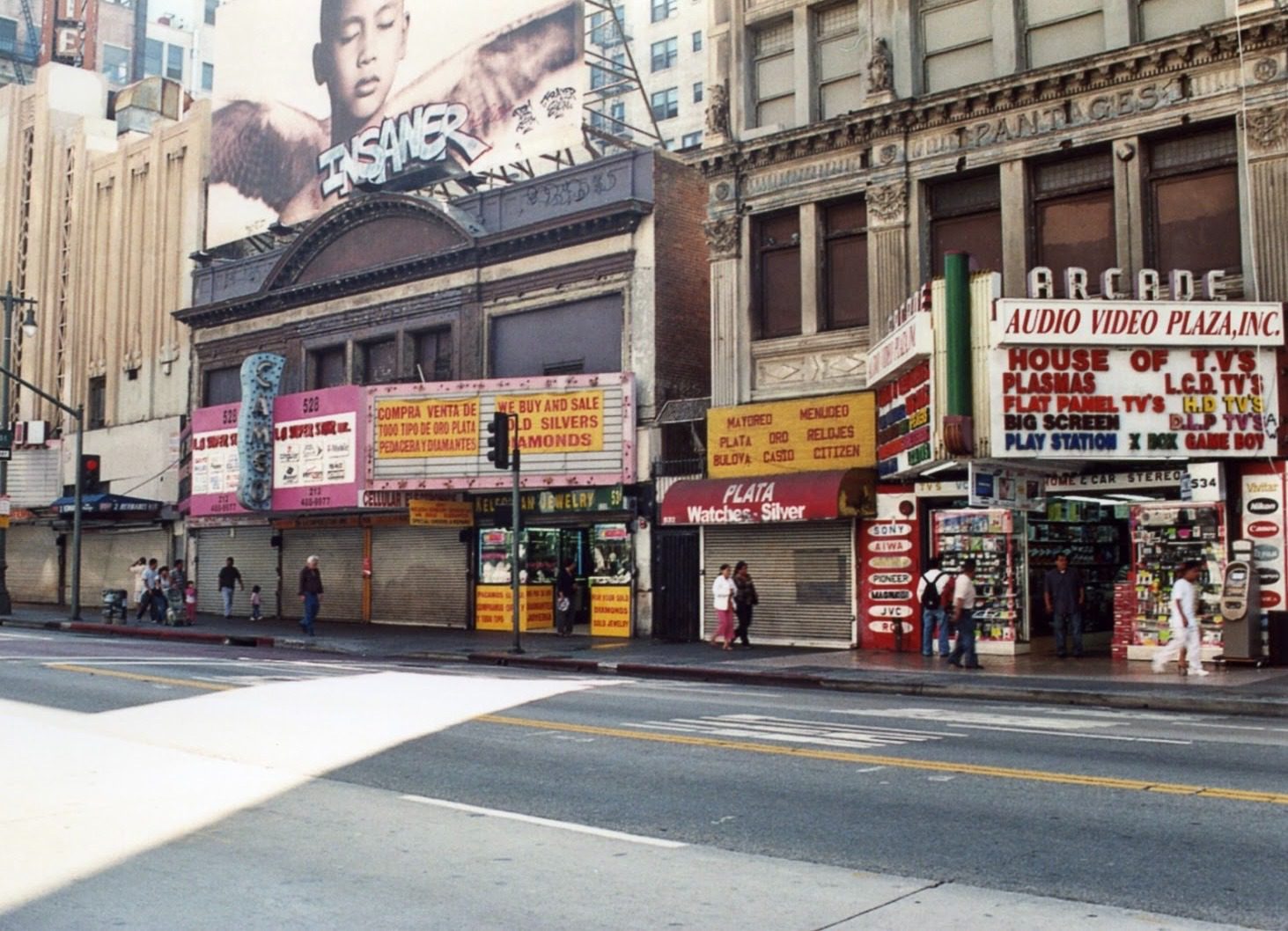
- Cameo Theatre – Renaissance Revival, built in 1910, 775 seats, now converted into retail space;
- Arcade Theatre – Beaux-Arts, built in 1910, originally a vaudeville house, later a cinema, now retail;
- Los Angeles Theatre – French Baroque, built in 1931, 1,931 seats;
- Palace Theatre – Early Florentine Renaissance, built in 1911, 1,068 seats;
- State Theatre – Beaux-Arts, built in 1921, currently functioning as a church;
- Globe Theatre – Beaux-Arts, built in 1913, 2,000 seats;
- Tower Theatre – Baroque Revival, built in 1927, now converted into retail space;
- Rialto Theatre – Georgian Revival, built in 1917;
- Orpheum Theatre – Beaux-Arts, built in 1926, operates as a concert venue and cinema;
- United Artists Theatre – Gothic, built in 1927, fully restored and operating as a performance space.
The architectural masterpieces of the district feature ornate facades, sculptures, clock towers, and artistic details that showcase a wild variety of styles—from Beaux-Arts and Art Deco to French Renaissance. Every building tells the story of an era when Los Angeles was crowning itself the undisputed cinematic capital of the world.
Commercial Boom
During the first half of the 20th century, the Broadway Theater District was the ultimate shopping hub in Los Angeles. Heavyweight department stores like A. Hamburger & Sons/May Company, Bullock’s, The Broadway, Fifth Street Store/Walker’s, Eastern-Columbia, and Blackstone’s/Famous all set up shop here. With over 3.4 million square feet of retail space, these stores formed the city’s economic core, creating jobs and pulling in shoppers from across the entire region.
Naturally, the Broadway Theater District has served as a backdrop for countless Hollywood films. Blockbusters and classics like Safety Last! (1923), Blade Runner (1982), Barton Fink (1991), Last Action Hero (1993), Ed Wood (1994), 500 Days of Summer (2009), The Artist (2011), and La La Land (2016) all utilized the area’s striking visuals. The architectural grandeur and historic vibe have cemented the district as an enduring symbol of classic Hollywood.
The Los Angeles Conservancy hosts regular walking tours of the district, introducing visitors to the rich history and architecture of Broadway. The local cultural calendar is packed with special screenings, concerts, and live events inside these beautifully restored theaters. By seamlessly blending historic value with modern functionality, the area continues to draw tourists, filmmakers, and the local community.
The Broadway Theater District is a masterclass in Los Angeles culture, architecture, and history. After enjoying a Golden Age in the first half of the 20th century and enduring a post-war slump, the area bounced back thanks to the relentless efforts of local preservationists and the city. Today, the district thrives as a cultural epicenter and a vital tourist destination, keeping the legacy of American cinema and theater alive and well.