
In the very heart of Los Angeles stands one of the city’s most prominent architectural landmarks: the Millennium Biltmore Hotel. It emerged not only as a masterpiece of luxurious early 20th-century hotel architecture but also as a reflection of the cultural politics of its era. Its interiors, decorative elements, and overall style reveal more than just aesthetic trends; they embody an ideology often referred to as the “Spanish fantasy heritage.” Read more on la-future.
The Origins of the Project
In the early 20th century, Los Angeles was far from the sprawling metropolis we know today. The turning point was the oil boom, which fueled rapid economic growth. The city began to transform. Skyscrapers reshaped the skyline, the population surged, and the urban landscape increasingly began to mirror East Coast giants like New York and Chicago.
Amidst this boom, a group of influential civic leaders decided to build a landmark that would symbolize the city’s newly elevated status. Led by banker Joseph Sartori, several prominent figures joined the initiative. They formed the Central Investment Corporation, raising substantial capital to construct the hotel. The president of the Bowman-Biltmore Hotels chain also stepped in to help bring the vision to life. The architectural design was entrusted to Schultze and Weaver, a New York-based firm renowned for its large-scale, ambitious projects.
The Architectural Vision
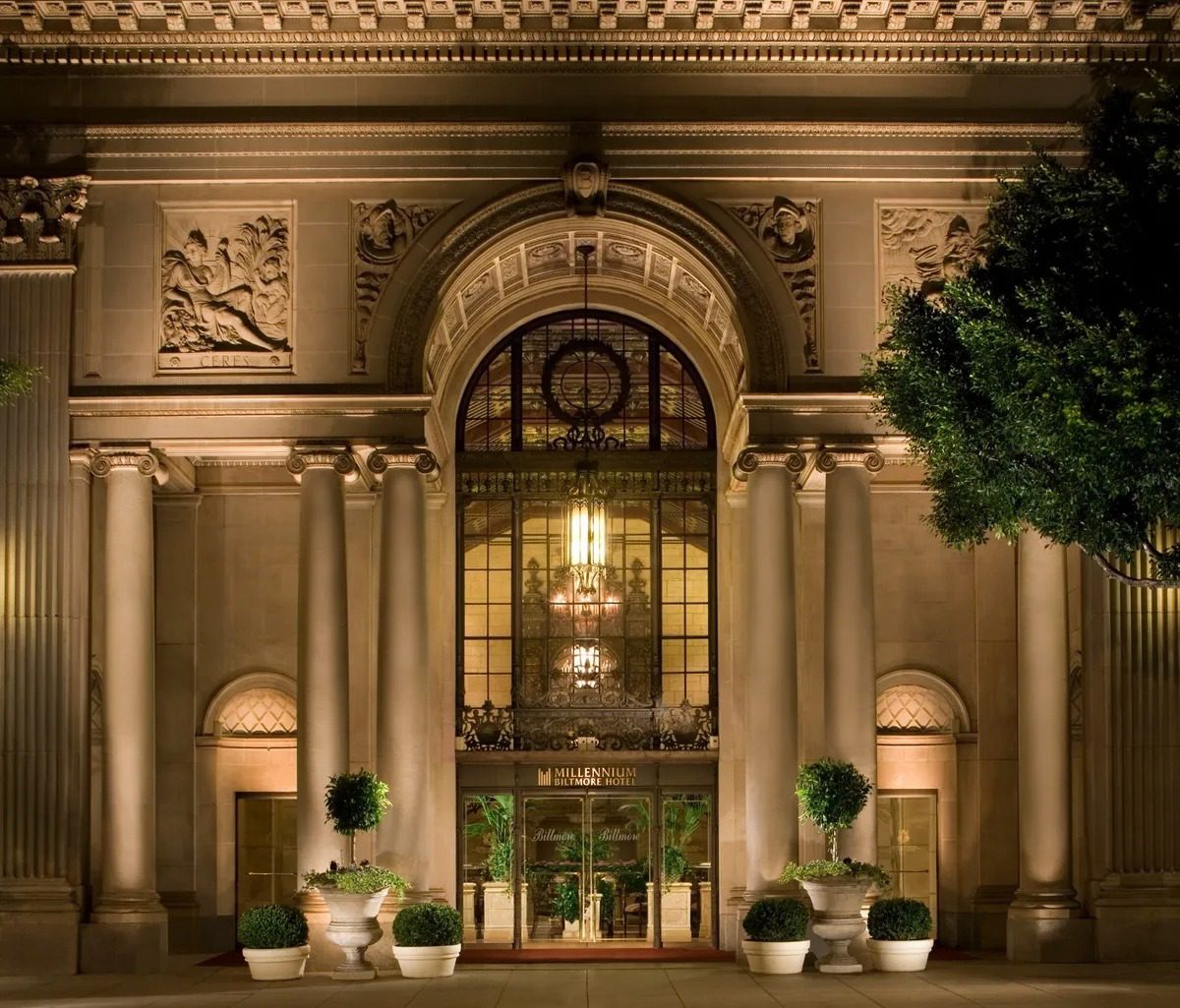
The hotel was designed in the Italian Renaissance Revival style—a very deliberate choice. The developers intentionally bypassed the Spanish Colonial style that was typical of Mexico and the American Southwest. Instead, they opted for a distinctly “European” Renaissance aesthetic, which carried strong associations of aristocracy and Old World cultural heritage.
Mid-20th-century promotional materials for the hotel explicitly stated that its architecture should harmonize with California’s history while reflecting its Castilian heritage. This approach carefully curated an image of Los Angeles as a city with deep European roots, consciously marginalizing the narratives of its Mexican and Indigenous populations.
This architectural direction was part of a broader trend. In the first half of the 20th century, the city’s elite actively crafted a narrative around LA’s “Spanish origins.” However, this was more of a romanticized fantasy than an accurate historical reality. Traces of this “fantasy heritage” are woven into the hotel’s very details. For instance, the bas-reliefs near the main entrance on Olive Street depict Spanish explorers. They symbolically reinforce a connection to the Spanish Crown, glossing over a much more complex historical reality.
Constructed with over 5,200 tons of steel, the building was designed for both monumental scale and longevity. Soaring over ten stories high, it easily dominated the urban landscape, cementing the hotel’s status as a true architectural centerpiece.
Spatial Layout and Interior Design
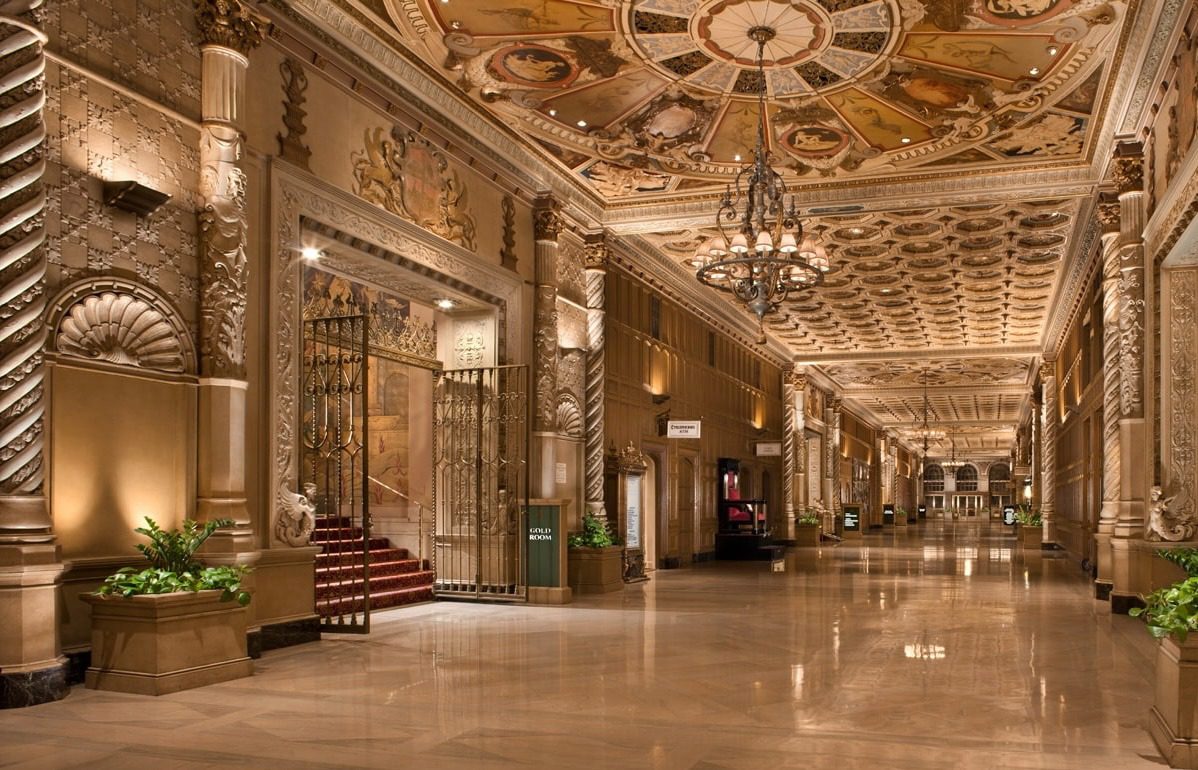
The hotel’s interior spaces showcase an even more extraordinary level of detail. The central lobby, famously known as the Rendezvous Court, is designed to evoke the altar of a Castilian cathedral. It features 24-karat gold accents, bronze bas-reliefs, and decorative elements inspired by European iconography. Italian artist Giovanni Smeraldi played a pivotal role in shaping these interiors, painting the ceilings with striking Greco-Roman frescoes. His depictions of nymphs, satyrs, and cherubs echo Renaissance masterpieces and give the space its unique, immersive atmosphere. The galleries are adorned with Pompeii-inspired friezes, while the Music Room features intricate glass fixtures that bathe the room in vibrant, multicolored light. The interiors are not just visually stunning; they completely transport guests into the world of European high culture.
However, the Biltmore’s interiors are a masterful blend of luxury and pragmatism. Many decorative elements that appear to be solid marble or hand-carved wood are actually made of plaster. This clever illusion significantly cut costs and sped up construction without sacrificing any visual impact. The hotel’s long galleries, lined with angelic figures and elaborate ornamentation, successfully recreate the grandeur of a European palace. Every space is designed to awe: high ceilings, perfect symmetry, dramatic lighting, and meticulous detailing combine to create a deeply theatrical experience.
The architects paid special attention to the layout of the first mezzanine, which housed the main public gathering spaces:
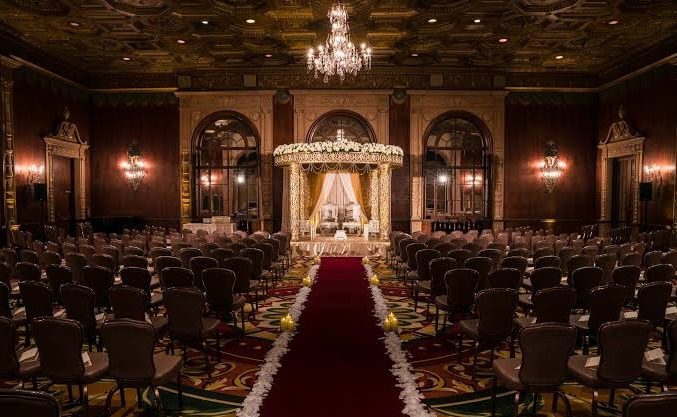
- The Renaissance Room (now the Emerald Room): A grand dining room featuring a hand-painted 24-foot ceiling, capable of seating 350 guests.
- The Palm Room and Supper Room (now the Gold Room): Two distinct spaces that were seamlessly merged during a modern renovation.
- The Music Room: A lavish banquet hall featuring a decorative fountain and an opalescent glass ceiling that mimics Louis Comfort Tiffany’s iconic lamps. The room was originally meant to display 17th-century Flemish tapestries. Unfortunately, they were involved in a train derailment during transit, and one was completely destroyed by an acid leak.
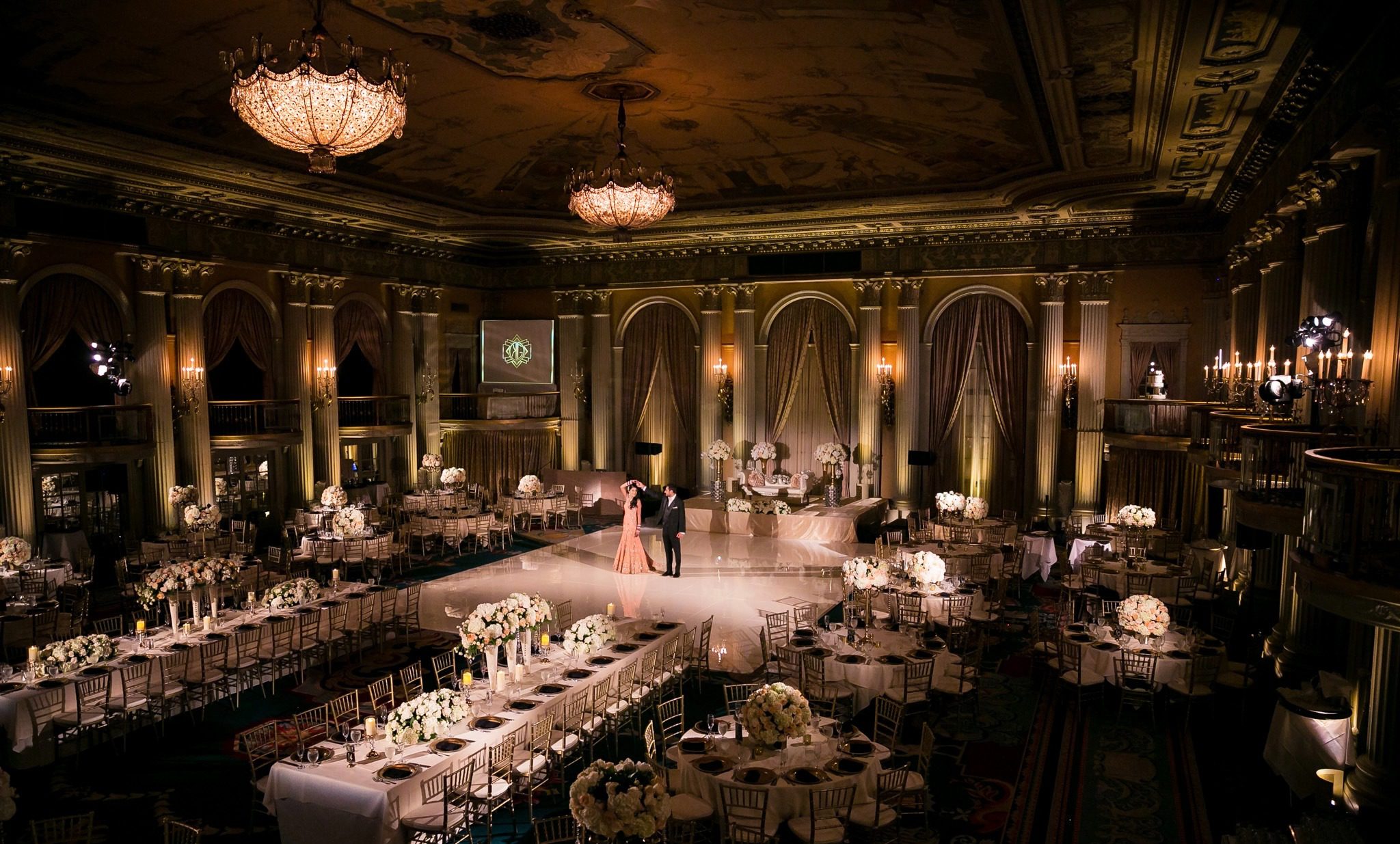
The crowning jewel of the architectural layout is the Crystal Ballroom, approached through a sweeping, spacious foyer. This progression creates an “architectural script”—a gradual transition from understated elegance to breathtaking visual splendor. It was a hallmark design technique for grand hotels of the era, where architecture was intended to be a deeply emotional experience.
A Cultural Epicenter
The hotel’s grand opening in 1923 was one of the most highly anticipated events in the city’s history. Demand for gala tickets far exceeded capacity, with thousands clamoring to attend the celebration. The guest list was a who’s who of prominent politicians, business moguls, and cultural icons. The event even left its mark on fashion: a dress worn by socialite Peggy Hamilton became such a sensation that it was dubbed the “Biltmore Dress.”
The Millennium Biltmore quickly became the beating heart of Hollywood’s social scene. It was here that industry leaders held the foundational meetings that led to the creation of the Academy of Motion Picture Arts and Sciences. Naturally, the hotel went on to host several early Academy Award ceremonies.
During the Prohibition era, the hotel was a hub for both official galas and a thriving underground nightlife. The Gold Room harbored a hidden speakeasy—an exclusive bar accessible only to an elite few. It drew a colorful crowd, including some of the era’s most notorious underworld figures.
The Biltmore also played a pivotal role in American politics. In 1960, it served as the headquarters for the Democratic National Convention, where John F. Kennedy officially secured his presidential nomination.
By the 1970s, the hotel fell into a period of decline, mirroring the broader struggles of downtown LA at the time. Fortunately, the building was saved through the dedicated efforts of developers Gene Summers and Phyllis Lambert. Today, in the 21st century, it is owned by Millennium & Copthorne Hotels, a company committed to preserving its historical legacy and architectural integrity. As a result, the Biltmore remains not just a historic landmark, but a fully functioning hotel that proudly retains its unique character and cultural heritage.
The Millennium Biltmore Hotel in Los Angeles is far more than just a historic place to stay. Its architecture is the physical embodiment of early 20th-century Los Angeles cultural politics. It weaves together Renaissance aesthetics, clever technical workarounds, and deliberate ideological narratives. Beyond its undeniable visual brilliance, the building serves as a reminder of the city’s complex journey in forging its identity—a history where architecture itself became a powerful tool for myth-making.