

Either solely or with the help of colleagues, Heinemann designed and developed more than twenty military aircraft. In addition to aircraft design, Heinemann and his team created a number of aircraft components and weaponry, including ejector seats, bomb racks, low-drag streamlined bombs, fuel tanks, autopilots, and air data computers. Edward Heineman dedicated his career to solving engineering problems in aviation science. The genius of the day, his intelligence and his creativity made significant contributions to the advancement of world aeronautics. Learn more at la-future.
Each aircraft built by the designer is thought to be the best in aviation history. The Dauntless dive bomber played a crucial role in the World War II battles of Midway and the Coral Sea, therefore contributing to the victory of the Allied forces. His Skyrocket was the first aircraft that flew twice as fast as sound. For many years, his A-4 Skyhawk served in the United States Navy. You may also read about a Ukrainian in Los Angeles who makes airships for the Pentagon.
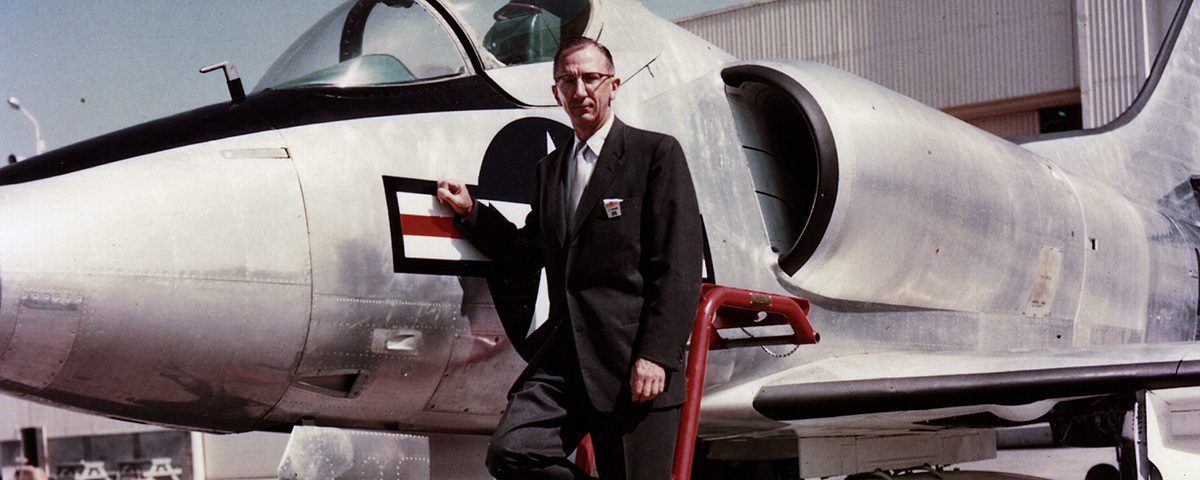
Biography
In 1926, Edward Heinemann dropped out of high school and went to work for the Douglas organization. He received a weekly compensation of $19 for drawing with pen and ink. Later on, this individual without an actual engineering degree commanded entire teams of graduate engineers and taught them the fundamentals of aircraft design. He was a brave enough innovator with great endurance and drive.
Edward Henry Heinemann worked for the Douglas Aircraft Company as a military aircraft designer. He made a substantial and lasting contribution to the development of aircraft and related equipment. Mr. Heinemann, a high school graduate who became a self-taught engineer, began working for the Douglas Aircraft Company in 1926. In 1927, at the age of nineteen, he was appointed chief draftsman of International Aircraft Company.
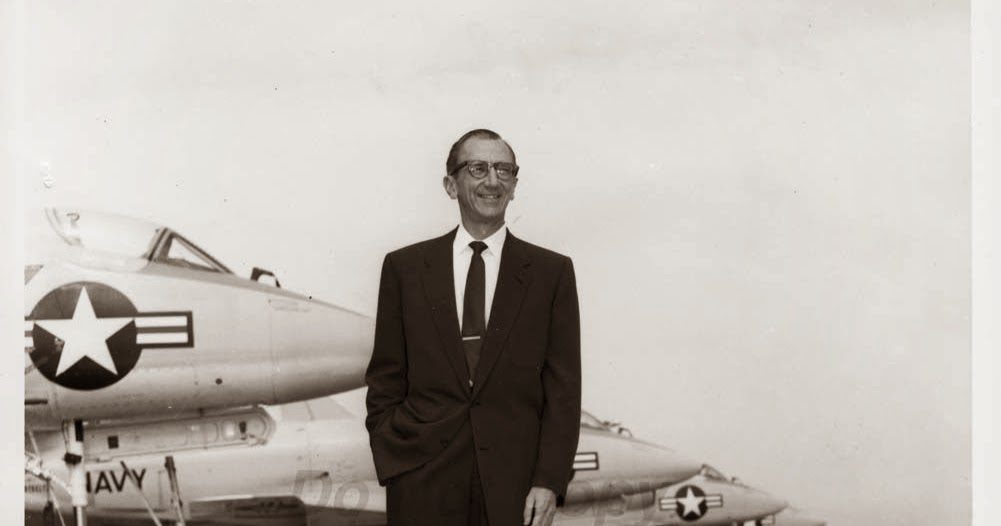
In 1928, he began working for Moreland Aircraft Company as an assistant chief engineer, rising to the post of chief engineer at the age of twenty-seven. In September 1930, he joined Northrop Aviation Corporation in Burbank, California. In 1958, he was named vice president for military aircraft engineering. In 1960, he departed from the Douglas Company to take an executive vice president position at Guidance Technology, Inc. In 1962, he became corporate vice president of engineering at General Dynamics, where he retired in 1973.
Technical developments
More than twenty thousand aircraft have been built based on Edward Heinemann’s designs. He created the first aircraft carrier, the F4D Skyray, which achieved an absolute world speed record. This invention was awarded the coveted Robert J. Collier Trophy in 1954. His D-558-II Skyrocket was the first aircraft to achieve twice the speed of sound. This class of aircraft was especially cost-effective in research programs that contributed to technological improvements after WWII by pushing aircraft through the so-called sound barrier.
The Skyraider was the first in an extended line of small, basic military aircraft that became the designer’s signature. The A4D Skyhawk, which also served in the Navy for many years, was representative of the aircraft affectionately referred to as the “Heinemann’s Hot-Rod”. His approach to aircraft design was usually simple. He once stated that he took the most powerful engine available and designed the aircraft around it.
The engineer is most well-known for his range of attack aircraft, which began with the famed SBD Dauntless. This dive bomber sank more enemy ships in the Pacific during the war than any other kind of weapon. It proved useful at the Battle of Midway when four aircraft carriers were dropped to the bottom of the ocean to assist stop the Japanese’s eastern flank. In the United States, the AD Skyraiders, A3D Skywarriers, and A4D Skyhawk were front-line aircraft.
Edward Heinemann had been monitoring the U.S. Navy and Marine Corps for over forty-five years to see what requirements they would have in the future and whether he could create aircraft to suit those needs. For example, Mr. Heinemann recognized that the Skywarrier, a carry-based heavy attack bomber, would need to operate from a smaller aircraft carrier than initially planned, so he developed an aircraft to address this issue.
He once had 16 hours to design a new bomber for the US Navy. Then he developed the AD Skyraider. The aircraft designer and two of his colleagues worked all night, and then Heinemann presented the designs to the admirals at nine in the morning. This was a deadline established by the US Navy Command. The aircraft was designed in less than 16 hours and was capable of outlasting any single-engine aircraft in Navy history.
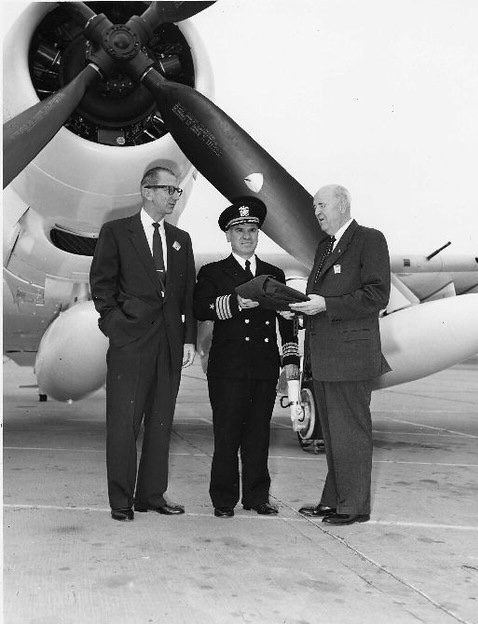
Developments during World War II
The most well-known aircraft created by the designer, the Skyhawk represents the height of his expertise dealing with the unique needs of ship aircraft. All fixed-wing tactical aircraft pilots in the United States flew the Skyhawk.
During World War II, over 7,500 A-20/DB-7 and 2,500 A-26 twin-engine attack bombers were manufactured for the Allied forces. When the Allies entered World War II, they had access to the A-20 and DB-7s, which significantly helped the states hold out until the US entered the conflict. Following World War II, many A-26s were modified into high-speed commercial business carriers, while military types were utilized during the Vietnam War.
The aircraft designer’s ability to create light, innovative, and cost-effective aircraft has allowed the US military to carry out its tasks more efficiently. Because of their durable basic design, these aircraft were able to fly for extended periods of time and on a variety of tasks, sometimes exceeding the service life of the aircraft designed for their use.
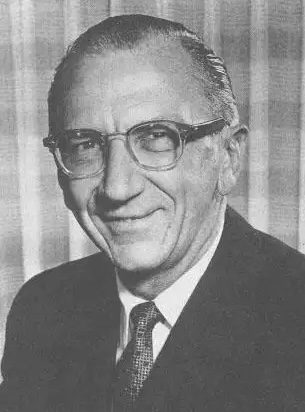
Aircraft equipment
Edward Heinemann also developed aviation equipment, including in-flight refueling depots, ejection seats, and additional ordnance, which later became standard features on other manufacturers’ aircraft.
Mr. Heinemann’s list of awards is lengthy and impressive. Among the awards are the National Medal of Science, an honorary fellowship in the Royal Aeronautical Society, the Guggenheim Medal, the United States Navy Distinguished Public Service Award, and numerous others. He was also inducted into various aviation halls of fame located around the United States.
Edward Heineman’s illustrious career came to an end when he died at the age of 83 on November 26, 1991. He will be remembered for the amount of aircraft his team created and the crews who flew them. Heinemann developed more than 20 military aircraft for the United States, including the Moreland M-1 Trainer in 1929. Throughout his long career, Heinemann designed over 20 combat aircraft, primarily for the United States, among them:
- SBD Dauntless dive bomber
- A-20 Havoc light bomber/attack aircraft
- A-26 Invader light bomber/attack aircraft
- A-1 Skyraider attack aircraft
- A-3 Skywarrior bomber
- A-4 Skyhawk light bomber
- F3D Skyknight night fighter
- F4D Skyray carrier-based fighter aircraft
- Douglas Skystreak and Douglas Skyrocket research aircraft.
The 1929 braced-wing parasol wing monoplane known as the Moreland M-1 Trainer was one of the first aircraft designed by the aircraft designer.