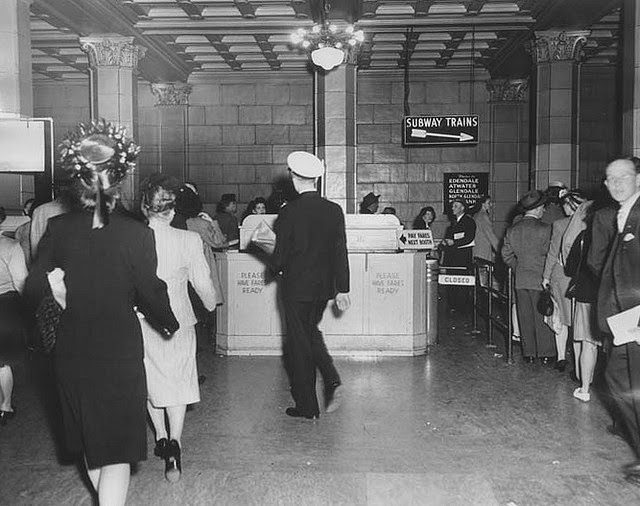

Railways have always played a vital role in the life of every major city. In the case of Los Angeles, the rail system was instrumental in helping the city transform into the metropolis it is today. The first rail lines began connecting LA to other cities in California and across the Eastern Seaboard. This move unlocked massive opportunities for trade, industry, and migration. The population boomed, and the economy flourished. Read more on la-future.
The Beginnings
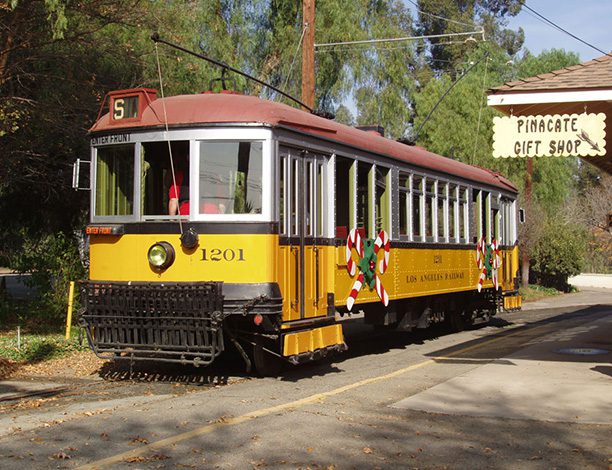
The Los Angeles Railway (LARy) was initially a city streetcar system known for its yellow-painted cars. In 1898, a group of investors led by Henry E. Huntington acquired control of the Los Angeles Railway.
Henry Huntington, a real estate and utility magnate, managed the railway. It became famous for its distinctive yellow cars and ran on a narrow gauge track of 3.5 feet. This gauge was smaller than the standard, which helped reduce construction and maintenance costs while also prioritizing safety for the public.
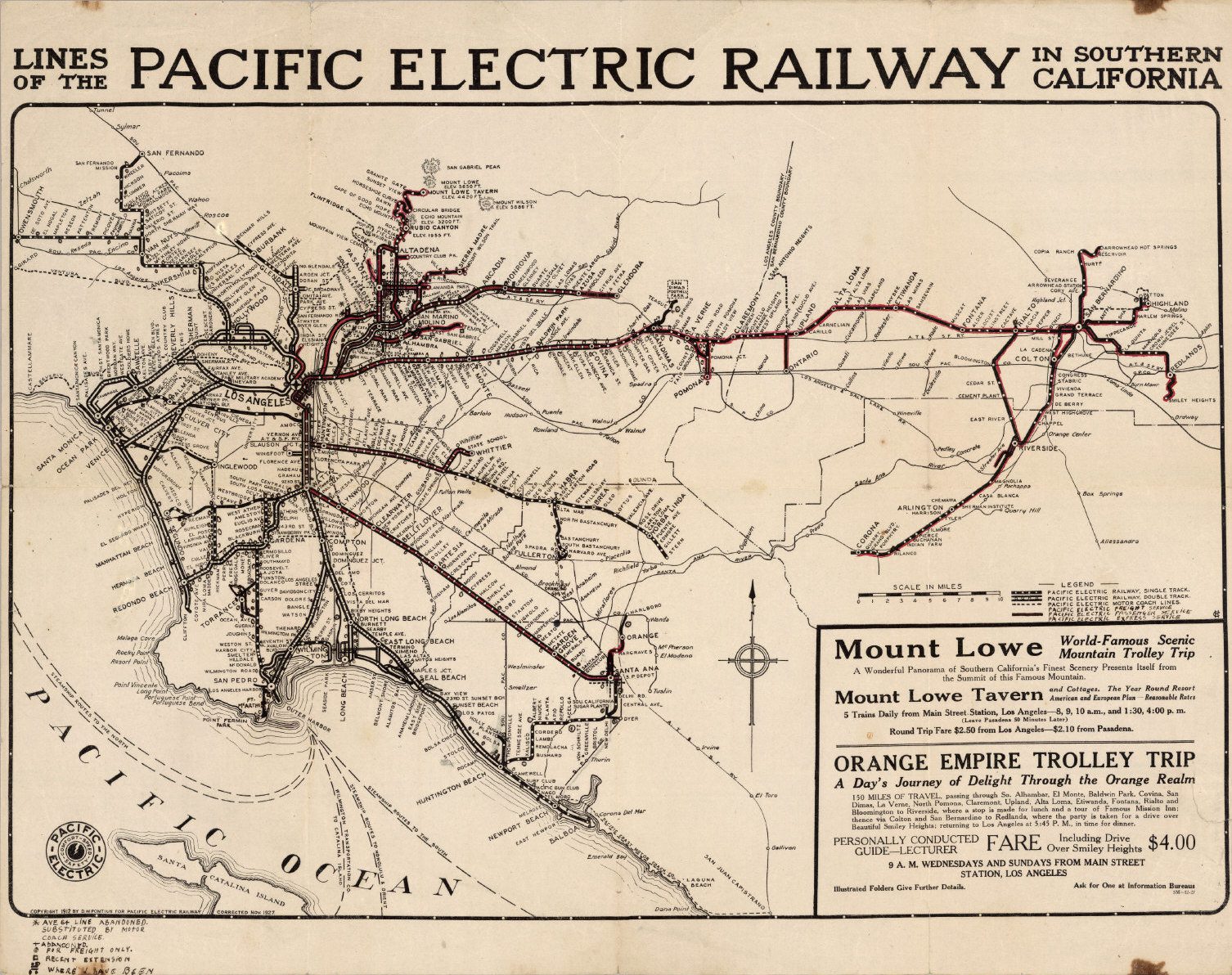
On key streets like Hawthorne Boulevard, Main Street, and Fourth Street, the Los Angeles Railway shared sections of track with the Pacific Electric system. Double track was used in these areas so that both rail systems could effectively utilize the limited space.
The Los Angeles Railway was an urban system, focused mainly on serving city residents and the immediate surrounding neighborhoods. In contrast, the Pacific Electric was an interurban electric railway with a larger coverage area, connecting LA with distant cities and districts.
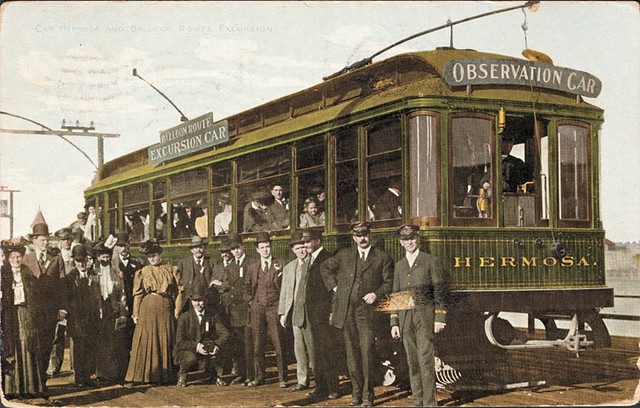
The Legacy of Henry Huntington
As a key figure in the development of the LA railway, Henry Huntington began negotiating the sale of his stake in Pacific Electric to Southern Pacific in 1910.
This event was later dubbed the “Great Merger,” which took place in 1911. Major companies, including Huntington’s Pacific Electric and Los Angeles & Pacific, consolidated and unified their lines. The Great Merger resulted in:
- Interurban lines with standard gauges were merged into Pacific Electric and came under the control of Southern Pacific;
- Local, inner-city lines with narrow gauges remained under the control of Henry Huntington, becoming the Los Angeles Railway;
- Essentially, a functional separation occurred, clearly dividing urban and interurban rail lines.
Henry Huntington is also remembered in history thanks to Huntington Beach and the Huntington Library, both named in his honor.
He played a vital role in developing Huntington Beach, helping it transform into a popular resort town. Residents and visitors are also very familiar with the Huntington Library, Art Museum, and Botanical Gardens in San Marino, near Los Angeles. Henry Huntington amassed a significant collection of rare books, manuscripts, artwork, and plants, all of which became the foundation of the institution.
After the Great Merger, Henry Huntington retired from railway management, dedicating his time to his art and literary collections. These collections are now available at his mansion and library in Pasadena.
Henry Huntington died in 1927, and his assets, including the Los Angeles Railway, passed to his heirs.
A Shift in Control
In 1927, the Los Angeles Railway (LARy) belonged to the Huntington Estate. In 1945, it was purchased by National City Lines, and its name was changed to “Los Angeles Transit Lines (LATL).”
Going back to 1940, roughly a million people in Los Angeles lived near the LARY/LATL bus and streetcar lines. Interestingly, by 1950, some lines had even penetrated into Beverly Hills on the Westside, while the longest streetcar line stretched 13 miles south of Hawthorne.
The End of the Line
It is important to note that during the first half of the 20th century, Los Angeles experienced a true rail transit boom. The city was saturated with a dense network of streetcar and interurban electric lines, allowing residents to travel conveniently and quickly across neighborhoods.
After World War II, ridership declined as the public increasingly favored the private automobile. For example, in 1958, LATL was sold to the Los Angeles MTA, which initiated a program to replace streetcars with buses.
Shortly thereafter, the streetcar lines were dismantled, and interurban trains lost their former popularity. The last five streetcar routes were converted to buses in 1963. This marked the end of 65 years of electric rail transit history in the city.
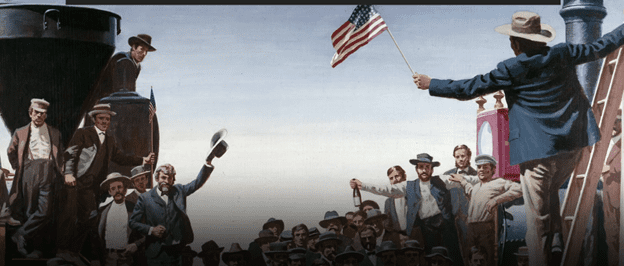
Riding the Transcontinental Railroad into LA
It was truly an exciting adventure. To get a feel for the experience, imagine the historical journey with all its details:
- Visitors relaxed on velvet cushions and looked into gilded mirrors;
- Fine dining included trout, berries, and champagne, along with other exclusive dishes. “It was a luxury, not a trip,” reported a New York Times journalist in 1869, traveling from Nebraska to California;
- The train journey allowed travelers to enjoy the scenery of the American West, dine, sleep, and relax.
The railroad stretched nearly 2,000 miles between Iowa, Nebraska, and California. This transportation route dramatically cut the travel time from six months by wagon or 25 days by stagecoach to a record-breaking four days. For travelers in 1869, the transcontinental railroad was the pinnacle of modern technology.
Beyond being a method of travel, the journey on the transcontinental railroad became an important part of US history and culture.
Fascinating Rail Facts
- LA was built around the railroads. The first steam train arrived in the city in 1869, and the first horse-drawn car in 1874. The first electric trolley began operating in 1885, and the arrival of the transcontinental railroad caused a demographic boom in 1888. Two years later, electric trains were launched. Eventually, the region boasted the largest electric interurban railway network in world history.
- LA once had over 1,000 miles of rail line.
- During the heyday of the LA railway, there was fierce competition among different rail companies. The term “Railroad Wars” was often used when companies used every means necessary to poach passengers.
- Another interesting feature: the impact on Hollywood’s development. Film studios used the rail lines for filming, and actors and crew used them for transportation.
- “Ghost stations” still exist, reminding us of a bygone era. Examples include abandoned tunnels and stations of the former Pacific Electric subway line in Los Angeles. For instance, after the line closed, the tracks were repaired, but the underground tunnels and stations were abandoned. The Old Tunnel remained intact until 1967, though it was partially filled beneath Flower Street. The upper levels were converted into offices, while the lower levels fell into obscurity. The Urbex Offlimits channel posted a video about these “ghost stations,” which is interesting to watch.
A Bygone Grandeur
The history of the Los Angeles Railway exemplifies the city’s transformation into a metropolis. The railroad played a pivotal role, stimulating urban development, economic growth, and cultural formation. Despite its decline due to the rise of automobile transport, these historical pages remain fascinating and relevant to modern generations.