
Vinton Cerf’s life had many opportunities and different paths to development. He could have become a famous engineer or a professional musician. However, he went down in world history as one of the creators of the Internet. Find out what’s happening with the network in California. Read more on la-future.
Biography
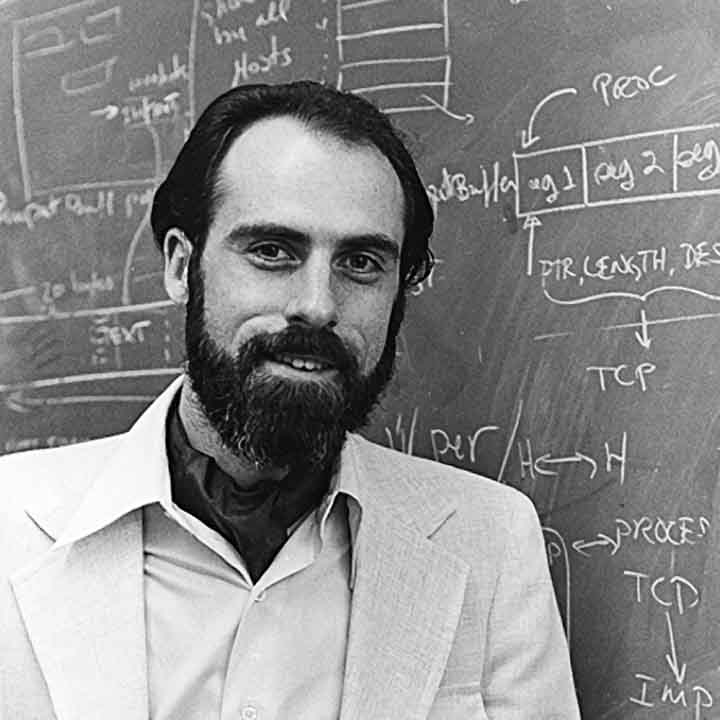
Vinton Gray Cerf was born on June 23, 1943. His mother was a housewife and his father worked in the aerospace industry. Vinton had hearing problems from birth. He went to high school in Los Angeles. During his studies, he got the opportunity to use a computer at the University of California, Los Angeles. This fascinated him so much that he decided to create the world with the help of a computer. At that time, the guy dreamed of becoming a mathematician. At the age of 15, Vinton got into the SAGE Control Centre. This is an American semi-automatic air defense coordination system. At the age of 17, he got his first job. He developed and tested software for the Rocketdyne F-1 engine, intended for the Apollo program. Later, the guy entered Stanford University. The knowledge he received there prompted him to choose programming instead of mathematics. He dreamed of earning big money and saw such an opportunity only in the field of IT. In 1965, he graduated from the university and began working on the QUIKTRAN system. In this position, he realized that his knowledge was not sufficient and continued his studies. In 1967, Vinton entered the University of California and made many useful acquaintances there. At the University of California, he worked on his thesis under the supervision of Professor Gerald Estrin and participated in the ARPANET project at the Network Measurement Laboratory of Professor Leonard Kleinrock. ARPANET was the predecessor of the Internet. At that time, Vint met Robert Kahn. In 1973, while Cerf was an assistant professor at Stanford, he and Kahn developed groundbreaking protocols that allow computers to exchange digital data. TCP defines a standard way to package data and send it over a network, while IP handles the address of each packet and ensures that it is delivered to the correct destination network. From 1976 to 1982, Cerf worked closely with Kahn as program manager and chief scientist at the Defense Advanced Research Projects Agency. They worked on the development of the Internet, packet radio, packet satellite and security programs.
He met his wife, Sigrid Vint, in a hearing aid store. She was also hearing impaired. The couple had two sons, David and Bennett. One is an Apple employee and the other is a cameraman in Hollywood. Vint has often said that his family has always been his support.
First developments
One of Vint’s first tasks was to create an operating system for the Sigma 7 computer. Vinton Cerf took on the development of part of the software. He also participated in the creation of a number of high-level protocols.
In 1972, the first International Conference on Computer Communications was held. Then, a new task appeared for Vint Cerf and the team. The ARPANET network was deployed in Washington. It connected more than 60 terminals of various types. It required a whole year of joint work. The team was able to complete its international task. This was a huge step towards what we will call the Internet now. According to the results of the conference, one could safely say that ARPANET was no longer just a working network. He suspended this cooperation due to low wages. After all, he needed to earn money for living and his family. It was difficult to do this on the salary of a civil servant. Thus, he accepted an invitation to work at the company MCI Communications Corp. There, he was supposed to organize e-mail. The program made it possible to send ordinary paper letters via e-mail. He worked there until 1986.
Commercial e-mail
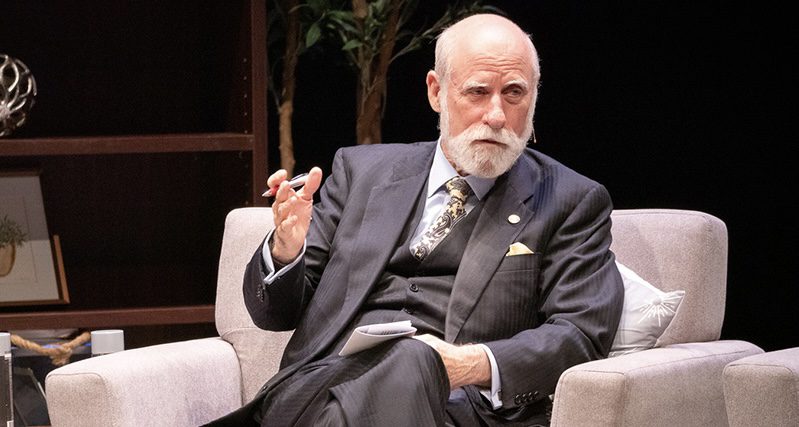
In 1988, Vinton initiated the creation of commercial e-mail. He had both scientific and commercial-political interests. Cerf received permission to launch it. Within a year, the system began to work. This caused a real boom among people.
In 1991, he created the public organization, Internet Society. The main task was to financially support developments in the field of technology. The fundamental difference of this organization from all previous ones was that it did not have clear and unambiguous state support on the basis of an institute, university or department.
Subsequently, Vinton was mainly engaged in social programs that were related to the Internet sphere and held many public events. In his lectures, he raised many serious issues: digital aging, long-term information storage, problems with the use of artificial intelligence, the development of modern technologies in medicine, etc. Young people often asked him whether he felt responsible for all the negativity of the Internet. The scientist believes that the network is creative and unique. He would like to reduce the negative aspects. However, Vinton does not plan to take responsibility for people’s decisions to abuse the opportunities.
Cerf was a member of the President’s Information Technology Advisory Committee and served as chairman of the Internet Corporation for Assigned Names and Numbers from 2000 to 2007. At Google, he was responsible for identifying new technologies to support the development of advanced Internet products and services.
Scientific awards
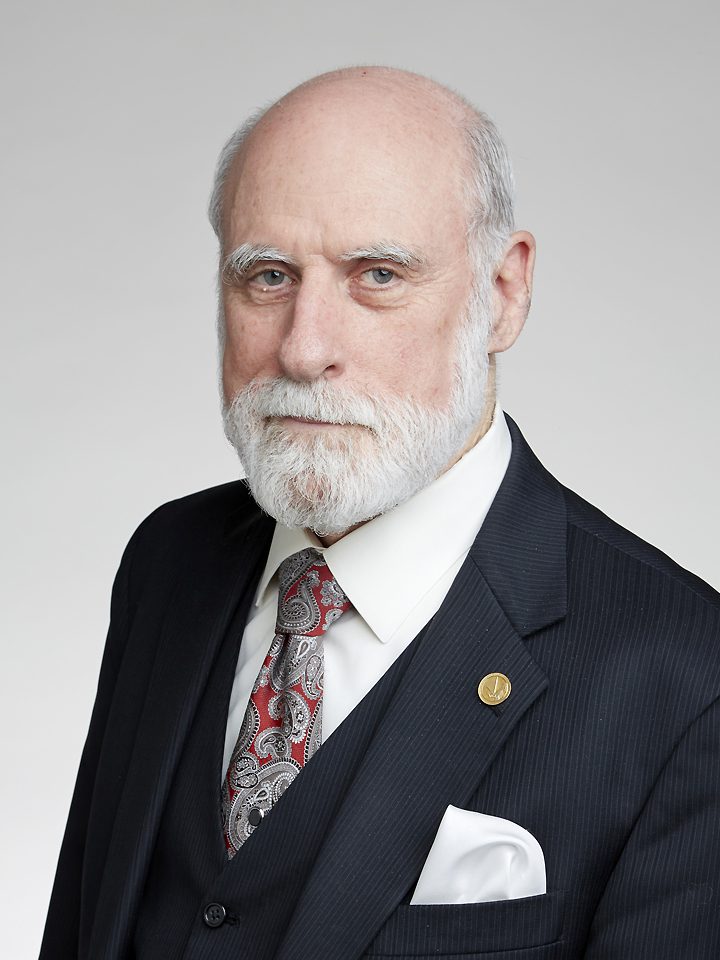
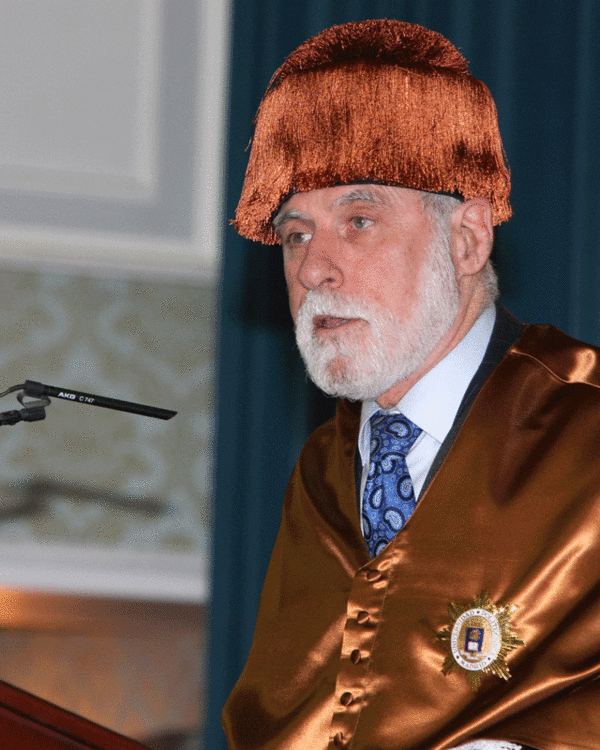
During his professional career, Vinton has received numerous awards. Among his honors: the Presidential Medal of Freedom and the Queen Elizabeth Prize for Engineering. Vinton has been awarded the title of honorary doctor by at least 28 different universities. Cerf is a former member of the US National Science Board and a member of the National Academy of Engineering, the NASA Advisory Council and the Visiting Committee on Advanced Technology of the US National Institute of Standards and Technology. He is also a Foreign Member of the UK Royal Society and the Swedish Royal Academy of Engineering, Fellow of the Association for Computing Machinery (ACM), the Institute of Electrical and Electronics Engineers (IEEE), the American Association for the Advancement of Science (AAAS) and The Chartered Institute for IT (BCS). He has received the Prince of Asturias Award, Japan Prize, ACM Turing Award, the Legion of Honor, the Franklin Medal, the Catalunya International Prize and 29 honorary degrees.
His work has led to great changes in the world. By 2006, the Internet had surpassed the size of the global telephone network. Hundreds of millions of Internet-enabled devices were connected to traditional servers, computers and laptops. The number of users had reached over 300 million by the end of 2000. As high-bandwidth access became the norm via cable modems and digital terrestrial and satellite radio, the changes were becoming obvious and irreversible. Television, radio, telephone and traditional print media have counterparts on the Internet and undergone a profound transformation.

