
Unlike other Western countries, the United States not only did not suffer heavy losses in World War II but also gained enormous benefits. The United States achieved tremendous economic, technological and military power. During the 5 years of the war, the profits of American monopolies amounted to 70 billion dollars and took a dominant position in the world capitalist economy. Learn about the history of the creation of the TV tower in Los Angeles. Read more on la-future.
The Los Angeles development boom
California experienced unprecedented military, technological and industrial growth before, during and after the war. This led to a massive increase in population migration, jobs and the development of industrial, urban and suburban areas. Although there were many jobs in California cities during and after the war, there was no housing. On the eve of the war, California’s population had already doubled to 3.4 million people from the 1920s. By 1962, California had become the most populous state and the population had grown to nearly 20 million by 1970. Approximately six million housing units were built in California during the thirty-year period following World War II. This became possible by government regulations, more jobs and faster construction methods.
Southern California was a state of experimental projects and technological innovations. Southern California’s high-tech industrial base expanded in the postwar years. The end of World War II postponed a period of deep economic depression in Southern California. By 1948, employment in the aircraft industry had fallen 76.6% from its peak employment during the war. In 1949, 178,000 workers were unemployed in Los Angeles, giving an overall unemployment rate of 13.6%.
However, by the 1950s, Los Angeles was the leading city in receiving major contracts. Los Angeles’ leadership was partly a reflection of its role as the headquarters of a large portion of U.S. defense contractors. This large amount of funding from the Department of Defense contributed to a significant expansion of manufacturing employment during the 1950s.
Four areas of employment were particularly developed during this time. These were the manufacture of munitions and weapons, communications equipment, electronic components and aircraft.
Aerospace industry
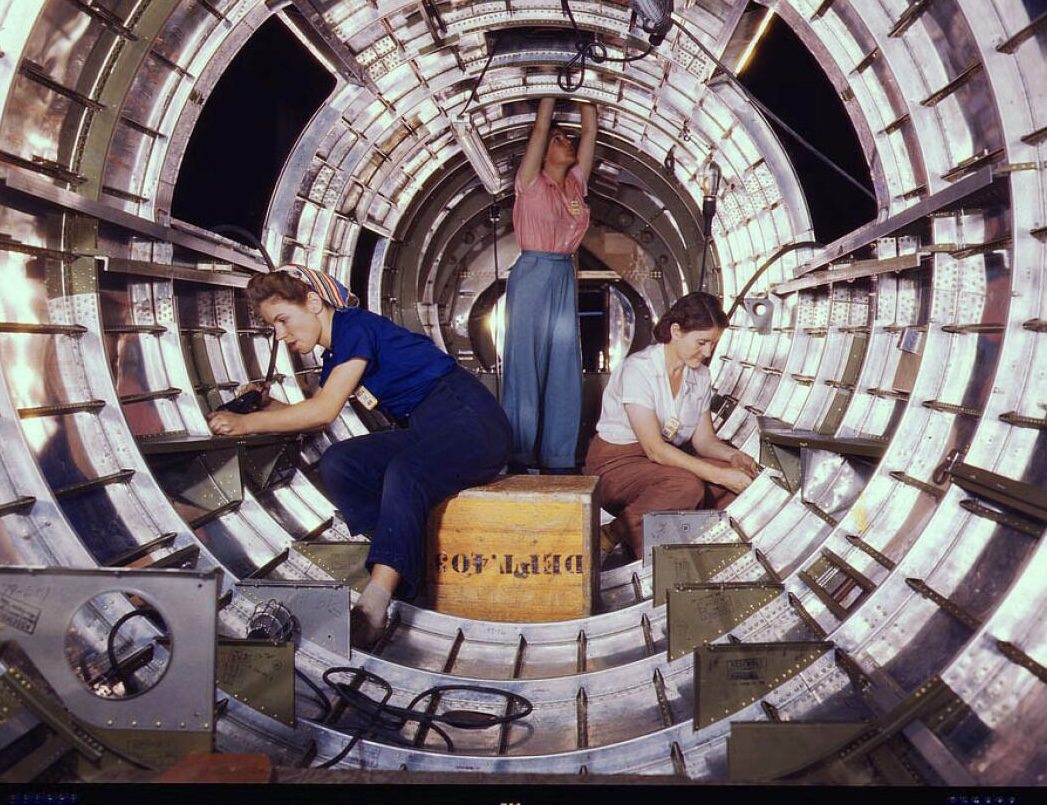
Before the end of World War II, more than 70% of the American aerospace industry was located in Southern California. At that time, the industry was only gaining momentum and expanding. Products were needed during the Korean War and in response to the launch of a Russian satellite. After the end of World War II, companies in Los Angeles diversified their products to include aerospace research and manufacturing, especially missiles. Companies actively worked on aerospace programs in collaboration with researchers from local universities. This allowed scientists to earn specialized degrees in their fields.
Until the 1990s, Los Angeles was home to the largest number of aerospace companies. However, after the end of the Cold War, the Department of Defense began to invest less in such production. As of 2012, only a few of the largest firms remained. By 2016, employment in the aerospace industry was one-third of 1990.
Telephone communications
Like most of the country, California was experiencing a numbering crisis. Between 1947 and 1997, the number of area codes in the state gradually increased from 3 to 13. In 1947, Los Angeles received its own telephone code, 213. It covered all of Southern California. However, in the 21st century, it contains only three tariff centers in central Los Angeles. The remaining 213 are divided into 310, 323, 562, 619, 626, 714, 818, 858, 909 and 949.
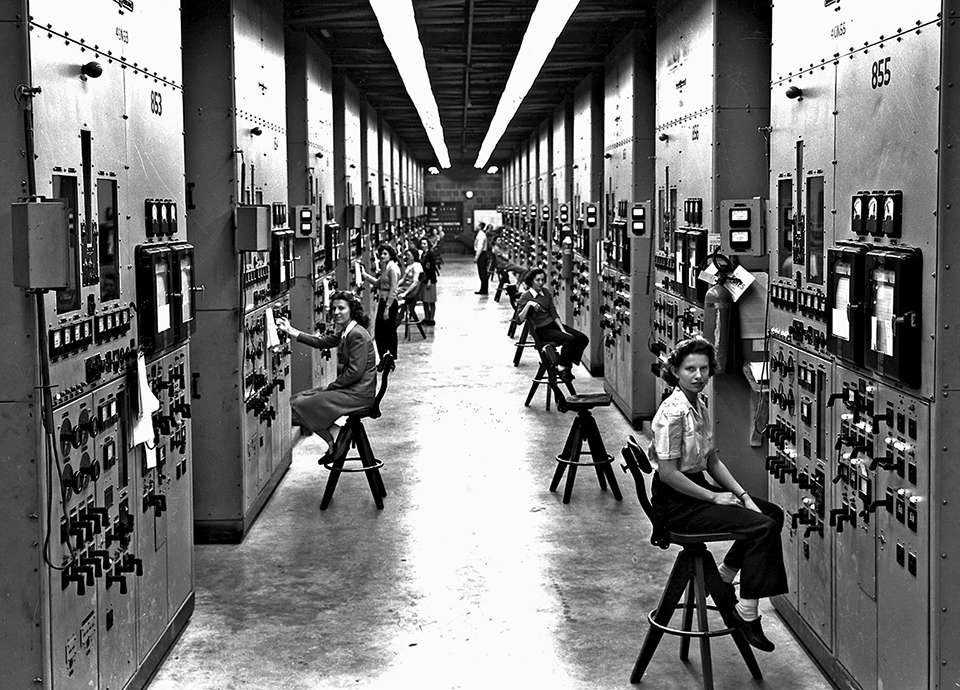
The Bell system was in full swing in the years after World War II. Long-distance call rates fell and service improved. The Bell Labs research division of Western Electric created innovative devices.
Three important innovations were made in the postwar period. The first was the creation of the coaxial cable system in the late 1940s, which carried television as well as telephone transmission. The second was the use of transistors instead of vacuum tubes, which were first installed in equipment. They were used for long-distance dialing in the mid-1950s. The third innovation was the introduction of microwave transmission, which by the 1960s had replaced coaxial cable as the primary means of long-distance communication. All long-distance calls were routed through the new Grand Avenue building. By 1954, it housed the first transistor telephone system installation. This allowed the company to start limited direct-dial long-distance service. By the late 1950s, microwave transmission required its own facility. By 1959, about 65% of Los Angeles had direct-dial long-distance service.

